1. Introduction
Throughout history, humankind has settled in various habitats, establishing a relationship of coexistence with nature and developing local knowledge from observing the environment. In this way, numerous techniques have been developed to grow food, with a single inexorable restriction: no action should compromise the integrity of the environment, which allows the agroecosystem to persist over time (Giraldo, 2014).
This cognitive capacity, transmitted from generation to generation, is found today mainly among traditional peoples. However, this knowledge is threatened by the implementation of production systems under the industrial agriculture model within the framework of neoliberal globalization (Toledo & Barrera-Bassols, 2008). Thus, it breaks with this knowledge accumulated for at least 10,000 years of co-evolution between society and nature, giving way to an agriculture based on specialization and simplification of complexity, which puts the continuity of the system at risk (Giraldo, 2014; Toledo & Barrera-Bassols, 2008).
This shift in the agricultural paradigm has focused mainly on the intensive use of input and capital technologies, favoring economies of scale and generating socio-economic, cultural and environmental transformations (Altieri & Nicholls, 2013; Shiva, 2016; Umbelino de Oliveira, 2003). These dynamics especially affect family systems, reducing their control over productive and commercial processes, with insufficient profits to cover household costs. When this happens, families tend to lower their level of well-being (lower income, longer working hours, and a general reduction in quality of life), resulting in a spiral of unsustainability that leads to their disappearance or, in other cases, proletarianization. As a consequence, smaller-scale farmers end up working as wage laborers within the agri-food system or migrating to cities (Shanin, 1988; Umbelino de Oliveira, 2003).
In addition, this makes it difficult for the population to satisfy what Gorz and Heller (as cited in Keucheyan, 2018) call “essential” needs. These needs go beyond mere survival and relate instead to living a full life: to love and be loved, to be autonomous, creative, and free, to participate in social and political life, and to maintain a relationship with nature.
From the ecological and technical-agronomic perspective, the increase in pressure on soils causes a deterioration in their physical and biological quality. This degradation, together with the decrease in diversity, favors a greater proliferation of pests, diseases, and weeds, which in turn increases dependence on fertilizers and agrochemicals. The intensive use of agrochemicals not only contributes to pollution and environmental degradation but also affects the health of farmers, rural workers, and consumers, both through direct contact with these substances and through their presence in food, water, air, and soil (Aguerre et al., 2014; Angelo, 2017; Gliessman, 2002; Marasas et al., 2012; Shiva, 2000).
The combination of these elements generates dynamics of unsustainability that affect all agricultural sectors on a global scale. In Uruguay, horticultural production systems are no exception to this process. In the last National Agricultural Census of 2011, the cultivated area decreased by 55% compared to the 2000 census. The same trend is observed in the number of farms, which was reduced by half, with the highest declines occurring in the smaller farm systems (Ackermann, 2014). Moreover, the reduction of productive rural land, together with the expansion of urban areas and logistics hubs, radically transforms ecosystems, degrades biodiversity, and threatens food security (Pons et al., 2022).
In this context, agroecology plays a fundamental role as a transition strategy from the paradigm of conventional intensive agriculture and globalized trade to systems that conserve natural resources and guarantee decent living, working, and income conditions for family farming. From this perspective, agroecology emerges as an integrative paradigm that offers ecological, social, economic, cultural, and political principles aimed at strengthening the viability and reproduction capacity of food systems over time, in harmony with the territories and communities that inhabit them (Altieri & Nicholls, 2007; Caporal et al., 2004; Gazzano & Gómez, 2015; González de Molina, 2012; Shiva, 2016).
In Uruguay, the Agroecology Network of Uruguay (RAU, by its Spanish acronym) is a leading organization that promotes agroecology as an alternative paradigm to the one promoted by the Green Revolution. Founded in 2005, it integrates producers, independent technicians, educators, researchers, food processors and distributors, social organizations, institutions, consumers, and individuals who share the principles of agroecology. Its membership is open throughout the national territory (Febrer, 2017; Gazzano & Gómez, 2015). Between 2012 and 2021, the RAU served as the organizational support of the Participatory System of Guarantees, a tool designed to guarantee the quality of production, processing, and distribution processes of agroecological products, understanding quality not only as compliance with technical standards, but also adherence to principles and values, which include social and equity aspects (Gómez & Galeano, 2006).
For the period 2011-2020, the number of RAU-certified agroecological systems grew from 54 to 154 farms. This growth is striking given the continuous decline in family production. Understanding the elements that contribute to the persistence and growth of agroecological systems is essential to promote their development.
In this context, the present study aims to support the transition processes towards agroecological systems through the identification and analysis of factors that enhance the development of horticultural-based farm systems in the Regional Sur-Sur of the Agroecology Network of Uruguay. The hypothesis that guides this research holds that certain elements drive agroecological transitions, especially those related to the care of nature and health, short marketing channels, the recognition of local knowledge, the design of biodiverse systems, and the development of creativity and solidarity among peers. These factors encourage the development of key attributes such as autonomy, adaptability, stability, and resilience. In addition, they contribute to greater material and spiritual well-being, linked to a life in harmony, respect, and balance, that values both rural living and agricultural work. This worldview, guided by the principles of complementarity, correspondence and reciprocity, conceives of the world as a whole whose elements are interconnected. From this point of view, land is not simply a resource, but part of a web of life in which the relationships with the elements must be mutual rather than based on domination (Altieri & Nicholls, 2013; Escobar, 2015; Giraldo, 2014; González de Molina, 2012; Marasas et al., 2012; Mier y Terán Giménez Cacho et al., 2018; Sarandón, 2002).
2. Materials and Methods
The research is positioned under the agroecological paradigm. One of its implications is the integration of popular and scientific knowledge to generate a pluri-epistemological approach that allows, from sociocultural biodiversity, to jointly influence, in a critical way, the course of dynamics of social transformation (Sevilla Guzmán, 2017).
As an approach methodology, a triangulation between quantitative and qualitative strategies was carried out, which seeks a convergence of results through the integration of both orientations for the investigation of the same aspect of reality (Batthyány & Cabrera, 2011). The quantitative approach was aimed at the development, measurement, and analysis of farm-level indicators across environmental and technical-agronomic, sociocultural, and economic dimensions, to obtain standardized data. The qualitative approach collected the perspectives of farmers so as to understand the rationales behind their choices of production methods, marketing channels, and lifestyles. The complementarity of both approaches is considered a strength, as it allows for a multifaceted and comprehensive understanding of reality (Corbetta, 2007).
The unit of analysis for this study is the farm (or production unit) and its management style (Guzmán Casado et al., 2000). The study encompasses all certified farm systems belonging to the Regional Sur-Sur of the Agroecology Network of Uruguay that present horticulture as the main production activity. This includes a total of ten farms (individual or group-managed) located in Montevideo and south of Canelones (34º61‘S to 34º85‘S - 56º04’W to 56º40'W).
2.1 Harvesting Stages and Techniques
Information from secondary sources was analyzed regarding the potential of the transition process to agroecological systems in Uruguay and countries in the region. To complement the information and identify specific elements of the study area, a workshop was held with qualified agroecology informants. From this workshop, guiding concepts emerged that were taken as input for the elaboration of the interview pattern and the construction of the indicators. The semi-structured interviews were conducted throughout 2022, following a standardized script to ensure consistency across respondents while allowing the inclusion of topics that emerged during the conversations (Corbetta, 2007). Information was also collected through management plans submitted to RAU for certification in 2021, technical certification reports, and field visits.
Nine indicators were designed for the ecological and technical-agronomic dimension, and five for the sociocultural and economic dimension (Table 1 and Table 2). These were standardized from 1 to 5, with 1 being the lowest and 5 being the highest (Table S1 and Table S2). To preserve anonymity, each farm system was assigned a letter, from A to J.
Table 1
Indicators of the ecological and technical-agronomic dimension according to the strategies used in horticultural systems of the Regional Sur-Sur and reference bibliography
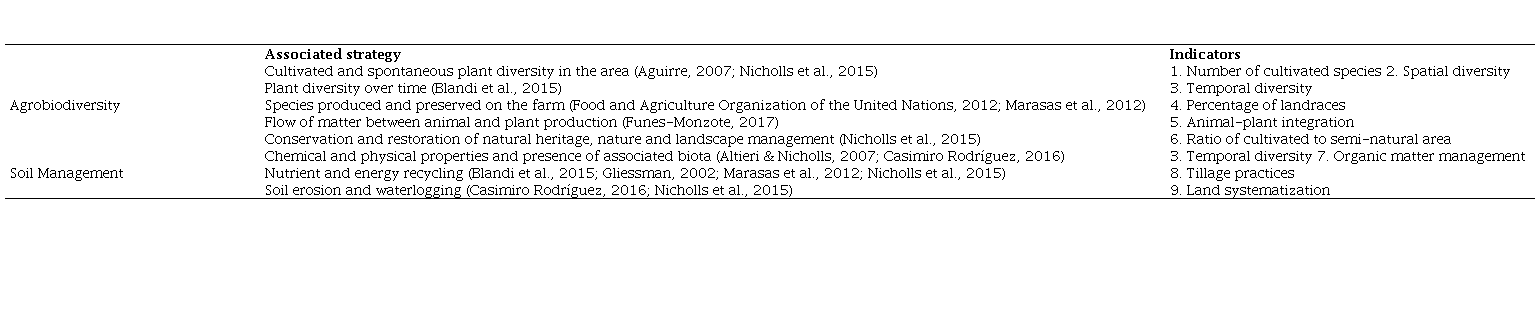
| Associated strategy | Indicators |
| Agrobiodiversity | Cultivated and spontaneous plant diversity in the area (Aguirre, 2007; Nicholls et al., 2015) | 1. Number of cultivated species 2. Spatial diversity |
| Plant diversity over time (Blandi et al., 2015) | 3. Temporal diversity |
| Species produced and preserved on the farm (Food and Agriculture Organization of the United Nations, 2012; Marasas et al., 2012) | 4. Percentage of landraces |
| Flow of matter between animal and plant production (Funes-Monzote, 2017) | 5. Animal-plant integration |
| Conservation and restoration of natural heritage, nature and landscape management (Nicholls et al., 2015) | 6. Ratio of cultivated to semi-natural area |
| Soil Management | Chemical and physical properties and presence of associated biota (Altieri & Nicholls, 2007; Casimiro Rodríguez, 2016) | 3. Temporal diversity 7. Organic matter management 8. Tillage practices |
| Nutrient and energy recycling (Blandi et al., 2015; Gliessman, 2002; Marasas et al., 2012; Nicholls et al., 2015) |
| Soil erosion and waterlogging (Casimiro Rodríguez, 2016; Nicholls et al., 2015) | 9. Land systematization |
Table 2
Indicators of the socio-cultural and economic dimension according to the strategies used in horticultural systems of the Regional Sur-Sur and reference bibliography

A hierarchical grouping of farms was carried out for each group of indicators, using Euclidean distance and the full grouping method, which considers the maximum distance by taking one individual from each group to form all possible combinations to measure the distance between groups.
For data analysis, the dist and hclust functions included in the vegan package of R were used (Oksanen et al., 2020). To study the consistency of the groups, the bootstrap method included in the clusterboot function of the fpc package was applied, with 1000 simulations (Hennig, 2023).
Complementing the analysis by indicators, the interviews provided, through open or semi-structured questions, data to understand the logics and choices of farmers. These data were classified based on recurrent categories and grouped by analytical dimensions. In the socio-political dimension, the chosen approach highlights the richness of the narratives and the underlying social dynamics that structure the relationships within territories. Likewise, in the case of health and social networks, qualitative analysis can provide key information related to the perception of well-being, cooperation, and care for the environment, in a relationship of interdependence between people and the ecosystems they inhabit.
In December 2022, a workshop was held with members of the Regional Sur-Sur of the RAU to present the results obtained to date and collect proposals for strengthening and amplifying the agroecological initiative in collaboration with the University.
3. Results
3.1 General Characteristics of the Farm Systems
The Regional Sur-Sur was formed in 2005 and was one of the first to be established. It is characterized by being composed of farmers with extensive experience in agroecology. Of the analyzed farms, eight have been practicing agroecology for more than 15 years, while the remaining two began their transition in 2014 and 2020, respectively. All are located in the rural area of Montevideo and southern Canelones, in areas with good access to services and marketing channels (Table 3).
Table 3
General description of the agroecological farms studied
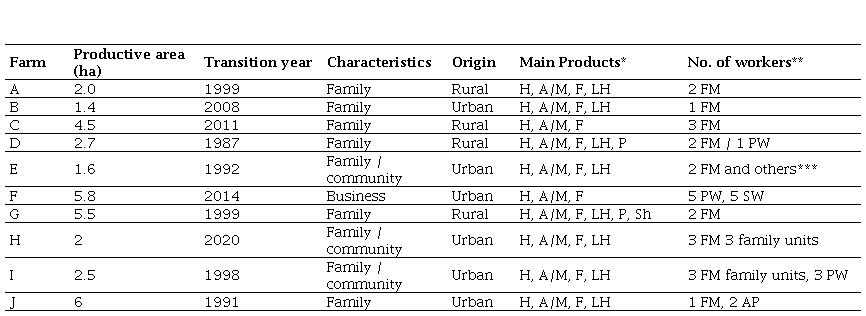 * Main products: horticultural (H), aromatic and medicinal plants (A/M), fruit trees (F), laying hens (LH), pigs (P), sheep (Sh). ** Number of workers: Family members (FM), Permanent wage workers (PW), Seasonal wage workers (SW). Two permanent members and other members of the collective (variable in number and hours of dedication) work seasonally.
| Farm | Productive area (ha) | Transition year | Characteristics | Origin | Main Products* | No. of workers** |
| A | 2.0 | 1999 | Family | Rural | H, A/M, F, LH | 2 FM |
| B | 1.4 | 2008 | Family | Urban | H, A/M, F, LH | 1 FM |
| C | 4.5 | 2011 | Family | Rural | H, A/M, F | 3 FM |
| D | 2.7 | 1987 | Family | Rural | H, A/M, F, LH, P | 2 FM / 1 PW |
| E | 1.6 | 1992 | Family / community | Urban | H, A/M, F, LH | 2 FM and others*** |
| F | 5.8 | 2014 | Business | Urban | H, A/M, F | 5 PW, 5 SW |
| G | 5.5 | 1999 | Family | Rural | H, A/M, F, LH, P, Sh | 2 FM |
| H | 2 | 2020 | Family / community | Urban | H, A/M, F, LH | 3 FM 3 family units |
| I | 2.5 | 1998 | Family / community | Urban | H, A/M, F, LH | 3 FM family units, 3 PW |
| J | 6 | 1991 | Family | Urban | H, A/M, F, LH | 1 FM, 2 AP |
According to the definition of family producer established by the Ministry of Livestock, Agriculture and Fisheries (Ministerio de Ganadería, Agricultura y Pesca, 2016), nine of the analyzed farm systems correspond to family producers (farms A, B, C, D, E, G, H, I, and J), while one is classified as a business farm (farm F). In addition to horticulture, other production activities include fruit growing, aromatic and medicinal plants, and small animal breeding. Aromatic and medicinal plants will be addressed together, since in most cases they are species that serve multiple functions in the garden: they provide biodiversity, act as natural insect repellents, and are also used to prevent or treat health imbalances in humans.
Of the ten farms analyzed, seven made a transition from conventional systems to agroecological systems. As for the origin of the farmers, four come from rural backgrounds, while the other three have urban origins and began their first productive experience under conventional systems. Among these three, two had previous experience as wage workers in rural areas (Figure 1).
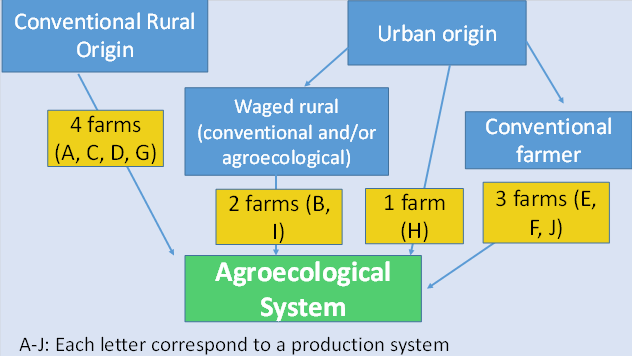 Figure 1
Origin and background of farmers
Figure 1
Origin and background of farmers
Among the nine family farms surveyed, three of them (E, H, I) consist of several family units residing or working in the same space, as community organizations. These farms share an urban origin and, although the internal organization varies in each case (in terms of division of labor, decision-making processes, and the definition of common objectives), in all cases they represent a break with the traditional model of the isolated rural family. In the business farm (F), the producer does not live on the farm, and daily activities are carried out by hired labor. The rest of the farm systems (A, B, C, D, G, J) are managed by family units that both live and work on their farms.
3.2 Ecological and Technical-Agronomic Dimension
The main aspects mentioned in this dimension include soil care, pollution prevention, increasing biodiversity, and animal welfare. In the interviews, the importance of caring for nature and avoiding its deterioration is highlighted, while also emphasizing the contribution to its improvement.
This approach transcends individual and farm objectives, as they consider the impact of farm management in the area and the care of the environment for future generations: “I spent several days thinking that I had to give something back to the land, it was not just about conserving it; its previous management had worn it out a lot, so I began to improve it” (Producer from Montevideo, personal communication, July 27, 2022); “For me, agroecology is the love for nature, building a more harmonious world for everyone, a conscious decision about what I want for myself and my environment, thinking about the present and the future” (Producer from Montevideo, personal communication, December, 2022).
3.2.1 Agrobiodiversity
Regarding agrobiodiversity (which integrates the number of cultivated species, spatial-temporal diversification, animal-plant integration, and connections between natural and cultivated components), the indicators show that the nine family farms presented similar results, with a 90% grouping level (Figure 2).
All ten farms under study coincide in presenting a high spatial diversity, both of cultivated and spontaneous species. With regard to cultivated species (including horticultural, fruit, medicinal, and floral plants), all farms grow more than twelve species, even reaching up to 30 (Altieri & Nicholls, 2007). In addition, they carry out between three and five of the following practices: planting boundary strips, intercropping, trap or aromatic plants, installing biological corridors, and preserving the surrounding vegetation. On all farms, at least 20% of the area is left uncultivated.
Table 4
Outcome of agrobiodiversity indicators
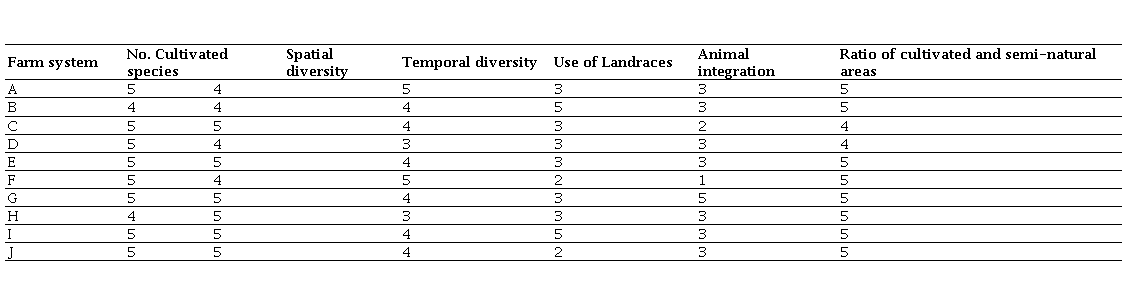
| Farm system | No. Cultivated species | Spatial diversity | Temporal diversity | Use ofLandraces | Animal integration | Ratio of cultivated and semi-natural areas |
| A | 5 | 4 | 5 | 3 | 3 | 5 |
| B | 4 | 4 | 4 | 5 | 3 | 5 |
| C | 5 | 5 | 4 | 3 | 2 | 4 |
| D | 5 | 4 | 3 | 3 | 3 | 4 |
| E | 5 | 5 | 4 | 3 | 3 | 5 |
| F | 5 | 4 | 5 | 2 | 1 | 5 |
| G | 5 | 5 | 4 | 3 | 5 | 5 |
| H | 4 | 5 | 3 | 3 | 3 | 5 |
| I | 5 | 5 | 4 | 5 | 3 | 5 |
| J | 5 | 5 | 4 | 2 | 3 | 5 |
| | | | | | | |
As for temporal diversity, all farms avoid repeating the same botanical family for two to four cycles. However, an aspect to improve is that few farmers keep detailed records on rotations, which hinders planning.
Another characteristic common to all farms is the selection of species and varieties adapted to both local conditions and the productive objectives of each system. This selection has been developed over time, based on observation and direct experience of each property. This approach has allowed agroecological farmers to incorporate, as part of their practices, the selection and conservation of seeds adapted to the local environment.
However, this practice applies only to some varieties, since most farmers consider that seed reproduction requires meticulous work, such as plant selection and differential management, which is difficult for them to implement. In addition, the availability of native seeds in the market is limited (understood as seeds that have been selected, conserved, and reproduced by farmers over generations, adapting to local conditions). For this reason, the percentage of native seeds used varies between 40% and 80% in the different farm systems.
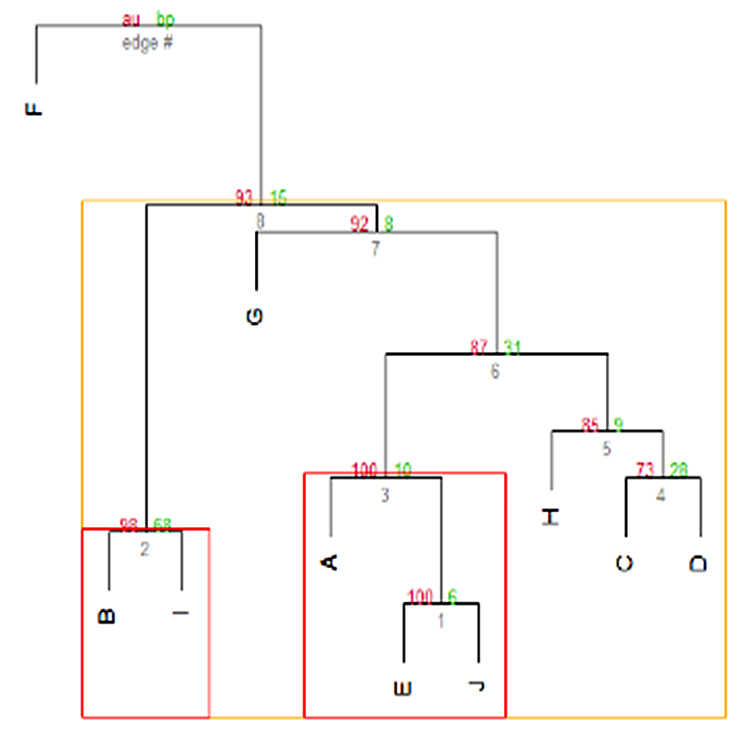 Figure 2
Cluster dendrogram of farm agrobiodiversity
Figure 2
Cluster dendrogram of farm agrobiodiversity
Regarding animal integration, nine farms have small animals, mainly laying hens, which feed from vegetable discards, pasture, and feed. However, only one of the farms manages to be completely self-sufficient in fertilizer production. In the rest of the farms, animal integration is insufficient; they must buy fertilizers locally, which come from conventional systems.
3.2.2 Soil Management
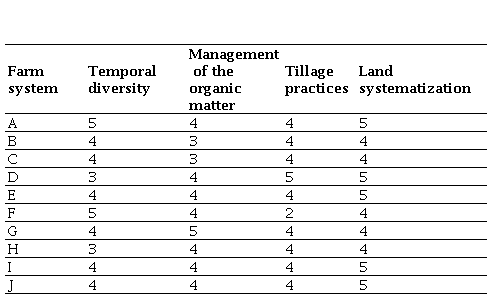
Soil management indicators integrate the temporal diversity of vegetation, land systematization, tillage practices, and organic matter management (Table S1).
Among the results obtained, land systematization yields the highest values (Table 5). This can be explained because, in the last 10 years, all farms have carried out some form of systematization, mostly linked to projects subsidized by the MGAP. Field observations showed that the slope and length of the beds are adequate. No significant erosion or waterlogging problems have been detected, except in certain specific areas of some farms, which represent less than 15% of the total area.
The maximum use of organic matter is achieved through the application of various techniques, such as the use of organic compost in the recommended doses, the implementation of green manures, and the use of mulch. Only one farm, which makes its own fertilizer, obtained the maximum value. In the remaining farms, the fertilizer used is chicken litter, chicken manure, or cow rumen, all from conventional sources. This carries the risk of possible contamination of the compost with agrochemicals.
In general terms, there are some aspects to consider and adjust in farm management. One aspect is linked to the arrival and curing time of the fertilizer for proper handling. Another aspect to consider refers to the homogeneous application of compost and the lack of soil analysis for application. It was found that in more than half of the farms compost is applied homogeneously without considering the specific needs of each crop. In this regard, farmers say that soil analysis is expensive, so it is not done frequently. The interviews highlighted the need for more research on the composition of animal-based fertilizers, the recommended doses for each crop, and the possibility of accessing certified organic compost.
All farms use green manures to improve the structure and fertility of the soil, as well as to control weeds. The need to generate more research on tillage practices is identified, since the southern soils are mostly heavy on texture. In this context, tools that allow for deeper tillage are used. Although conservation management practices are incorporated, these are complemented with implements that cause a greater alteration of the soil profile.
Table 5
Soil management indicator results
| Farm system | Temporal diversity | Management of theorganic matter | Tillage practices | Land systematization |
| A | 5 | 4 | 4 | 5 |
| B | 4 | 3 | 4 | 4 |
| C | 4 | 3 | 4 | 4 |
| D | 3 | 4 | 5 | 5 |
| E | 4 | 4 | 4 | 5 |
| F | 5 | 4 | 2 | 4 |
| G | 4 | 5 | 4 | 4 |
| H | 3 | 4 | 4 | 4 |
| I | 4 | 4 | 4 | 5 |
| J | 4 | 4 | 4 | 5 |
3.3 Socio-Cultural, Economic and Political Dimension
The interviews show that, in family farms, choosing the agroecological paradigm is presented as a way of life that integrates work, place of residence and the relationship with the natural environment, where bonds of solidarity and cooperation are fostered. There is a strong conviction for this path, which remains firm in the face of diverse social, political and economic circumstances. In addition, agroecology is mentioned as the alternative to ensure the viability of family farming in rural areas. In this regard, interviewees mentioned: “What I invest here I do with enthusiasm, this is my place in the world”; “If someone starts producing agroecologically just for an economic reason, they’ll quit for the same reason; for us it is a way of life”; “This is my life project, to which I dedicate myself every day” (Producer from Montevideo, personal communication, August 18, 2022); “Agroecology is a utopia that, as such, inspires us to move forward” (Producer from Montevideo, personal communication, August 18, 2022).
The nine family farm systems agree that in order to achieve stability, the yield per area should not be increased, but rather the concept of global diversity-productivity of the system should be integrated, generating a balance between income and expenses appropriate to the family's needs, favoring greater independence. In all cases, the farm is the only workspace, although three farms receive retirement pensions. In this regard, great importance is given to strengthening the system and reducing the use of external inputs. In addition, farmers also appreciate the possibility to consume the food produced on their farms, as a way to reduce living costs and access healthy and diverse food.
The six farms belonging to Group 1 in Figure 3, including the four managed by farmers of rural origin, it is considered that the productivity of the farm system is sufficient to satisfy their basic needs, repay and reinvest capital, and allocate part of the income to recreational activities. Three of these farms hire waged labor. However, one of the challenges pointed out is the high workload, which exceeds 50 hours per week, on average. Although this workload is significant, farmers of rural origin pointed out that, under the conventional system, working hours were also long, but income did not cover the family’s basic needs, often forcing them to seek off-farm employment or increase their working hours even further. They argue that this does not happen in the current system, so they visualize this aspect as a strength of the agroecological system: “Before, it was all about planting as much as possible, working all day, and investing a lot of money. You know how conventional production is, you have to work from dawn to dusk, and you are always throwing away food that you can't sell” (Producer from Montevideo, personal communication, September 16, 2022).
The rest of the farmers consider that the productivity of the system manages to satisfy their basic needs and wages, but they cannot generate any savings for personal use, or amortize or invest in the farm. They share a common urban origin and their farms are made up of several family units that live and work there.
One of the potentialities that this last group mentioned is that their work involves an adequate workload and, compared to their previous jobs, they currently have greater work flexibility, which adds to the peace of mind of working and living in the same place. Families with children highlight the possibility of taking care of them in their workspace, apart from allowing them to grow up in contact with nature.
On farm F, which has a business profile, the farmer does not live on the farm, and their main income comes from another job. Although they do not consider that the workload for vegetable production is high, it does not generate the expected income either, which raises doubts about continuing in the sector long-term.
In all farm systems, a strong sense of community is observed, aligned with one of the principles of agroecology (Giraldo & Rosset, 2021) that promotes organizational structures and collective processes rather than individualized projects.
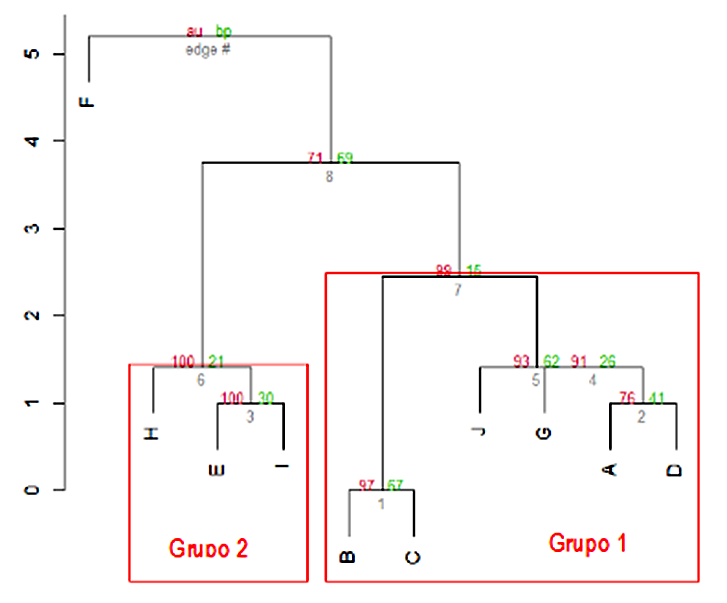 Figure 3
Cluster dendrogram of sociocultural and economic farm dimensions
Figure 3
Cluster dendrogram of sociocultural and economic farm dimensions
3.3.1 Health
In the interviews, a central aspect of the agroecological model is health. This includes growing and consuming fresh, nutritious food free of pesticide residues; the protection of both farmers' and workers’ health, by avoiding exposure to agrotoxics, and the prevention of soil, air, and water pollution.
In three of the farms that made the transition from conventional to agroecological systems, the main driver of the decision was health concerns. In one of the farms, a farmer suffered acute poisoning when he consumed a lettuce from his farm contaminated with captan residues due to the drift of a nearby field. On another farm, a farmer suffered from chronic gastritis and, after several studies, it was diagnosed that the cause of his disease was related to the use of pesticides. This farmer began wearing protective gear with a mask and reflected: “While I was fumigating with the gear on, I kept thinking that the food I was applying chemicals to would later go to the market for others to eat… After some time, when I started producing again, I did it agroecologically” (Producer from Canelones, personal communication, Jun 9, 2022). In the third case, on a farm that worked with teenagers, the decision was made to avoid exposing them to agrotoxins to prevent possible health problems. In the farms with children, not using agrotoxins is a central aspect, since it allows children to play and move freely through the farm without risk.
In all cases, farmers emphasized the importance of maintaining ecosystem health –not only inhabiting a clean, uncontaminated space but also caring for nature and all living beings within it.
3.3.2 Social Networks
All farm systems integrate more than one association or network of farmers. Some of those mentioned are: farmers’ markets, eco-stores, the Agroecology Network of Uruguay, the National Network of Native and Creole Seeds, and local rural development groups, among others. The reasons they mention for participating include belonging to groups with common principles and goals that allow them to develop agroecology in the region and the country, and collectively solve problems common to family systems and especially agroecological ones.
In all cases, solidarity and cooperation among peers are highlighted, reflected mainly in three aspects: the exchange of information that helps solve technical, productive, and commercial difficulties jointly; the promotion of complementarity rather than marketing competition; and mutual support when a farmer faces illnesses or other difficulties.
About decision-making processes, nine out of ten farm systems report that all adult members of the family or cooperative participate equally in long-term objectives, or, otherwise, they commonly agree to divide responsibilities and decision-making among the members.
3.3.3 Recognition of Local Knowledge
As for the knowledge required to develop the technical proposal, they all agreed that they do not face difficulties in farm management. On the contrary, they consider that agroecological systems require a holistic perspective that enhances creativity, promotes job satisfaction, and integrates seamlessly into their management practices.
Farmers who previously produced under conventional systems point out that such work was routine and monotonous, so they consider that the change was positive: “I like to create, I am always changing and learning about new crops. The supermarket or the commission agent always wants the same thing, here I can go where I want” (Producer from Montevideo, personal communication, September 16, 2022).
As aspects to be improved, they mention that, although in recent years there has been greater access to information and inputs, this aspect is still insufficient. All the interviews express the need for research institutions to allocate more funds to the development of proposals related to agroecology, since existing studies fail to reflect the characteristics of Uruguay's agroecological systems. The same applies to educational institutions, as there is a perceived shortage of technicians trained in this field. Furthermore, they pointed out that most of the technicians working under the agroecological paradigm have been trained mainly through their engagement with farmers of the Agroecology Network of Uruguay (RAU).
3.3.4 Marketing Channels
In all the family farms surveyed, sales through short marketing channels are considered key to economic sustainability. More than 80% of sales are made through farmers’ markets, produce baskets, restaurants or self-managed stores, allowing farmers to set stable prices and plan production without waste. In addition, the direct link with consumers fosters trust, knowledge exchange, and demand stability, while at the same time knowing the profit margin for each product: “Sales are very well organized –nothing is left unsold. And if one crop yields more than expected, we use it for preserves”; “In each crop, I already calculate the profit margin because I know what cost it has and at what price I’ll sell it” (Producer from Canelones, personal communication, Jun 9, 2022).
For consumers, this also represents an advantage, since they know in advance the price at which they will find the produce. In turn, the direct link with consumers fosters dialogue about seasonality, characteristics of food production systems, and “cosmetic” criteria, among others.
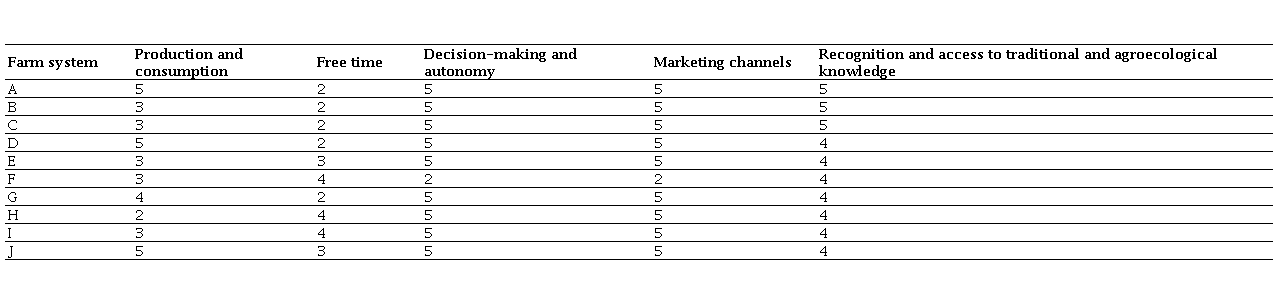
The farm with a business profile showed lower levels in the indicators “marketing channels” and “decision-making and autonomy” (Table 6). This is related to the fact that 75% of its production is sold to supermarkets, where there is no direct connection with either consumers or other farmers. In addition, sales conditions are imposed by the commercial channel, which charges for the service and deducts 10% for products considered “waste”, thus reducing the profit margin and the producer's decision-making capacity.
Although this model allows for higher sales volumes, it entails less autonomy compared to direct sales channels. The farmer points out that demand always exceeds supply, but in recent years, he has been unable to increase his production volume. Thus, unlike the other cases, their income only covers production costs and wages.
Table 6
Results of indicators in the socio-cultural and economic dimension
| Farm system | Production and consumption | Free time | Decision-making and autonomy | Marketing channels | Recognition and access to traditional and agroecological knowledge |
| A | 5 | 2 | 5 | 5 | 5 |
| B | 3 | 2 | 5 | 5 | 5 |
| C | 3 | 2 | 5 | 5 | 5 |
| D | 5 | 2 | 5 | 5 | 4 |
| E | 3 | 3 | 5 | 5 | 4 |
| F | 3 | 4 | 2 | 2 | 4 |
| G | 4 | 2 | 5 | 5 | 4 |
| H | 2 | 4 | 5 | 5 | 4 |
| I | 3 | 4 | 5 | 5 | 4 |
| J | 5 | 3 | 5 | 5 | 4 |
4. Discussion
Based on the objectives set, the following section describes the aspects identified as central to the development of horticultural-based agroecological systems analyzed in this study, as well as their link with the attributes of autonomy, stability, resilience, and adaptability (Astier et al., 2000) in relation to their contribution to the agroecological transition. Additionally, an analysis will be carried out on the relationship of these systems with the principles of complementarity, correspondence, and reciprocity proposed by Giraldo (2014), which are related to a life in harmony, respect, and balance with all that exists, promoting well-being and happiness.
4.1 Autonomy
Common characteristics are observed across the nine family systems regarding a conscious choice of work and lifestyle, allowing farmers to define and integrate their objectives and priorities, identity and values, while also providing room for creativity.
The production strategies are aimed at understanding the characteristics of the environment, valuing traditional knowledge, the exchange between farmers, and the development of technologies adapted to the local environment. In turn, the diversity of crops and species cultivated contributes, to a greater or lesser extent, depending on the case, to guarantee the family's food consumption and to maintain a diversified marketing throughout the year. On the other hand, short marketing channels allow defining sales volumes and prices in a close relationship with consumers.
A limitation of agroecological systems raised by Guzmán & Alonso (2007) is the excessive workload. Of the farms interviewed, five mentioned that free time is less than desired and, in some cases, they explain that the need to take care of productive tasks and also packing and marketing does not allow for days off during the week. On the other hand, the other half see flexible working hours as a strength, also associated with childcare. In all cases, farmers emphasized their enjoyment and conviction in what they do.
Access to compost and organic seeds varies between farms, so it would be advisable to promote training and exchange opportunities on these issues, as well as to foster the creation of specialized production systems. Despite these differences, the farms have achieved a remarkable productive and commercial autonomy, with low dependence on external inputs. In addition, the interviews highlight a high satisfaction with work and lifestyle, which contrasts with what Umbelino de Oliveira (2003) found about conventional small-scale systems, in which there is a growing indebtedness and exclusion from family systems, where farmers have little or no influence over production and commercial processes.
4.2 Stability, Resilience and Adaptability
The attributes of stability, resilience and adaptability are analyzed together, since they refer to the dynamic equilibrium of the system, in relation to how it recovers from major environmental changes and its ability to be sustainable over time.
In the ecological and technical-agronomic dimension, greater ecosystem functionality is observed, aligned with agroecological principles, which is characterized by an increase in spatial and temporal biodiversity, both cultivated and spontaneous, a high integration with animal production activities, and the incorporation of techniques that improve the soil’s physical, chemical and biological properties, as well as the overall environmental quality.
The increase in ecological interactions optimizes the functions in the agroecosystem, favoring stable dynamic balances over time. It also allows the productive potential to be maintained after suffering environmental disturbances. During the transition stage, a greater use of biological inputs may be necessary to sustain yields until greater functional diversity is achieved, reaching yields similar to conventional systems but with lower costs of external inputs.
With regard to the socio-cultural and economic, and socio-political dimensions, the diversity of marketing channels contributes to strengthening commercial stability. Likewise, short marketing channels are based on trust bonds with consumers, and prices are not subject to market fluctuations of supply and demand. They integrate and articulate organizations with common objectives, with principles and foundations that allow them to position agroecological systems from the socio-political point of view.
With regard to the relationship between farmers, there are networks of solidarity that are far from the prevailing competitive relations in the conventional market. This aspect is related to the concept mentioned by Giraldo (2014) of “full life”, taken from the Aymara and Quechua cultures, which states that “one cannot live well if others live poorly”. Thus, in the interviews, farmers highlighted collaboration and complementarity among peers in sales spaces that seek collective well-being. This aspect has an impact on greater stability in the face of possible market fluctuations.
4.3 Principles of Complementarity, Correspondence and Reciprocity
The principles of complementarity, correspondence and reciprocity are proposed by Giraldo (2014) as elements that contribute to life in harmony, respect and balance with all that exists, through the understanding that everything is interconnected, both among people and with nature.
In the socioeconomic indicators, it was observed that all family farms maintain short marketing channels, characterized by different practices, such as collective price-setting at markets, coordination of produce, mutual assistance, and knowledge exchange, among others. Through these practices, the principle of complementarity is expressed. According to Giraldo (2014), this principle refers to an intersubjective rationality, where we are all subjects who need each other and complement each other, in contrast to the predominant discourse of modern society, in which competition is the primary form of social relation.
In the technical-productive dimension, the results of the agrobiodiversity indicators show a relationship of care with the environment, expressed through practices such as rotations, polycultures and soil care, among others. These actions align with the principles of correspondence and reciprocity, which imply recognizing that, just as nature provides what is necessary for life, people must return what they have extracted (for example, by incorporating compost) or allow time for the ecosystem to regenerate. This principle also applies in human relationships through cooperative work and mutual aid.
5. Conclusions
The study showed that agroecological production systems contribute to the continuity and expansion of production systems, mainly led by family farmers. They promote greater autonomy, stability, resilience and adaptability, while revaluing traditional knowledge, the exchange between farmers, the development of technologies adapted to the environment, care for nature, and relationships of mutual support and trust among peers and with consumers.
The family farm systems interviewed present a common discourse that redefines the value and identity of being a farmer, conceptualized as individuals who transform the ecosystem to grow food, with a sensitivity for the well-being of nature and people as part of it, without separating the individual from the collective.
No significant barriers to the agroecological transition were identified, which can be explained by the trajectory and strong conviction of those who manage these farms, with a clear commitment to the chosen model. However, some aspects were pointed out for improvement: the need to strengthen on-farm production of compost and organic seeds, the scarce training of technicians specialized in agroecology, the limited research on the subject, and the inadequacy of public policies to the specific characteristics of these systems.
Despite these limitations, farmers consistently agree that the shift towards agroecology has been positive. Rather than a difficulty, the transition is experienced as a viable and necessary opportunity: a possible way of growing food and inhabiting rural areas that moves society toward a model based on the reproduction of life, in harmony with nature, which contributes to a full and meaningful life.
Acknowledgments
We would like to thank the farmers of the Agroecology Network of Uruguay who opened their homes to share their knowledge, experiences and reflections on ways of connecting with nature and producing food based on respect, reciprocity and solidarity, under the paradigm of agroecology. We also thank the Agroecology Group of the Department of Environmental Systems, Agronomy College, Udelar, for their institutional support.
References
Ackermann, M. (2014). Horticultura: Situación y perspectivas. In Anuario OPYPA 2014 (pp. 193-208). MGAP.
Aguerre, V., Dogliotti, S., Chilibroste, P., & Casagrande, M. (2014). Los sistemas de producción combinados hortícola-ganaderos como alternativas para el desarrollo sostenible de productores familiares de Canelones, Uruguay. INIA.
Aguirre, S. (2007). Evaluación de la sustentabilidad en predios hortícolas salteños [Master’s thesis]. Universidad de la República.
Altieri, M., & Nicholls, C. (2007). Conversión agroecológica de sistemas convencionales de producción: Teoría, estrategias y evaluación. Ecosistemas, 16(1), 3-12.
Altieri, M., & Nicholls, C. (2013). Agroecología y resiliencia al cambio climático: Principios y consideraciones metodológicas. Agroecología, 8(1), 7-20.
Angelo, M. (2017). La seguridad alimentaria, la agricultura industrializada y un cambio climático mundial: Perspectivas en Estados Unidos y Cuba. Florida Journal of International Law, 29(1), 133-158.
Astier, M., Masera, O., & López-Ridaura, S. (2000). Sustentabilidad y manejo de recursos naturales: El marco de evaluación MESMIS. Mundi-Prensa.
Batthyány, K., & Cabrera, M. (Eds.). (2011). Metodología de la investigación en ciencias sociales: Apuntes para un curso inicial. Universidad de la República.
Blandi, M., Sarandón, S., Flores, C., & Veiga, I. (2015). Evaluación de la sustentabilidad de la incorporación del cultivo bajo cubierta en la horticultura platense. Revista de la Facultad de Agronomía, 114(2), 251-264.
Caporal, F., Costabeber, J., & Paulus, G. (2004). Agroecologia: Alguns conceitos e princípios. MDA/SAF/DATER/IICA.
Casimiro Rodríguez, L. (2016). Necesidad de una transición agroecológica en Cuba: Perspectivas y retos. Pastos y Forrajes, 39(3), 81-91.
Corbetta, P. (2007). Metodología y técnicas de investigación social. McGraw-Hill.
Escobar, A. (2015). Decrecimiento, post-desarrollo y transiciones: Una conversación preliminar. Interdisciplina, 3(7), 217-244.
Febrer, C. (2017). El rol de los sistemas participativos de garantía en la transición agroecológica: estudio de caso Regional Sur Sur de la Red de Agroecología del Uruguay [Master’s thesis]. Universidad Internacional de Andalucía.
Flores, C., & Sarandón, S. (2015). Evaluación de la sustentabilidad de un proceso de transición agroecológica en sistemas de producción hortícolas familiares del Partido de La Plata, Buenos Aires, Argentina. Agricultura Familiar, Agroecología y Territorio, 114(1), 52-66.
Food and Agriculture Organization of the United Nations. (2012). Cooperativas y seguridad alimentaria: Un modelo vigente.
Funes-Monzote, F. (2017). Integración agroecológica y soberanía energética. Agroecología, 12(1), 57-66.
Gazzano, I., & Gómez, A. (2015). Agroecología en Uruguay. Agroecología, 10, 103-113.
Giraldo, O. (2014). Utopías en la era de la supervivencia: Una interpretación del Buen Vivir. Universidad Autónoma Chapingo.
Giraldo, O., & Rosset, M. (2021). Principios sociales de las agroecologías emancipadoras. Desenvolvimento e Meio Ambiente, 58, 1-28. https://doi.org/10.5380/dma.v58i0.77785
Gliessman, S. (2002). Agroecología: Procesos agroecológicos en agricultura sostenible. CATIE.
Gómez, A., & Galeano, P. (2006). Manual operativo y guía de formación: Programa de Certificación Participativa-Red de Agroecología. Red de Agroecología.
González de Molina, M. (2012). Algunas notas sobre agroecología y política. Agroecología, 6, 9-22.
Guzmán, G., & Alonso, A. (2007). La investigación participativa en agroecología: Una herramienta para el desarrollo sustentable. Ecosistemas, 16(1), 24-36.
Guzmán Casado, G., González de Molina, M., & Sevilla Guzmán, E. (2000). Introducción a la agroecología como desarrollo rural sostenible. Mundi-Prensa.
Hennig, C. (2023). FPC: Flexible Procedures for Clustering (Version 2.2-10) [Software]. R Foundation for Statistical Computing. https://cran.r-project.org/package=fpc
Keucheyan, R. (2018). La revolución de las necesidades vitales: Marx en la era de la crisis ecológica. Nueva Sociedad, 277, 102-115.
Marasas, M., Cap, G., De Luca, L., Pérez, M., & Pérez, R. (2012). El camino de la transición agroecológica. INTA.
Mier y Terán Giménez Cacho, M., Giraldo, O. F., Aldasoro, M., Morales, H., Ferguson, B. G., Rosset, P., Khadse, A., & Campos, C. (2018). Bringing agroecology to scale: Key drivers and emblematic cases. Agroecology and Sustainable Food Systems, 42(6), 637-665. https://doi.org/10.1080/21683565.2018.1443313
Ministerio de Ganadería, Agricultura y Pesca. (2016). Resolución N.º 1013/016: Definición de productor familiar. https://www.gub.uy/ministerio-ganaderia-agricultura-pesca/institucional/normativa/resolucion-n-1013016-mgap-definicion-del-productor-familiar-agropecuario
Nicholls, C., Altieri, M., & Vázquez, L. (2015). Agroecología: Principios para la conversión y el rediseño de sistemas agrícolas. Agroecología, 10(1), 61-72.
Oksanen, J., Simpson, G. L., Blanchet, F. G., Kindt, R., Legendre, P., Minchin, P. R., O’Hara, R. B., Solymos, P., Stevens, M. H. H., Wagner, H., Barbour, M., Bedward, M., Bolker, B., Borcard, D., Carvalho, G., Chirico, M., Caceres, M. D., Durand, S., Evangelista, H. B. A., & FitzJohn, R. (2020). vegan: Community Ecology Package (Version 2.5-7) [Software]. https://CRAN.R-project.org/package=vegan
Pons, D., Marinelli, V., Sanchez, J., Garcia, F., Jachuf, J., Morales, H., Barral, P., Ximarco, X., Villarino, S., Giobellina, B., Zader, P., Lopez, J., Barraza, G., Fernandez, M., Conti, G., & Foradori, P. (2022). Desarrollo de un sistema de monitoreo espacial de la producción hortícola en periurbanos de la República Argentina (MEPHPRA). https://opendata.fi.uncoma.edu.ar/jornadasIDERA/trabajos/Pons_et_al.pdf
Sarandón, S. (2002). Agroecología: El camino hacia una agricultura sustentable. Ediciones Científicas Americanas.
Sevilla Guzmán, E. (2017). Sobre las perspectivas teórico-metodológicas de la agroecología. Redes, 22(2), 13-30.
Sevilla Guzmán, E., & Soler, M. (2010). Agroecología y soberanía alimentaria: Alternativas a la globalización agroalimentaria. In Instituto Andaluz de Patrimonio Histórico (Ed.), Patrimonio cultural en la nueva ruralidad andaluza (pp. 191-217).
Shanin, T. (1988). El mensaje de Chayanov: Aclaraciones, faltas de comprensión y la teoría del desarrollo contemporánea. Agricultura y Sociedad, 48, 141-172.
Shiva, V. (2000). La globalización del hambre: una guerra contra la naturaleza y los pobres. Masiosare, 143, 3-6.
Shiva, V. (2016). ¿Quién alimenta realmente al mundo? El fracaso de la agricultura industrial y la promesa de la agroecología. Capitán Swing Libros.
Toledo, V., & Barrera-Bassols, N. (2008). La memoria biocultural: La importancia ecológica de las sabidurías tradicionales. Icaria Editorial.
Umbelino de Oliveira, A. (2003). Perspectivas de geografía agraria. In II Simposio Nacional de Geografía Agraria (pp. 15-30). Universidade de São Paulo.
Supplementary Material
Table S1
Sustainability indicators: ecological and technical-agronomic dimension

| Indicator name | Standardization |
| 1. Number of cultivated species | (5) More than 15 species cultivated on the farm per year and more than one variety in at least two crops; (4) more than 12 species cultivated on the farm per year; (3) between 7 and 12 species cultivated per year; (2) between 3 and 7 species cultivated per year; (1) Less than 3 species cultivated per year. |
| 2. Spatial diversity | (5) Boundary strips; intercropping; trap or aromatic plants; biological corridors; preserves the surrounding vegetation; (4) performs between three and four of the mentioned practices; (3) performs two of the mentioned practices; (2) performs one of the mentioned practices; (1) does not perform any of the mentioned practices. |
| 3. Temporal diversity | (5) Planned rotations of more than four productive cycles incorporating species from different botanical families; (4) although records are not kept, ensures that the same botanical family is not repeated for two to four productive cycles; (3) unplanned rotations, but species from different families are incorporated; (2) unplanned and sporadic rotations among the same species or families; (1) no crop rotations. |
| 4. Percentage of landraces | (5) More than 80% of the varieties used are preserved on the farm or exchanged with other producers; (4) between 60% and 79% of the varieties used are preserved on the farm or exchanged with other producers; (3) between 40% and 59% of the varieties used are preserved on the farm or exchanged with other producers; (2) between 20% and 39% of the varieties used are preserved on the farm or exchanged with other producers; (1) less than 20% of the varieties used are kept on the farm or exchanged with other producers. |
| 5. Integration between animal and plant production | (5) There is a planned relationship between animal and plant products: all the manure used is produced on the farm; crop residues or plant waste is used to feed animals; (4) there is a planned relationship between the animal and plant products: more than 50% of the manure is generated on the farm; crop residues or plant waste is used to feed animals; (3) there is a planned relationship between the animal and plant products: the manure produced on the farm is low, but it is used to make biofertilizers and seedlings, among others; crop residues or plant waste is used to feed animals; (2) although there is animal production, there is little connection with plant production; (1) no animal production. |
| 6. Relationship of cultivated and semi-natural area | (5) The cultivated area represents less than 70% of the surface, the rest being boundary strips, biological corridors and natural areas; (4) the cultivated area represents between 75% and 90% of the surface, the rest being planned as boundary strips, biological corridors and natural areas; (3) the cultivated area represents less than 70% of the surface, the rest being unplanned; (2) the cultivated area represents between 75% and 90% of the area, the rest being unplanned; (1) The cultivated area represents more than 90% of the surface. |
| 7. Organic matter management | (5) Applies compost or organic animal manure within the recommended doses, uses green manures and mulch; (4) applies compost or non-organic animal manure within the recommended doses, uses green manures and mulch; (3) applies compost or non-organic animal manure, compost or mulch; (2) performs at least one organic matter management strategy; (1) does not use any organic matter management strategy. |
| 8. Tillage practices | (5) Exclusive use of conservation tillage implements; (4) use of conservation tillage implements combined with implements that break the soil bread (no more than 3 passes per year); (3) use of implements that break the soil bread (more than 3 passes per year); (2) use of implements that break the soil bread sometimes combined with pulverizing tools; (1) uses both implements that break the soil bread and pulverizing tools. |
| 9. Land systematization | (5) All plots are systematized. No water erosion or waterlogging is observed; (4) the farm presents systematization in all its plots with some areas (less than 55%) needing improvement; (3) the farm presents systematization in all its plots with some areas (between 55% and 30%) needing improvement; (2) areas with steep slopes lacking adequate management or drainage, generating waterlogging over large portions (more than 30%); (1) no systematization, presence of gullies or areas of waterlogging that affect production. |
Table S2
Sustainability indicators: socio-cultural and economic dimension

| Indicator name | Standardization |
| 10. Production and consumption | According to the farmer’s opinion, the productivity of the farm system: (5) covers basic needs, wages, amortization and reinvestment or leisure; (4) covers basic needs, wages and amortization; (3) covers basic needs and wages; (2) covers only basic needs; (1) does not cover basic needs. |
| 11. Free time | (5) Less than 40 hours of average weekly work; (4) 40 to 44 hours of average weekly work; (3) 45 to 49 hours of average weekly work; (2) 50 to 54 hours of average weekly work; (1) more than 55 hours of average weekly work. |
| 12. Decision-making process and autonomy | (5) A) All adult members of the family or society participate equally in long-term decision-making or, otherwise, by common agreement, divide responsibilities and decisions among the members. B) Producers are interconnected, creating exchange networks where production is jointly planned. C) Exchanges with consumers that contribute to farm decisions. D) There is autonomy to set the sales prices; (4) At least three of the aspects above are met; (3) at least two of the aspects above are met; (2) at least one of the aspects above is met; (1) none of the aspects above is met. |
| 13. Marketing channels | (1) More than 80% of sales occur through direct-to-consumer channels (farmers’ markets, baskets, restaurants, self-managed premises); (4) between 60% and 79% of sales occur through direct-to-consumer channels; (3) between 40% and 59% of sales occur through direct-to-consumer channels; (2) less than 40% of sales occur through direct-to-consumer channels; (1) no direct-to-consumer sales. |
| 14. Recognition and access to traditional and agroecological knowledge | (5) The complexity of agroecological systems is managed with ease, there is good access to inputs and to technicians or colleagues trained in the subject; (4) agroecological systems present moderate difficulties in at least one of the three aspects raised; (3) agroecological systems present moderate difficulties in two or three of the aspects raised; (2) agroecological systems present a significant difficulty in farm management, access to inputs or technical assistance; (1) agroecological systems present great difficulties in farm management, access to inputs and technical assistance. |
Author notes
vgarcia@fagro.edu.uy
Additional information
Editor: Andrea Ruggia (https://orcid.org/0000-0002-1181-200X) Instituto Nacional de Investigación Agropecuaria (INIA), Canelones, Uruguay
Author contribution statement: V García Llobodanin: Conceptualization; Data curation; Formal analysis; Investigation; Writing – original draft. I Gazzano: Conceptualization; Supervision; Writing – review and editing. M Carámbula: Conceptualization; Supervision; Writing – review and editing
Transparency of data: Data not available: The data set that supports the results of this study is not publicly available.
Alternative link
https://agrocienciauruguay.uy/index.php/agrociencia/article/view/1544/1973 (pdf)