

Artículos
Abordaje de los Retos de las Trabajadoras Migrantes a Través del Concepto de Justicia Social
Addressing the Challenges of Female Migrant Workers Through the Concept of Social Justice
 Eda Düzgün edabulanik4@gmail.com
Revista Tecnológica ESPOL - RTE
Escuela Superior Politécnica del Litoral, Ecuador
ISSN: 0257-1749
ISSN-e: 1390-3659
Periodicidad: Semestral
vol. 37, núm. 1, 2025
Aprobación: 24 abril 2025
Publicación: 30 junio 2025

Resumen: Este estudio examina las experiencias de las trabajadoras migrantes desde la perspectiva de la justicia social, analizando las barreras sistémicas que dificultan su inclusión y su trato equitativo en los mercados laborales globales. Estas trabajadoras están desproporcionadamente representadas en sectores de empleo de bajos salarios, precarios e informales, donde enfrentan desafíos interseccionales como la discriminación de género, la explotación económica, la desigualdad racial y el acceso limitado a los derechos laborales. Estas injusticias estructurales no solo marginan a las trabajadoras migrantes, sino que también perpetúan ciclos de exclusión y desigualdad. Adoptando un enfoque interdisciplinario e interseccional, este artículo enfatizó la necesidad de ampliar los marcos de justicia social más allá de la redistribución económica para incluir el reconocimiento cultural y la inclusión política. Sostiene que abordar estas desigualdades multidimensionales requiere intervenciones políticas específicas y sistemas laborales inclusivos que reflejen las realidades vividas por las mujeres migrantes. Al integrar perspectivas globales y locales, el estudio destacó la importancia de fomentar oportunidades equitativas y fortalecer las protecciones para las trabajadoras migrantes, al tiempo que aborda las jerarquías sociales más amplias que refuerzan la exclusión. En última instancia, esta investigación contribuyó al discurso en curso sobre migración y justicia social al ofrecer perspectivas prácticas sobre las reformas estructurales necesarias para empoderar a las trabajadoras migrantes y reducir las desigualdades globales. Los hallazgos abogan por un enfoque integral que priorice los derechos humanos, promueva la equidad y la dignidad, y desmantele las injusticias sistémicas que continúan poniendo a este grupo en riesgo de exclusión.
Palabras clave: trabajadoras migrantes, género, migración, desigualdades en el mercado laboral, justicia social.
Abstract: This study examines the experiences of female migrant workers through the lens of social justice, analyzing the systemic barriers that hinder their inclusion and equitable treatment in global labor markets. These workers are disproportionately concentrated in low-wage, insecure, and informal employment sectors, where they face intersecting challenges such as gender discrimination, economic exploitation, racial inequality, and limited access to labor rights. These structural injustices not only marginalize female migrant workers but also perpetuate cycles of exclusion and inequality. Adopting an interdisciplinary and intersectional approach, this article emphasizes the need to expand social justice frameworks beyond economic redistribution to incorporate cultural recognition and political inclusion. It argues that addressing these multidimensional inequalities requires targeted policy interventions and inclusive labor systems that reflect the lived realities of migrant women. By integrating global and local perspectives, the study highlights the importance of fostering equitable opportunities and strengthening protections for female migrant workers, and challenging broader societal hierarchies that reinforce exclusion. Ultimately, this research contributes to the ongoing discourse on migration and social justice by offering actionable insights into the structural reforms needed to empower female migrant workers and reduce global inequalities. The findings advocate for a comprehensive approach that prioritizes human rights, promotes fairness and dignity, and dismantles the systemic injustices that continue to place this group at risk of exclusion.
Keywords: Female migrant workers, gender, migration, labor market inequalities, social justice.
Introduction
Unlike broader notions of justice, social justice is a relatively modern concept that emerged during the Industrial Revolution, influenced by socialist, social democratic, and Christian democratic views on societal organization. It has weak foundations in Anglo-Saxon political thought and is notably absent from major international instruments, including the UN Charter, the Universal Declaration of Human Rights (UDHR), and the two core human rights covenants—the International Covenant on Civil and Political Rights (ICCPR) and the International Covenant on Economic, Social and Cultural Rights (ICESCR), both adopted in 1966. Although frequently referenced in the 1995 Copenhagen Declaration and Program of Action, it received little attention in the 2000 UN Millennium Declaration (United Nations, 2006, p. 2). It is not explicitly mentioned in the 2030 Agenda or its 17 Sustainable Development Goals (SDGs) (United Nations, 2015). Nevertheless, it is widely recognized that social justice is embedded across the Goals as a cross-cutting principle. This underscores the pressing need to integrate social justice more deeply and directly into global frameworks to effectively combat persistent inequalities and promote equitable opportunities for all.
As a conceptual framework, social justice offers critical tools for understanding and addressing these inequalities. However, its definition remains deeply contextual, shaped by historical, cultural, and political circumstances. Its origins can be traced to ancient religious traditions, where social justice principles appear in the Judaic Old Testament, Christian writings, the Quran, and other religious philosophies, with early formulations dating back as far as 3,000 years (Thakur, 1996, pp. 29–41). These traditions articulated core principles of fairness, dignity, and collective well-being, laying the ethical groundwork for later philosophical and theoretical developments. These foundational principles shaped the evolution of modern justice theories, particularly those addressing redistribution and equity. Building on this legacy, early modern perspectives, such as John Rawls' (1971) theory of justice as fairness, prioritized economic redistribution as the foundation of justice. While this approach established a robust theoretical basis for addressing economic inequalities, it fails to fully address the multifaceted realities of marginalized groups, particularly female migrant workers. Contemporary theories, including those advanced by Nancy Fraser (2003), expand the scope of social justice to encompass cultural recognition, political participation, and the dismantling of institutionalized oppression. These multidimensional frameworks are essential for analyzing the intersections of migration, gender, and labor, providing deeper insights into the structural barriers that perpetuate inequality.
Migration and social justice are deeply interconnected, reflecting broader dynamics of economic inequality, cultural hierarchies, and political representation within society. As migration has become increasingly recognized as a global phenomenon, it has transformed economies, redefined borders, and generated extensive debates on integration, displacement, and the systemic challenges faced by marginalized populations. Female migrant workers face particular vulnerabilities, disproportionately concentrated in low-wage and informal sectors where they encounter intersecting injustices shaped by gender discrimination, economic exploitation, and racial bias (Hamilton-Jiang et al., 2022, pp. 2-5). Their experiences reveal persistent structural inequities in global labor systems.
This study seeks to examine the challenges faced by female migrant workers through the lens of social justice, drawing on Fraser's theoretical contributions and broader feminist perspectives. Focusing on key barriers, including economic marginalization, restricted labor rights, and political exclusion, the research develops a comprehensive framework for redefining and implementing social justice principles to empower this vulnerable population. By centering migrant women's experiences within contemporary social justice discourse, the study argues that meaningful progress in this field requires a multidimensional and intersectional approach.
This study adopts a conceptual methodology grounded in theoretical analysis of scholarly literature, international legal frameworks, and institutional reports to illustrate this approach. By integrating economic, cultural, and political dimensions, the analysis highlights the importance of comprehensive frameworks that address material inequalities (such as unequal pay, limited access to social protection, and exploitative working conditions) while advancing recognition and representation. This dual focus contributes to the ongoing debate on migration and social justice and offers concrete policy interventions for fostering equity in today's interconnected world. These include ratifying ILO Convention C-189 to improve working conditions for domestic workers (ILO, 2011) and including migrant women's voices in national policy processes, as highlighted in the UN Women's Report on racially marginalized migrant women (Hamilton-Jiang et al., 2022).
What is Social Justice?
Social justice, a concept frequently encountered worldwide, lacks a universally accepted definition. This absence of conception has endowed it with a flexible structure, enabling its adoption across diverse political discourses. Consequently, social justice can be examined at various levels of political discourse and interpreted from different perspectives, further complicating attempts to establish a universally understood definition. Nevertheless, the normative roots of social justice can be traced back to political philosophy. Other disciplines, such as sociology, social psychology, law, legal studies, and human geography, have significantly contributed to both its theoretical development and the identification of its core components (Khechen, 2013, p. 1).
The origins of the term justice in Western civilization can be traced back to the Judeo-Christian religious tradition. Politically and philosophically, the concept of justice is prominently featured in Classical Greek philosophy, particularly in Aristotle's Nicomachean Ethics (Crisp, 2014) and Plato's The Republic (Reeve, 2004). These works later became foundational texts for the development of the social sciences and philosophy. Thinkers such as Karl Marx, Thomas Hobbes, and John Stuart Mill subsequently expanded on the concept, exploring the requirements for a just society (Sabbagh & Schmitt, 2016, p. 1). While the concept of justice, often viewed as a precursor to social justice, has ancient roots, social justice itself is a distinctly modern term with unique content and scope that diverges significantly from the justice concepts of antiquity.
To define the concept of social justice, it is crucial to consider the theoretical efforts made in this domain. Numerous theories in the literature aim to conceptualize social justice within a normative framework. Among them, John Rawls, one of the most influential political philosophers of the second half of the 20th century, has had a profound impact. Scholars often associate social justice with Rawls' emphasis on redistribution, framing it as a central element of his theory. The publication of A Theory of Justice in 1971 marked a pivotal defense of the welfare state, establishing a theoretical foundation that contrasted sharply with the rise of neoliberalism following Margaret Thatcher's election as Prime Minister of the United Kingdom in 1979 and Ronald Reagan's presidency in the United States in 1980. Rawls' theory brought egalitarian liberalism, as opposed to utilitarianism, to the forefront of political theory. He described his approach as justice as fairness, focusing on the redistribution of basic rights and duties within social institutions.
Rawls proposed two fundamental principles to govern a just society. The first is the equal liberty principle, which asserts that every individual is entitled to equal basic freedoms. The second, addressing social and economic inequalities, consists of two conditions: inequalities are permissible only if they are tied to institutions operating under the fair equality of opportunity principle and if they benefit the least advantaged members of society, as articulated in the difference principle, which holds that social and economic inequalities are justifiable only when they work to the benefit of the most disadvantaged. To support these principles, Rawls introduced the concepts of the original position and the veil of ignorance. The latter posits that a just society ensures a fair distribution of resources necessary for a decent life, regardless of factors such as socioeconomic, physical, or psychological conditions. The veil of ignorance requires individuals to determine principles of justice impartially without knowledge of their personal circumstances (Mursal & Dong, 2022, p. 5).
Several scholars have expanded upon Rawls' theory. Beitz (1979, pp. 149–150) extends the difference principle to the international level, proposing the global difference principle, which advocates for justice between individuals worldwide rather than within states alone. Similarly, Barry (1991) contends that wealthier states must redistribute resources to less affluent ones, though he acknowledges the general reluctance of individuals to support greater freedom of movement (Black, 1996, p. 67).
Other contemporary theorists, such as David Miller, Walter Garrison Runciman, and William Galston, have also connected social justice to distribution, focusing on what should be distributed and how. For instance, Miller links social justice to the distribution of benefits and burdens, emphasizing their examination within societal contexts (Khechen, 2013, p. 1). Diverging from Rawls, Walzer (1983) suggests that moral responsibilities extend not only to individuals but also to states and communities. He likens states to families, asserting that citizens bear moral obligations toward certain external groups. Once accepted into a state, individuals should be granted full membership, as a sense of belonging is essential to social justice (Black, 1996, p. 68).
David Harvey is a significant contributor to the theorization of social justice, particularly through his emphasis on its territoriality. According to Harvey, justice must address inequalities at both individual and regional levels, ensuring redistribution not only among individuals but also across groups, organizations, and geographic territories. He underscores the importance of needs, contributions to the common good, and merit as fundamental criteria for achieving equitable distribution (Harvey, 1973).
Amartya Sen's capability approach represents a major contribution to the theorization of social justice. Sen connects social justice with the development of human capabilities. While he aligns with John Rawls' concept of justice as fairness, he critiques Rawls' excessive focus on establishing just institutions. In his seminal work The Idea of Justice (2009), Sen shifts the focus toward the impact of these institutions on individuals' lives and freedoms, emphasizing their outcomes rather than fairness alone. He first introduced the capability approach in the early 1980s, notably in Equality of What? (1980) and further developed it in Commodities and Capabilities (1985). He later expanded and popularized this framework in Development as Freedom (1999), advocating for the recognition of capabilities as fundamental rights. By broadening the discourse from income poverty to the more encompassing concept of capability deprivation, Sen introduces a new dimension to social justice theory. He defines his approach as comparative realization, contrasting it with the transcendental institutionalism traditionally associated with justice theories (Osmani, 2010, p. 604).
Subsequent perspectives on social justice have expanded the concept beyond material redistribution to include factors such as social participation, political roles, equality of conditions, and recognition of diverse identities (Pulido, 2022, p. 5). Feminist political philosopher Nancy Fraser delineates two core dimensions: distributive justice, which focuses on the equitable allocation of resources and opportunities, and recognition justice, which prioritizes the acknowledgment and respect of identity, social status, and cultural diversity (Fraser, 1997). While Fraser acknowledges the importance of distributive justice, she argues that there is a second form of inequality—misrecognition— that must also be addressed. She contends that social justice is undermined not only by economic disparities but also by hierarchical social structures that privilege certain groups and by unequal power dynamics. Fraser emphasizes the cyclical nature of social injustices, noting that inequalities in social participation are both a cause and a consequence of material injustices (Fraser, 1989, 1997, 2000, 2003). In Scales of Justice: Reimagining Political Space in a Globalising World (2008), Fraser identifies three dimensions of social injustice: the economic (involving the distribution of resources and opportunities), the cultural and legal (concerning hierarchies such as race and gender), and the political (addressing representation and participation).
Another influential theorist who moves beyond the distribution paradigm in defining social justice is Iris Marion Young. Critiquing the limitations of distribution-focused approaches, Young contends that social justice must also involve the elimination of institutionalized domination and oppression. She highlights the systemic oppression experienced by women and specific racial and social groups, identifying five distinct faces of oppression: exploitation, marginalization, powerlessness, cultural imperialism, and violence (Young, 2020).
In conclusion, social justice has been defined and theorized from several different perspectives, reflecting a significant evolution in political theory. Initially centered on economic redistribution, the concept has expanded to include recognition, addressing cultural diversity and multiculturalism, as theorized by scholars such as Charles Taylor (1994), Axel Honneth (1995), and Iris Marion Young (2020), though this article focuses more closely on Fraser's and Young's contributions. Philosophers like John Rawls emphasize the redistributive aspect, focusing on economic inequalities, while others have broadened the discourse to include recognition of cultural diversity. Consequently, social justice theories can be categorized into two primary paradigms: the redistribution of resources and the recognition of cultural differences. As Fraser and her followers argue, these paradigms are not mutually exclusive but rather complementary. The challenge, then, lies in integrating these paradigms into a cohesive framework (Khechen, 2013, pp. 2–3). As discussed in this article, a complementary approach to social justice is particularly crucial for addressing the unique challenges faced by migrant women workers.
Migration and Gender
Migration is a phenomenon that has persisted throughout human history. Among the various theoretical approaches in migration studies, the push-pull model—originally developed by Everett Lee (1966)—is one of the most frequently cited. It explains migration as a process influenced by labor demand in receiving countries (pull) and labor surplus in sending countries (push) (Yılmaz & Ledwith, 2017, p. 5). However, Lee's model reflects the gender norms of its time, often portraying men as rational decision-makers and women and children as passive dependents, a perspective that has since been critiqued by gender-sensitive scholarship (Lutz, 2019, p. 16). Research shows that women were active participants in transatlantic migrations and were also recruited for various industries in West Germany, often exceeding the employment rates of domestic women. This contradicts the stereotype of non-employed housewives (Lutz, 2019, p. 16). In addition, individuals fleeing war or political instability, such as refugees and asylum seekers, are often compelled to seek employment for survival, making survival, alongside economic factors, one of the primary drivers of migration (Yılmaz & Ledwith, 2017, p. 37).
Although migration dates back to ancient times, the 20th century marked a significant transformation, establishing it as a truly global phenomenon (Lutz, 2019, p. 13). In recent years, migration has become a critical political issue, fueling debates on integration, displacement, safety during migration, and border management. Broadly defined, migration involves the movement of men and women from their usual place of residence, either within a country or across international borders. This study focuses on international migration, which refers to the crossing of national borders with the intent to reside in a host country for an extended period (IOM, n.d.-a). According to the International Organization for Migration, there were an estimated 281 million international migrants globally in 2020, representing 3.6 % of the world's population. Over the past five decades, the global migrant population has steadily increased (IOM, 2024).
Currently, there are slightly more male migrants than female migrants worldwide. In 2000, male migrants comprised 50.6 % of the global migrant population, compared to 49.4 % for female migrants (88 million versus 86 million, respectively). By 2020, this ratio shifted to 51.9 % male and 48.1% female, with 146 million male migrants and 135 million female migrants (IOM World Migration Report, 2024). Although the proportion of female migrants has decreased by 1.3 percentage points since 2000, women still account for nearly half of all international migrants.
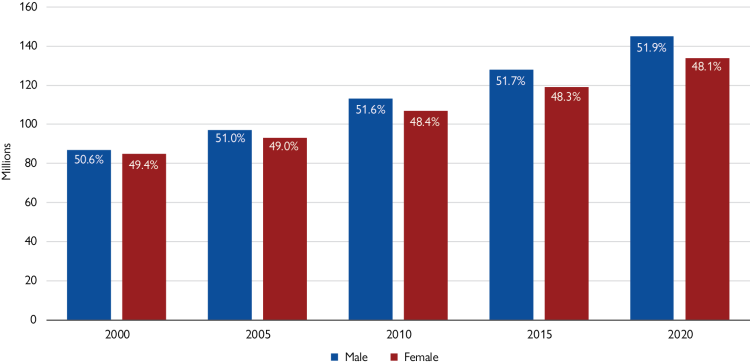
The substantial proportion of female migrants underscores the necessity of incorporating a gender perspective into migration studies. This approach is essential for understanding the unique challenges and experiences faced by migrant women, many of which are closely tied to gender-based inequalities. However, an assessment conducted by the Migration Governance Indicators (MGI) across 84 countries revealed that fewer than one in four countries (23 %) incorporate a gender perspective in their national migration strategies (IOM, n.d.-b). Neglecting the gender-specific needs of migrants not only limits their access to equal opportunities but also hinders their ability to fully contribute to host societies.
The inequalities and injustices faced by female migrants, particularly in comparison to male migrants, are critical issues that demand analysis through a social justice lens. The principle of inclusivity within social justice necessitates the implementation of policies that address the needs of all individuals, regardless of gender. Moreover, it is imperative to expand this analysis beyond binary frameworks to acknowledge the unique struggles of LGBTQ+ individuals. However, this study focuses specifically on one of the most vulnerable groups, female migrant workers, by analyzing their experiences from a social justice perspective.
Traditional migration studies in the literature classify migration into several distinct categories, including voluntary migration (for example, work, au pair programs, marriage, and professional training), forced migration (for example, due to political, religious, or ecological reasons, persecution of LGBTQ+ individuals, displacement caused by armed conflict or environmental crises, or forced prostitution), betterment migration (seeking improved living standards), expert or career migration (also referred to as elite migration), internal and international/intercontinental migration, as well as permanent, temporary, circular, and transnational migration (Lutz, 2019, p. 14). However, within these traditional studies, female migrants were largely neglected for many years, often perceived not as autonomous agents but as dependents or companions of male' guest workers'—such as wives, daughters, or caregivers—rather than as migrants in their own right (Lutz, 2019, p. 16).
Understanding the concept of gender is essential for analyzing the social injustices faced by migrant women. Gender, in its broadest sense, refers to a system of historically constructed patterns of unequal power relations between men and women, encompassing socially defined notions of masculinity and femininity (Connell, 2013). The term gender entered academic discourse with Ann Oakley's foundational research in 1972 (Holmes, 2007, p. 42). Additionally, Simone de Beauvoir played a crucial role in the development of gender studies through her influential work. Her famous statement, "One is not born, but rather becomes, a woman," emphasizes the idea that gender is not a biological condition but a socially constructed identity.
By the 1990s, Judith Butler, an American feminist philosopher and a prominent figure in queer theory, introduced transformative perspectives on gender analysis. In her seminal book Gender Trouble, Butler challenged the conventional distinction between sex and gender, asserting that sex, like gender, is a socially constructed concept. She replaced the deterministic notion that biology is destiny with the claim that culture is destiny (Butler, 1999).
A review of the literature on migration and women reveals that research focusing on women's experiences began to emerge in the late 1970s. This scholarly evolution can be traced back through three key stages. The first stage critiques the male-dominated perspective of migration studies, calling for the visibility of migrant women. The second stage investigates the specific roles, challenges, and experiences of women as migrants. The third stage explores feminist topics such as the construction of masculinity and femininity, the dynamics of privacy and publicness, and the power structures within gender relations. Poststructuralist, postcolonial, and queer theories were especially instrumental in expanding the literature on migration and gender (Nawyn, 2010, pp. 750-51).
In summary, migration research has undergone a significant transformation as scholars have increasingly examined the intersection of migration and gender, influenced by feminist theories on the social construction of gender. These theoretical developments marked a turning point in understanding how gender shapes migration at individual, household, and societal levels. They have also illuminated the ways in which gender identities, roles, and power relations influence migrant agencies, decision-making processes, migration patterns, and experiences throughout the migration cycle (IOM, n.d.-b). Since the late 20th century, particularly with the rise of feminist scholarship in the 1980s, the field of migration studies, once dominated by a male-centric lens, has evolved to incorporate gender as a core analytical framework (Lutz, 2019, p. 2). As a result, women are now recognized and studied as independent agents within migration research rather than solely in relation to their male counterparts (Lutz, 2019, p. 3).
Conceptualizing Women Migrant Workers in the Framework of Social Justice
Legal Framework for Women Migrant Workers
Women migrant workers face numerous systemic injustices, including economic exploitation, limited access to labor rights, and heightened vulnerability to abuse and discrimination— as extensively documented in field research on female migrant domestic workers, who report extreme overwork, confinement, and physical abuse—particularly in contexts where legal protections are weak or unenforced (Amnesty International, 2014; ILO, 2016). Recognized normative protections and rights for all workers, particularly those specific to women migrant workers, are essential for addressing these challenges and advancing social justice. International human rights laws and labor standards provide a critical framework to uphold these rights. Key instruments include the United Nations (UN) Convention on the Elimination of All Forms of Discrimination Against Women (CEDAW) and International Labour Organization (ILO) Conventions Nos 111, 189, and 190. These instruments play pivotal roles in ensuring decent working conditions, safeguarding against workplace harassment, and promoting gender equality in labor markets worldwide.
Adopted by the UN General Assembly on December 18, 1979, CEDAW is a landmark international treaty that establishes a comprehensive framework for eliminating gender-based discrimination and advancing women's rights globally (United Nations, 1979). CEDAW Article 11(1) affirms women's rights to work, equal employment opportunities, free choice of profession and vocational training, equal pay, social security benefits, and healthy and safe working conditions while also providing specific protections for reproductive health. Additionally, Article 11(2) outlines measures that must be taken to prevent discrimination against women on the grounds of marriage or maternity and to ensure their effective right to work (CEDAW, 1979).
Secondly, the ILO's foundational instrument on non-discrimination, the Convention Concerning Discrimination in Respect of Employment and Occupation, 1958 (No. 111)—which entered into force on 15 June 1960 and has been widely ratified by member states—establishes the framework for eliminating workplace inequalities on seven specified grounds, including sex. In many cases, its provisions are also extended to address discrimination based on migrant status by ratifying countries (ILO, 1958).
Moreover, two recent ILO conventions—No. 189 and No. 190—play a vital role in safeguarding the rights of women migrant workers. Adopted in 2011 and entering into force on 5 September 2013, the Convention Concerning Decent Work for Domestic Workers (No. 189) offers specific protections for domestic workers. It outlines fundamental rights and principles and obliges member states to implement measures aimed at ensuring decent work conditions for this group. As the first international convention to explicitly address the rights of domestic workers, Convention No. 189 serves as a critical instrument in advancing the rights of both female and male migrant workers. Its preamble explicitly acknowledges that domestic work remains undervalued and largely invisible, predominantly performed by women and girls—many of whom are migrants or members of marginalized communities—who face heightened risks of discrimination, exploitative working conditions, and other human rights abuses (ILO, 2011).
Adopted in 2019 and entering into force on 25 June 2021, the Convention Concerning the Elimination of Violence and Harassment in the World of Work (No. 190) establishes a comprehensive framework to prevent and address violence and harassment in professional settings. Recognizing such acts as violations of human rights and threats to equality, dignity, and decent work, the Convention emphasizes the creation of a work culture rooted in mutual respect and human dignity. It promotes an inclusive, integrated, and gender-responsive approach to tackling the root causes of violence and harassment, such as gender stereotypes, discrimination, and imbalanced power relations. Notably, it acknowledges the disproportionate impact of gender-based violence and harassment on women and girls and underscores the shared responsibility of governments, employers, and workers in fostering zero-tolerance environments. Although the Convention does not explicitly target migrant workers, its provisions are universal in scope, offering essential protections to vulnerable groups, including migrants, who are often exposed to elevated risks in precarious labor conditions (ILO, 2019).
Beyond these two conventions, several other international instruments further strengthen the rights of migrant workers (ILO, 2011). While this list focuses on key Conventions, it is worth noting that many are accompanied by Recommendations, which provide complementary guidance on implementation (ILO 1981; ILO, 1997).
- Migration for Employment Convention (Revised), 1949 (No. 97);
- Migrant Workers (Supplementary Provisions) Convention, 1975 (No. 143);
- Workers with Family Responsibilities Convention, 1981 (No. 156);
- Private Employment Agencies Convention, 1997 (No. 181);
- Employment Relationship Recommendation, 2006 (No. 198); and
- The ILO Multilateral Framework on Labour Migration: Non-binding Principles and Guidelines for a Rights-Based Approach to Labour Migration (2006).
Associated Recommendations:
- Workers with Family Responsibilities Recommendation, 1981 (No. 165)
- Private Employment Agencies Recommendation, 1997 (No. 188)
The Violence and Harassment Convention (2019) (No. 190) establishes a comprehensive framework to prevent and address violence and harassment in the world of work, recognizing these acts as human rights violations and threats to equality, dignity, and decent work. The Convention underscores the importance of fostering a work culture based on mutual respect and human dignity while advocating for an inclusive, integrated, and gender-responsive approach to tackle root causes such as gender stereotypes, discrimination, and unequal power dynamics. It acknowledges the disproportionate impact of gender-based violence and harassment on women and girls and highlights the shared responsibility of governments, employers, workers, and their organizations in fostering zero-tolerance environments.
Importantly, it is the first international binding treaty to address the effects of domestic violence on employment (ILO, 2019). While it does not explicitly target migrant workers, it refers to the UN's International Convention on the Protection of the Rights of All Migrant Workers and Members of Their Families, and Article 11 calls on ratifying states to ensure that violence and harassment in the world of work are addressed in relevant national policies, including those related to migration. In addition, the Convention's provisions are universal, offering crucial protections to all vulnerable groups, including migrants, who often face increased risks in precarious work settings. Its accompanying Recommendation No. 206 reinforces this inclusion, with Paragraph 10 stating, "Members should take legislative or other measures to protect migrant workers, particularly women migrant workers, regardless of migrant status, in origin, transit and destination countries as appropriate from violence and harassment in the world of work."
Ratification is the formal process by which a state accepts a convention as a legally binding instrument. In contrast, recommendations are not subject to ratification and instead provide non-binding but authoritative guidance. As with other international labor standards, Conventions No. 189 and 190 serve as foundational frameworks for the development of national laws and policies. Upon ratification, these conventions create binding international legal obligations for the ratifying states (ILO, n.d.-b). ILO's supervisory system monitors compliance by periodically reviewing whether ratifying countries are fully implementing the provisions to which they have committed. The significance of international labor conventions in promoting social justice for women migrant workers cannot be overstated. These Conventions, alongside human rights laws, soft-law labor standards, and other international instruments, serve as essential foundations for developing concrete, enforceable national laws and policies.
In addition to international labor conventions, various institutional initiatives and organizational frameworks also contribute to advancing social justice globally and enhancing its practical visibility. Among these, the recently established Global Coalition for Social Justice marks a significant milestone. Launched by ILO's Director-General Gilbert F. Houngbo and endorsed by the Organization in November 2023, the Global Coalition seeks to address poverty, inequality, and social tensions while fostering cohesive and productive societies. Rooted in the ILO's century-long foundational principles, the Global Coalition has received strong support from leaders across the world, including the UN Secretary-General (ILO, n.d.-a). The explicit use of the term "social justice" in its name, along with its inclusive vision, distinguishes it from other initiatives. The Advancing Social Justice Report (ILO, 2023, pp. 8-9) informs the Global Coalition's efforts by defining social justice in terms of human dignity, fairness, equality, and having a voice and the agency to shape one's own life. It also outlines the ILO's four key dimensions of social justice: universal human rights and capabilities, equal access to opportunities, fair distribution, and just transitions.
Beyond the Global Coalition for Social Justice, other significant institutional initiatives contribute to the visibility and impact of social justice. These include NGOs such as the Centre for Social Justice (Centre for Social Justice, n.d.) and UNESCO's Social Justice Chairs (UNESCO Chair for Comparative Research on Cultural Diversity and Social Justice, n.d.). Together, these initiatives work to define and operationalize social justice in meaningful and impactful ways from their respective perspectives.
In summary, the legal framework for protecting women migrant workers is grounded in a comprehensive array of international treaties, including CEDAW and ILO Conventions Nos. 111, 189, and 190, which provide essential protections for labor rights, workplace equality, and safety. Also, the Global Coalition for Social Justice and efforts by NGOs collectively strive to advance social justice on a global scale. Together, these frameworks establish a robust structure for addressing systemic injustices and promoting fair and equitable labor conditions for women migrant workers worldwide.
Barriers to Justice for Women Migrant Workers
Since the 1980s, research on international migration has highlighted the growing number of women migrating independently as workers. This trend gave rise to the concept of the feminization of migration, which gained prominence following the publication of a special issue on women in the International Migration Review in 1984 (Tittensor & Mansouri, 2017, p. 11). Alongside this, another significant concept emerged: the feminization of employment. Some scholars argue that the feminization of labor migration is a defining feature of contemporary global migration patterns (Piper, 2003, p. 726).
Women are often pushed into roles within gendered welfare states, driven by care crises, which frequently result in their concentration in lower-status jobs, such as domestic work or the sex industry (Piper, 2003, p. 726). This demonstrates how labor markets, shaped by gender norms, perpetuate discrimination by channeling women into specific types of work and denying them voice and agency. These patterns show that the concept of "feminization of migration" reflects not just a rise in numbers but structural gender inequalities within global labor markets.
In 2019, there were approximately 70 million female migrant workers, accounting for 41.5% of the total international migrant workforce. Despite this substantial figure, men continued to outnumber women among migrant workers, representing 58.5% of this labor group. These figures refer solely to international migrant workers, as reported by the International Labour Organization (ILO, 2021-a, pp. 21–22), and should be distinguished from broader migrant population data such as the IOM's 2024 report, which states that men accounted for 51.9% of all international migrants in 2020. The lower representation of women among international migrant workers can be attributed to two primary factors: (1) a smaller proportion of working-age women within the migrant population and (2) lower labor force participation rates among female migrants compared to their male counterparts. Many women migrate for family-related reasons rather than for work and encounter additional barriers such as gender discrimination, limited social networks, and challenges in balancing work and family life. These obstacles contribute to their lower participation rates in both migration and the labor market.
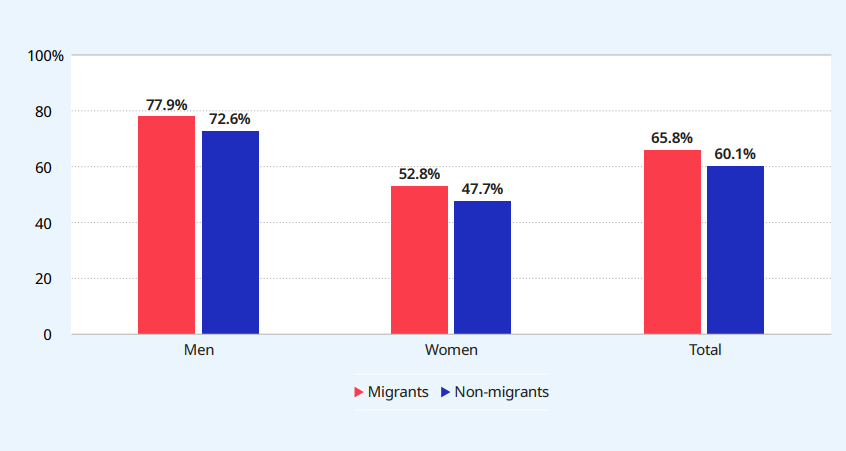
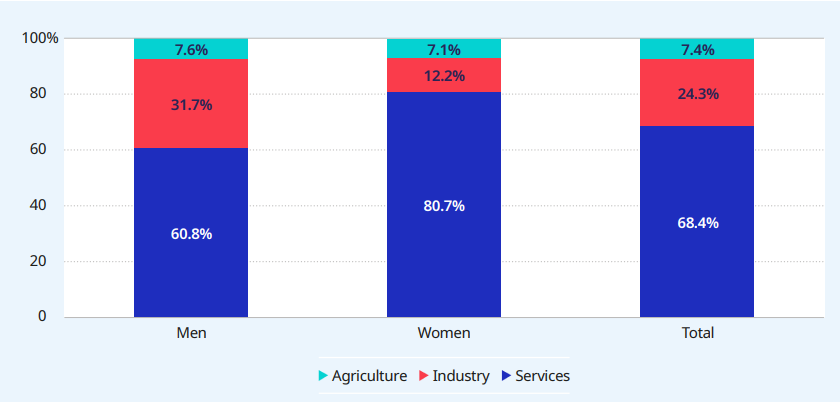
A common challenge for women migrant workers is their confinement to low-skilled, low-paid, and informal jobs, particularly in undervalued care services (Piper, 2003, p. 726). Globally, women constitute over 80% of the workforce in domestic and care work. While men also work in domestic roles, particularly as gardeners, drivers, security staff, or butlers, women dominate the field (Yılmaz & Ledwith, 2017, p. 11).
In the Global North, the increasing demand for domestic and care services is primarily met by low-cost, flexible female labor from economically struggling non-Western countries. Consequently, female migrant workers are heavily concentrated in these sectors. This trend referred as the maid trade (Carling, 2005; Yılmaz & Ledwith, 2017, p. 8), international division of reproductive labor (Parreñas, 2001, p. 561), global nanny chain (Hochschild, 2000, p. 33) or transnational political economy of care (Williams, 2012, p. 364; Gallo & Scrinzi, 2016, p. 1) exposes workers to gender-specific challenges, including limited access to information, social protection, and governance frameworks. These challenges further impede their ability to secure decent work and exercise labor rights.
They are especially vulnerable to exploitation, such as trafficking for sexual purposes, and are subjected to various abuses, including physical, psychological, and sexual violence, excessive working hours without fair compensation, and outright wage theft. For example, a recent survey of migrant women in Australia revealed that 51% had experienced workplace sexual harassment. However, fear of jeopardizing their immigration status or facing punitive actions deterred most of them from reporting these incidents (Herbert & Thorne, 2024). Moreover, restricted access to health and education services, coupled with family separation, profoundly affects their well-being and that of their children (UN Women, 2016, p. 10). Finally, the discrimination faced by female migrant workers in the domestic and care work sector often intersects with race and class, as white, middle-class professional women frequently delegate caregiving roles to migrant women from the Global South. (Dedeoglu, 2014, pp. 27–28).
The discrimination faced by migrant women workers is not limited to the domestic and care work sector. Other service sectors also employ a significant number of migrant women who encounter low job security, high flexibility, irregular employment, poor working conditions, low wages, and minimal social prestige (Dedeoglu, 2014, pp. 27–28). Another significant sector employing migrant women is manufacturing. Globalization has intensified competition among countries to provide corporations with the most affordable and compliant labor, driving substantial demand for female migrant workers (Oishi, 2005, p. 3). Additionally, international criminal networks have expanded the global sex industry, further increasing the demand for migrant women (Oishi, 2005, p. 4). This has created yet another sector where migrant women face numerous challenges, including violence, exploitation, and oppression.
As these examples illustrate, female migrants experience various forms of injustice in the labor market. Being largely confined to low-wage, insecure jobs and subjected to multiple forms of exploitation underscores the fact that social justice remains unachieved in this domain. To address these issues, inclusive and multidimensional policies are essential to ensure social justice for migrant women in the labor market.
For example, the theory of social justice advanced by Nancy Fraser (2003) provides a valuable framework for addressing these issues. Fraser's conceptualization of social justice emphasizes the intersection of economic inequalities, cultural hierarchies, and political underrepresentation. The injustices faced by migrant women are evident across all three dimensions outlined by Fraser. Her concept of distributive justice highlights how migrant women are often relegated to low-wage, insecure, and temporary jobs, depriving them of equitable access to economic opportunities. Similarly, her notion of recognition justice addresses the systemic disregard for the social status of migrant women, who are frequently marginalized based on their gender and ethnicity. These women are often classified as part of the lower class in societies dominated by white, middle-class men, rendering them invisible in both the labor market and broader social structures. Furthermore, Fraser's concept of political justice underscores the lack of political representation for migrant women, who are frequently excluded from platforms and decision-making spaces that could allow them to advocate for their rights. Political inequalities are also evident in their underrepresentation in trade union structures. In Asia and the Pacific, for example, women represent only 34.1% of trade union membership, significantly below the global average of 42.4%, illustrating the structural barriers that limit their political agency and collective bargaining power (ILO, 2021-b, p. xxiv).
Moreover, the four dimensions of social justice outlined in the ILO Director-General's 2023 report—universal human rights and capabilities, equal access to opportunities, fair distribution, and just transitions—can be meaningfully mapped onto Fraser's triadic model. For instance, fair distribution aligns with Fraser's distributive justice; equal access and capabilities intersect with both recognition and political justice, while just transitions speak to the institutional changes required to ensure full political inclusion.
In this context, Fraser's social justice framework serves as a critical tool for identifying the root causes of the multifaceted injustices faced by migrant women and for proposing pathways toward a more equitable and inclusive society. For example, the Swiss canton of Geneva has implemented a voucher system to regularize domestic work and extend social protection coverage to migrant women, even those with irregular status, thereby advancing distributive justice in practice. Similarly, regularization initiatives in Italy and a bi-national agreement between Paraguay and Argentina demonstrate how distributive and political justice can be pursued through inclusive labor policies (ILO, 2015, pp. 6–9).
Conclusions
Social justice, as a framework, offers critical insights into addressing the systemic barriers faced by female migrant workers. This article has illuminated the intersection of migration, gender, and labor through the lens of social justice, highlighting the economic, cultural, and political inequalities that perpetuate exclusion and marginalization. By emphasizing the disproportionate representation of female migrant workers in low-wage, insecure, and informal employment sectors, this study underscores the urgent need for inclusive policies and practices that promote fairness, dignity, and equity in global labor markets.
The analysis presented here advocates for a multidimensional approach to social justice that transcends economic redistribution to encompass cultural recognition and political inclusion. Such an approach is essential for dismantling the structural hierarchies that impede the social and economic empowerment of female migrant workers. Addressing these intersecting inequalities requires global and local frameworks that not only acknowledge but actively work to eliminate the discriminatory practices that act as structural barriers to justice—such as gendered labor segregation and exclusion from decision-making—and instead promote positive measures aligned with Fraser's model, including recognition of cultural identities, equitable distribution of labor protections, and enhanced political participation. Moreover, these frameworks must prioritize actionable measures, including robust legal protections, inclusive labor rights, and platforms for political representation, to ensure that female migrant workers are equipped with the tools necessary for meaningful participation in society.
This article also emphasizes the importance of integrating diverse perspectives into migration studies, particularly those of marginalized groups such as LGBTQ+ individuals, who often face compounded vulnerabilities. While this study has focused specifically on female migrant workers, adopting a broader lens that encompasses varied gender identities would enrich the discourse and contribute to more comprehensive solutions.
Ultimately, achieving social justice for female migrant workers requires sustained engagement and collaboration among policymakers, academics, and civil society, and crucially, with women migrant workers representatives themselves. By addressing the root causes of systemic injustices and implementing holistic strategies, it is possible to foster equitable opportunities and empower those most at risk of exclusion. This research calls for continued exploration of migration and social justice, with the hope of inspiring transformative change that upholds dignity, rights, and equity for all individuals, regardless of their sex, in the global labor markets.
References
Amnesty International. (2014). My sleep is my break: Exploitation of migrant domestic workers in Saudi Arabia. https://www.amnesty.org/en/documents/mde23/017/2014/en/
Barry, B. (1991). Liberty and justice: essays in political theory 2. Oxford University Press.
Beitz, C. R. (1979). Political theory and international relations. Princeton University Press.
Butler, J. (1999). Gender trouble. Routledge.
Connell, R. (2013). Gender and power: Society, the person and sexual politics. John Wiley & Sons.
Crisp, R. (Ed.). (2014). Nicomachean ethics (Aristotle) (2nd ed.). Cambridge University Press.
Centre for Social Justice. (n.d.). Homepage. Retrieved January 20, 2025. https://www.centreforsocialjustice.org.uk/
Dedeoglu, S. (2014). Migrants, work and social integration: Women's labour in the Turkish ethnic economy. Springer.
Fraser, N. (1989). Unruly Practices: Power, Discourse and Gender in Contemporary Social Theory. Polity Press, Oxford.
Fraser, N. (1997) Justice Interruptus: Critical Reflections on the 'Postsocialist' Condition. Routledge.
Fraser, N. (2000). Rethinking Recognition, New Left Review, no. 3 (MayJune), pp. 107- 20.
Fraser, N. (2003). 'Social Justice in the Age of Identity Politics: Redistribution, Recognition and Participation', in Redistribution or Recognition? A Political-Philosophical Exchange, eds N. Fraser & A. Honneth, New York: Verso, pp. 7-109.
Fraser, N. (2008). Scales of Justice: Reimagining Political Space in a Globalising World. Polity Press.
Gallo, E., & Scrinzi, F. (2016). Migration, masculinities and reproductive labour: Men of the home (pp. 1-321). Basingstoke: Palgrave Macmillan.
Hamilton-Jiang, S., von Hase, I., Stewart-Evans, M., & Achiume, E. T. (2022). Racially marginalized migrant women: Human rights abuses at the intersection of race, gender and migration [Policy brief]. UN Women. https://www.unwomen.org/sites/default/files/2022-11/Racially-marginalized-migrant-women-en_0.pdf
Harvey, D. (1973). Social justice and the city. University of Georgia press.
Herbert, B., & Thorne, L. (2024). Sexual harassment of migrant women rife in Australian workplaces, report finds. ABC News. https://www.abc.net.au/news/2024-11-14/migrant-women-face-sexual-harassment-at-work/104595724
Holmes, M. (2007). What is Gender? Sociological Approaches. Sage Publications.
Honneth, A. (1995). The struggle for recognition: The moral grammar of social conflicts (J. Anderson, Trans.). MIT Press. (Original work published 1992)
Hölscher, D. (2012). Considering Nancy Fraser's Notion of Social Justice for Social Work: Reflections on Misframing and the Lives of Refugees in South Africa. Ethics and Social Welfare, 8(1), 20–38. https://doi.org/10.1080/17496535.2012.744845
International Labour Organization. (ILO) (n.d.-b). Ratification of Convention No. 190. Retrieved January 20, 2025. https://c190guide.ilo.org/en/ratify-c190-chapters/chapter-8/
International Labour Organization (ILO). (1958). Convention concerning Discrimination in Respect of Employment and Occupation (No. 111). Adopted 25 June 1958, entered into force 15 June 1960. https://www.ilo.org/dyn/normlex/en/f?p=NORMLEXPUB:12100:0::NO::P12100_INSTRUMENT_ID:312256
International Labour Organization (ILO). (1981). Recommendation concerning Equal Opportunities and Equal Treatment for Men and Women Workers: Workers with Family Responsibilities (No. 165). https://normlex.ilo.org/dyn/nrmlx_en/f?p=NORMLEXPUB:12100:0::NO::P12100_ILO_CODE:R165
International Labour Organization (ILO). (1997). Recommendation concerning Private Employment Agencies (No. 188). https://www.ilo.org/dyn/normlex/en/f?p=NORMLEXPUB:12100:0::NO::P12100_INSTRUMENT_ID:312526
International Labour Organization (ILO). (2011). Convention concerning decent work for domestic workers (No. 189). Geneva: ILO. https://normlex.ilo.org/dyn/nrmlx_en/f?p=NORMLEXPUB:12100:0::NO::P12100_Ilo_Code:C189
International Labour Organization (ILO). (2015). Making decent work a reality for migrant domestic workers (Domestic Work Policy Brief No. 9). https://www.ilo.org/publications/making-decent-work-reality-migrant-domestic-workers
International Labour Organization (ILO). (2016). Women at work: Trends 2016. https://www.ilo.org/global/publications/books/WCMS_457317/lang--en/index.htm
International Labour Organization (ILO). (2019). Convention concerning the elimination of violence and harassment in the world of work (No. 190). Geneva: ILO. https://normlex.ilo.org/dyn/nrmlx_en/f?p=NORMLEXPUB:12100:0::NO::P12100_ILO_CODE:C190
International Labour Organization (ILO). (2021-a). ILO Global Estimates on International Migrant Workers Results and Methodology Third edition.
International Labour Organization (ILO). (2021-b). Organizing women migrant workers: Manual for trade unionists in ASEAN. ILO & UN Women.
International Labour Organization (ILO). (2022). Global Estimates on International Migrant Workers: International migrants in the labour force. https://www.ilo.org/sites/default/files/2024-12/MIGRANT%20%E2%80%93%20ILO%20Global%20Estimates%20Exec%20Summary_Embargo.pdf
International Labour Organization (ILO). (2023). Advancing social justice: Report of the Director General (Report I(A), 111th Session of the International Labour Conference, Geneva, 2023). Geneva: ILO. https://www.ilo.org/resource/conference-paper/ilc/111/advancing-social-justice
International Organization for Migration (IOM). (2024). World migration report 2024 (Publication No. PUB2023/047-L). International Organization for Migration. https://publications.iom.int/books/world-migration-report-2024.
Khechen, M. (2013). Social justice: Concepts, principles, tools and challenges. A publication of the United Nations economic and social Commission for West Asia; United Nations economic and social council.
Lee, E. (1966). A Theory of Migration. Demography, vol. 3, no. 1, pp. 47–57.
Lutz, H. (2019). Gender relations and migration: Introduction to the current state of the debate. (eds. Amelina, A. & Lutz, H.) In Gender and Migration - Transnational and Intersectional Prospects (pp. 1-25). Routledge.
Mursal, A., & Dong, W. (2022). Should Canada Pay for Refugee Healthcare? A Social Justice Analysis of the Interim Federal Health Program (IFHP). Journal of Immigrant & Refugee Studies, 22(4), 755-768. https://doi.org/10.1080/15562948.2022.2128492
Nawyn, S.J. (2010). Gender and Migration: Integrating Feminist Theory into Migration Studies. Sociology Compass, 4, 9, pp. 749–765.
Oakley, A. (1972). Sex, gender and society. Temple Smith.
Oishi, N. (2005). Women in motion: Globalization, State Policies, and Labor Migration in Asia. Stanford University Press.
Osmani, S. R. (2010). Theory of justice for an imperfect world: Exploring Amartya Sen's idea of justice. Journal of Human Development and Capabilities, 11(4), 599-607.
Piper, N. (2003). Feminization of Labor Migration as Violence Against Women: International, Regional, and Local Nongovernmental Organization Responses in Asia. Violence Against Women, 9(6), 723–745.
Pulido, J. S. (2022). Social justice as a moral and normative framework for social intervention with migrant citizens. Cadernos Brasileiros de Terapia Ocupacional, 30 (spe), e3066. https://doi.org/10.1590/2526-8910.ctoAR232230662
Rawls, J. (1971). A theory of justice. Harvard University Press.
Reeve, C. D. C. (2004). Plato: Republic. Hackett Classics, Indianapolis.
Sabbagh, C., & Schmitt, M. (2016). Past, Present, and Future of Social Justice Theory and Research. In: Sabbagh, C., Schmitt, M. (eds) Handbook of Social Justice Theory and Research, Springer, New York, NY. https://doi.org/10.1007/978-1-4939-3216-0_1 1-11
SDG Resource Centre. (n.d.) Retrieved February 16, 2025. https://sdgresources.relx.com/social-justice-0
Sen, A. (1980). Equality of what? In S. McMurrin (Ed.), The Tanner Lectures on Human Values, Vol. 1. https://tannerlectures.utah.edu/_resources/documents/a-to-z/s/sen80.pdf
Sen, A. (1985). Commodities and capabilities. Oxford University Press.
Sen, A. (2008). The İdea of Justice. Journal of human development, 9(3), 331-342.
Sen, A. (2014). Development as freedom 1999. In: The Globalization and Development Reader: Perspectives on development and global change, 525-548.
Taylor, C. (1994). Multiculturalism: Examining the politics of recognition (A. Gutmann, Ed.). Princeton University Press.
Thakur, S. C. (1996). The Idea of Justice in the Great Religions. In: Religion and Social Justice. Library of Philosophy and Religion. Palgrave Macmillan. https://doi.org/10.1057/9780230374447_4, 29-41.
Tittensor, D., Mansouri, F. (2017). The Feminisation of Migration? A Critical Overview. In: Tittensor, D., Mansouri, F. (eds) The Politics of Women and Migration in the Global South. Palgrave Macmillan. https://doi.org/10.1057/978-1-137-58799-2_2
UNESCO Chair for Comparative Research on Cultural Diversity and Social Justice. (n.d.). UNESCO Chair for Comparative Research on Cultural Diversity and Social Justice. Deakin University. Retrieved January 17, 2025. https://www.unesco-cdsj.com/
United Nations General Assembly. (1966). International Covenant on Civil and Political Rights. https://www.ohchr.org/en/instruments-mechanisms/instruments/international-covenant-civil-and-political-rights
United Nations General Assembly. (1966). International Covenant on Economic, Social and Cultural Rights. https://www.ohchr.org/en/instruments-mechanisms/instruments/international-covenant-economic-social-and-cultural-rights
UN Women. (2016). Women migrant workers' journey through the margins: labour, migration and trafficking. https://knowledge.unwomen.org/en/digital-library/publications/2017/2/women-migrant-workers-journey-through-the-margins
United Nations. (1979). Convention on the elimination of all forms of discrimination againstwomen. Retrieved January 20, 2025, from https://www.ohchr.org/en/instruments-mechanisms/instruments/convention-elimination-all-forms-discrimination-against-women
United Nations. (2006). The International Forum for Social Development: Social justice in an open world – The role of the United Nations. Department of Economic and Social Affairs. https://www.un.org/esa/socdev/documents/ifsd/SocialJustice.pdf
United Nations. (2015). Transforming our world: The 2030 agenda for sustainable development. https://sdgs.un.org/2030agenda
Walzer, M. (1983). Spheres of justice: A defense of pluralism and equality. Basic Books.
Yılmaz, G. & Ledwith, S. (2017). Migration and domestic work: the collective organization of women and their voices from the city. Springer.
Young, I. M. (2020). Justice and the Politics of Difference. In The New Social Theory Reader (pp. 261-269). Routledge.