

Artigos
Discussing with prospective teachers a didactic proposal on finan-cial education through problem solving
Discutindo com futuros professores uma proposta didática sobre Educação Financeira através da Resolução de Problemas
Discutiendo con futuros docentes una propuesta didáctica sobre Educación Financiera a través de la resolución de problemas

 Jarlyson César Silva Pereira jarlyson_cesar@hotmail.com
Maria Maroni Lopes ufrn00215@ufrn.edu.br
Letícia de Azevêdo Medeiros azevedoleticia-@hotmail.com
Revemop
Universidade Federal de Ouro Preto, Brasil
ISSN-e: 2596-0245
Periodicity: Frecuencia continua
vol. 7, 2025
Accepted: 22 May 2025
Published: 11 July 2025

Abstract: This study aimed to describe some of the contributions of a didactic sequence on financial education in teacher education, based on the problem solving methodology, seeking to develop in students a responsible management of their money and encouraging them to plan and expand their knowledge about finances. Thus, this text presents a qualitative study, employing as a methodology the application and analysis of the didactic sequence in the Supervised Practicum II and IV of a university. The results indicate that problem solving can be an ally in the process of discussing activities related to financial education. Regarding teacher education, it is understood that when a teaching degree student immerses themselves in an environment with activities on financial education, they tend to incorporate the topic into their teaching practice.
Keywords: Problem solving, Financial education, Teacher education.
Resumo: Este estudo objetivou descrever algumas das contribuições de uma Sequência Didática sobre Educação Financeira na formação docente, fundamentada a partir da metodologia da Resolução de Problemas, buscando desenvolver nos discentes uma gestão responsável do seu dinheiro e incentivando-os a planejar e ampliar o conhecimento sobre finanças. Assim, o presente texto trata de um estudo de natureza qualitativa, tendo como metodologia a aplicação e análise da Sequência Didática nas disciplinas de Estágio Supervisionado II e IV de uma universidade. Os resultados apontam que a resolução de problemas pode ser uma aliada no processo de discussão de atividades que tratam da Educação Financeira. No que tange a formação docente, compreende-se que quando o licenciando é imerso em ambiente com atividades sobre Educação Financeira, este tende a trabalhar a temática em sua prática docente.
Palavras-chave: Resolução de Problemas, Educação Financeira, Formação Docente.
Resumen: Esta investigación tuvo como objetivo describir algunos de los aportes de una Secuencia Didáctica sobre Educación Financiera en la formación docente, basada en la metodología Resolución de Problemas, buscando desarrollar en los estudiantes el manejo responsable de su dinero, incentivándolos a planificar y ampliar sus conocimientos sobre finanzas. Así, el presente texto aborda un estudio de carácter cualitativo, utilizando como metodología la aplicación y análisis de la Secuencia Didáctica en las disciplinas de Pasantía II y IV de una universidad. Los resultados indican que la resolución de problemas puede ser una gran alternativa en el proceso de discusión de actividades que abordan la educación financiera. En cuanto a la formación docente, se entende que cuando el estudiante se encuentra inmerso en un ambiente con actividades sobre educación financiera, tiende a trabajar el tema en sus actividades prácticas.
Palabras clave: Problem solving, Financial education, Teacher education.
1. Introduction
Money is significant in our lives because it provides us with access to consumer goods. Therefore, knowing how to manage it and being critical about its use is of great relevance for any citizen. In this direction, and with the understanding that school is one of the primary formative environments for young people, this research argues that teaching financial education (FE) can be a relevant means of helping them become responsible and aware adults. Therefore, we agree that:
Financial education in schools can be a valuable ally in helping young people develop a healthy financial life. From the moment the student comes into contact with FE, from the beginning of their academic life, it is clear that they will be better able to use their money consciously from their first salaries (ASSIS, 2020, p. 44).
It is likely that with more financial guidance, students will have a better chance of thriving financially by learning how to manage their spending and save for future needs. Therefore, encouraging the act of saving money and introducing the basic concepts of financial education from an early age in the school context is essential to help students achieve their most audacious goals, such as buying a house or a car and other goods that require a larger cash reserve over time, in addition to helping them deal with other kinds of financial situations. In other words, financial education enables individuals to develop a healthy relationship with money, manage their resources more rationally, and, consequently, avoid accumulating debts, thereby reducing the risk of becoming financially vulnerable (OLIVEIRA, 2021).
In this sense, financial mathematics should be introduced in basic education, as it provides the essential tools for financial education.
In this text, we assume that “Financial mathematics is a body of knowledge that studies the change in the value of money over time; to do so, it creates models that allow the evaluation and comparison of the value of money at different points in time” (PUCCINI, 2016, p. 11). Financial education involves understanding various financial products, enabling individuals to better organize their finances and achieve their desired goals.
Financial mathematics is present in everyday life, for example, when receiving a discount on a cash purchase, on the interest charged on a loan, or on an installment purchase. In these examples, the rebate and interest are usually represented as a percentage, which are some basic and essential concepts for people to use when managing their finances.
Now, when it comes to financial education, it is based on financial control, planning, and setting goals to be achieved. Furthermore, its purpose is to:
Work on an appropriate and healthy concept in relation to money, educating the individual so that they not only know how to distinguish and analyze credit options but also how to behave in the face of the stimulus to consumption to which they are subjected daily and develop the habit of organizing themselves financially, setting goals and objectives (SOUZA, 2012, p. 19).
According to the National Common Curriculum Base (BNCC), a document that defines the set of essential learnings of basic education, it is up to education systems and networks to incorporate into their curricula and pedagogical proposals the approach of contemporary themes that affect human life, preferably in a transversal and integrative way, among which is financial education (BRASIL, 2018). BNCC notes that the topic should be addressed from the beginning of middle school (K6) and continued until the conclusion of basic education (K12).
Based on these concepts, it is interesting to reflect on approaches to teaching financial education in the classroom. Thus, in this study, we understand that one of the methodologies to address this issue is problem solving, as it is possible to apply everyday situations to questions that students must solve using mathematical knowledge. Thus, it makes it possible to visualize the applicability of these contents since students often complain about not seeing the usefulness of mathematics in their daily lives.
In this direction, the present study proposes activities that aim to teach mathematics on the theme of financial education through problem solving. With this, we intend to address the following research question: What are the potential contributions that a didactic sequence on financial education, utilizing problem-solving approaches, can make to the education and teaching practices of mathematics students pursuing a teaching degree?
To answer this research question, the main objective of this study is to describe some of the contributions of a didactic sequence on financial education in teacher education, focusing on problem solving.
Based on the general objective, some specific objectives were defined in order to clarify some pertinent questions on the topic:
• Present the fundamentals of financial education and problem solving;
• Propose a didactic sequence on financial education;
• Apply the problem solving methodology to the teaching sequence, using real-life situations based on financial applications.
It is worth highlighting that this study was motivated by the fact that the main author of this work was interested in the topic and sought to educate more financially aware citizens, thus addressing the problem in his course completion work for the mathematics teaching degree at the Center of Higher Education of Seridó (CERES) of the Federal University of Rio Grande do Norte (UFRN), located in Caicó, Rio Grande do Norte, Brazil. Therefore, this article is an excerpt from this research.
In view of the above, this study will present some scenarios developed using the problem-solving methodology to address financial education. In these situations, financial mathematics content will also be covered, as it is the basis of monetary literacy. To this end, real-life situations based on financial applications will be used in the development of problems, and key concepts of financial mathematics will be introduced, enabling students to make informed choices about their finances.
In addition, the work will present the results and discussions about the application of the sequence of activities developed from these situations to the groups of prospective teachers that took the Supervised Practicum II and IV in the 2022.2 semester in the mathematics teaching degree course at UFRN/CERES – Caicó.
2. Theoretical Argumentation: A Look at Financial Education and Problem-Solving Methodology
This section provides a brief historical context of problem solving and discusses its mention by some official Brazilian documents, as well as the theoretical framework used, which includes assumptions about this methodology, financial education, and mathematical concepts necessary in and to approaching these themes.
From this perspective, it is initially worth highlighting that the study on problem solving has George Pólya (1944) as one of its leading scholars. Furthermore, this line of research began to gain relevance when he began working as a professor at Stanford University in the United States. Its methodology was recommended by the National Council of Teachers of Mathematics (NCTM) through the document Agenda for Action, which instructed that problem solving should become the focus of school mathematics in the 1980s. This occurred due to students’ low performance in mathematics when the predominant curriculum was based on the Modern Mathematics Movement.
The Agenda for Action was the starting point for the development of new documents focused on school mathematics in the United States (MORAIS and ONUCHIC, 2021). In this way, “These documents played a crucial role in the implementation, systematization, and dissemination of problem solving in the American school curriculum, with repercussions in curricula around the world” (MORAIS and ONUCHIC, 2021, p. 39).
These events influenced changes in the teaching of mathematics in Brazil and around the world, as highlighted in the National Curriculum Parameters for Elementary Education (PCN–EF), which emphasizes problem solving as a methodology in mathematics teaching, focusing on everyday situations and other subjects (BRASIL, 1998).
Furthermore, the PCN points to problem solving “as the starting point for the mathematical activity to be developed in the classroom” (BRASIL, 1998, p. 59). The National Common Curriculum Base highlights problem solving as one of the mathematical learning processes developing fundamental skills in mathematical literacy (BRASIL, 2018).
According to Severo (2022), Pólya bases the problem-solving method on four steps: understanding the problem, developing a plan, executing it, and, finally, looking back or conducting a retrospective. This perspective of Pólya became known as “teaching about problem solving”, but there are other conceptions of how to work using the fundamentals of problem solving: “teaching for problem solving” and “teaching through problem solving” (ALLEVATO and ONUCHIC, 2021).
Teaching for problem solving, according to Allevato and Onuchic (2021), emphasizes mathematics rather than problem solving; that is, problem solving becomes an accessory to mathematics. In “teaching through problem Solving”, “Mathematics and problem solving are considered simultaneously and are mutually and continuously constructed” (ALLEVATO and ONUCHIC, 2021, p. 47).
Therefore, “in this methodology, the problem is the starting point and guidance for learning new concepts and new mathematical content” (ALLEVATO and ONUCHIC, 2021, p. 53).
According to Severo (2022), the teaching approach involving problem solving proposed by researcher Lourdes de La Rosa Onuchic consists of ten stages formulated based on motivating problems, which are shown in Figure 1.
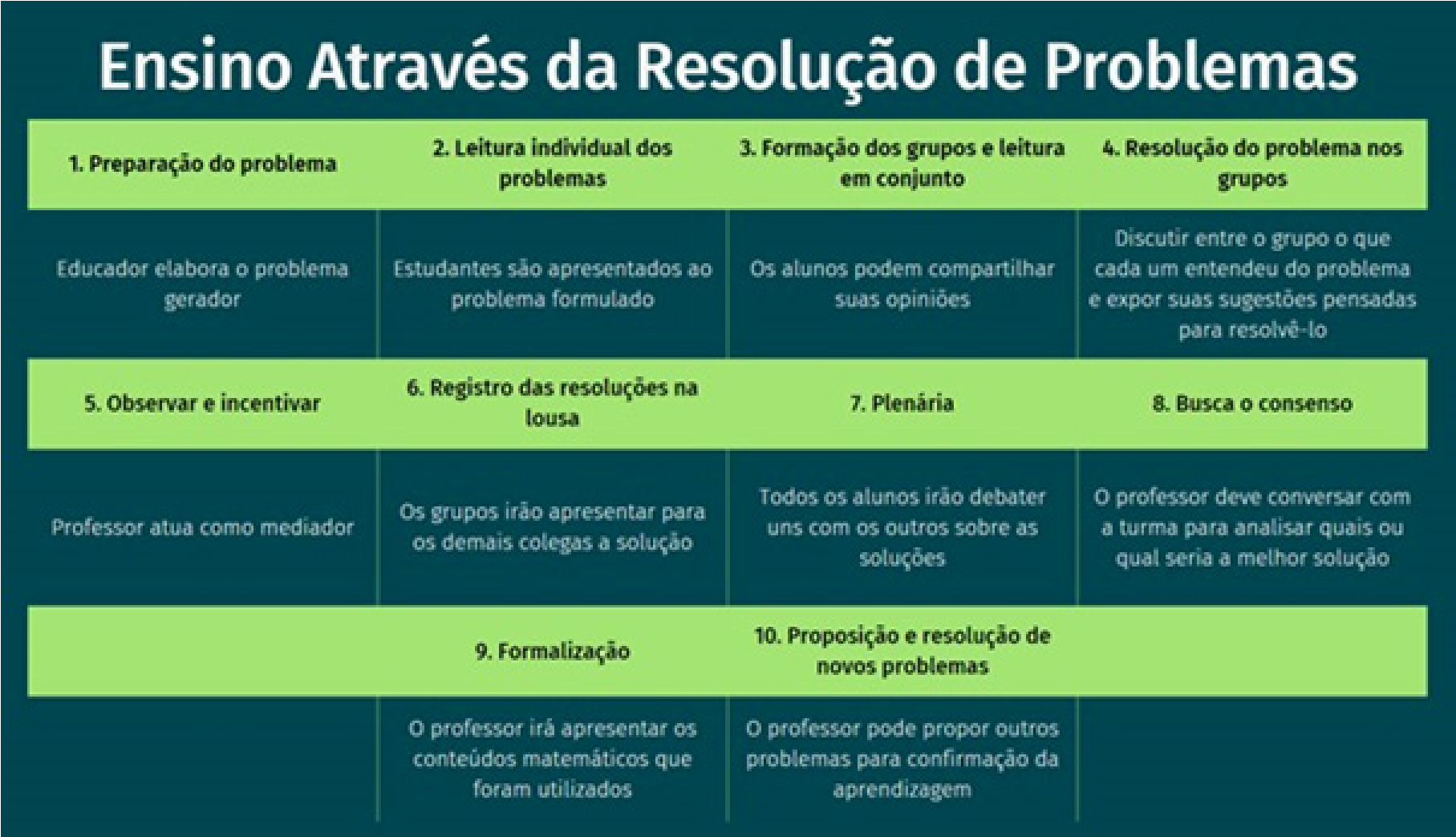
Teaching through problem solving enables students to think critically, debate, and solve problems. These characteristics are essential in financial education, as it is necessary to reflect on financial products, clarify customer doubts about what is offered, and decide on a course of action.
Aiming to approach financial education through problem solving, we admit that “Learning and applying practical knowledge of financial education can contribute to improving the management of our finances, making our lives more peaceful and balanced from a financial point of view” (BRASIL, 2013, p. 11).
From this perspective, Assis (2020, p. 40) says: “When the approach to financial education is more emphatic in the student’s academic life, from primary school onwards, we will have citizens who are more aware and confident in their financial decision-making.” Sodré (2018, p. 54) complements this discussion by stating that “studying financial mathematics content at school with a view to financial education is fundamental in the student’s education in order to enable them to make decisions that, as a whole, may have an economic impact on society.”
When comparing these understandings of financial education with reality, it is clear that society is far from being financially educated, which can be confirmed by the National Survey of Consumer Debt and Default (Pesquisa Nacional de Endividamento e Inadimplência do Consumidor–PEIC), conducted by the National Confederation of Commerce of Goods, Services and Tourism (Confederação Nacional do Comércio de Bens, Serviços e Turismo–CNC), published in April 2024. This research indicates that 78.5% of Brazilian families have outstanding debts, with 28.6% already in arrears and 12.1% unable to pay the bills that are due.
Furthermore, this research also makes it clear that many Brazilians resort to credit because they lack knowledge of effective financial planning and, as a consequence, end up getting into debt and paying interest. In fact, “The credit card had the largest share in the volume of debtors in the month, being used by 87.1% of the total number of debtors” (CNC, 2024, p. 3). Given this scenario, the need to work on the issue of family budget planning in society becomes evident.
Another important point of finances, and which justifies the importance of research like this, is that most Brazilians leave a good part of their money in savings accounts, which is considered one of the worst investments according to experts, because in savings accounts, the return on money is very low and, usually, does not keep up with inflation.
Currently, with the services offered through applications, it is possible to make more profitable investments quite easily and safely with low amounts. However, many people refrain from investing due to fear of losing all their money or because they feel they lack sufficient resources.
Another indication that most Brazilians lack financial knowledge can be seen in a survey launched by the Central Bank of Brazil,
[…] to measure the level of financial education and inclusion of the Brazilian population and, in this way, better understand the reality of the country to assist in the design of more effective public policies. The results showed that, in the knowledge dimension, errors occur due to a lack of knowledge of financial mathematics. In the behavioral dimension, the results show that most participants do not worry about creating a family budget, do not research the best rates when hiring financial services and products, and do not have the habit of saving, especially the highest income segment of the population (ASSIS, 2020, p. 41).
However, the lack of access to financial education is not a new phenomenon. In December 2010, Presidential Decree No. 7.397 formally established the National Strategy for Financial Education (Estratégia Nacional de Educação Financeira–ENEF). This decree also created the National Committee for Financial Education (Comitê Nacional de Educação Financeira–CONEF) to:
Promote and encourage a culture of financial education in the country. Expand citizens’ understanding so they can make informed choices about managing their resources. Contribute to the efficiency and solidity of the financial, capital, insurance, and pension fund markets (ENEF, 2010, p. 11).
As stated on the ENEF website, Decree 7.397/2010 was renewed by Decree 10.393 of 2020, allowing us to understand that financial education is a national concern, as improving the economic situation of the population is fundamental to the country’s development.
With the same intention as ENEF, BNCC also seeks to promote financial education in the school context; therefore, this topic must be included in the basic education curricula in a transversal manner. For elementary education, the BNCC emphasizes the importance of addressing specific objects of knowledge, such as percentages, to develop skills related to financial education as a transversal axis of teaching. In high school, skills development focuses on the study of functions within the context of financial mathematics.
Given the above, financial education is crucial for an individual’s development and is closely related to financial mathematics, as it provides the techniques and education necessary for a more informed analysis of financial situations.
In basic education (K1-K12), financial mathematics can encompass diverse content such as percentages, simple and compound interest, discounts, amortization systems, capitalization, and inflation, among others. However, “The mere presence of these contents does not imply that financial education is being contemplated” (SOUZA, 2012, p. 28). It is necessary to educate so that individuals can make “financial decisions in everyday situations and use math during the process” (ASSIS, 2020, p. 42).
Corroborating this discussion, when talking about the inclusion of financial education in the school environment, Sodré (2018, p. 56) states that “it can help students build the profile of future financially educated citizens, capable of dealing with the challenges arising from a constantly changing financial scenario.” The author also adds that “teaching financial education at school must make sense to students so that they learn mathematical concepts and know how to apply this knowledge in everyday situations they experience” (SODRÉ, 2018, p. 56).
Based on these discussions, the sequence of activities presented in this work will focus on two types of financial products: the first, credit-related products, and the other, investments. When faced with financial products, students will learn about Treasuries (Tesouro Direto), bank deposit certificates (CDB), real estate credit letters (LCI), agribusiness credit letters (LCA), company shares, SELIC rates, income tax, interest, and profitability, among others.
Given the above, when working on financial education through problem solving with real-life financial products, students will be more familiar with terms from the area of finance, will learn about financial mathematics, and will know how to question in purchasing situations, for example, what is being offered and will make good decisions about their finances.
3. Research Methodology
This study comprises a qualitative research approach. This type of approach, according to Garnica (2001), is characterized by a fluid and dynamic environment that lacks pre-established rules and predetermined outcomes. In other words, “It is research that interacts and, by interacting, changes itself. It is a change that goes deep into the fabric of doing and is formed in action. Being incessantly constructed and deepened [...]” (GARNICA, 2001, p. 42).
Furthermore, this is exploratory and bibliographical research. The purpose of exploratory research is to “Provide greater familiarity with the problem, to make it more explicit or constructing hypotheses. We can say that these studies have as their main objective the refinement of ideas or the discovery of insights” (GIL, 2002, p. 41).
Thus, this study is characterized as exploratory because it aims to expose a problem, namely the need to form more financially aware citizens, and present hypotheses on how educational training can help address this issue, pointing to the problem-solving methodology as a potential approach to financial education with students. It is also bibliographically supported, as articles, books, and master’s dissertations related to the topic were consulted to substantiate the text.
In this sense, we developed a sequence of activities to present to prospective teachers, specifically those who will work in basic education, demonstrating ways of incorporating financial education through the problem-solving approach. The first author of this work proposed the activities that were later applied in the Supervised Practicum II and IV classes during the 2022.2 academic semester of the mathematics teaching degree course at the Federal University of Rio Grande do Norte (UFRN), Caicó Campus.
Each student was given a copy of the activity book and asked to solve it. Students followed the steps presented in Figure 1. After the author planned, developed, and produced the activity booklet, he handed it to the students. The students then read the problems individually and organized themselves into pairs to reread them.
While they were solving the problems, the first author observed the class and guided them regarding any doubts that arose during the resolution. The solutions were recorded in the activity notebook itself, and after completion, it was opened for discussion among the students, where they pointed out the greatest difficulties. Finally, the expected solutions to the problems in question were presented.
Thus, it was possible to enrich the Practicum lessons by discussing an interesting subject relevant to prospective teachers’ education, which also allowed them to contribute to the research. They demonstrated an understanding of the proposed block of activities and, through discussions, collaborated to improve these activities. The students had the opportunity to make suggestions and offer criticisms, generating debates that contributed to both their education and the development of this work.
4. Didactic Sequence on Financial Education Based on Problem Solving
Next, the didactic sequence proposed to teach mathematics content in the context of financial education will be presented. Zabala (1998, p. 18) understands a didactic sequence as “a set of ordered, structured, and articulated activities to achieve specific educational objectives.”
In that case, two blocks of activities with problem-solving as their theoretical-methodological foundation were developed. Each block consists of three questions, with the first focusing more on planning situations and interest in credit operations, while the second addresses problems related to investments and profitability.
4.1. First block of activities
Activity 1.1 aims to discuss issues related to financial planning based on the budgetary issues of a family that earns, on average, a minimum wage. Furthermore, this activity, in its first part, aims to prepare students to plan their use of money and to observe whether the group tends to spend more or is more economical.
Activity 1.1: A budget is a financial planning tool that helps you visualize and organize your money movements. To do this, you must write down all your income, expenses, and investments. So, taking the 2022 minimum wage (R$1,212.00) as a basis, prepare a budget planning how to use this money. After that, determine how much will be spent on each group of expenses, such as food, housing, education, health, leisure, debts and interest, travel, investments, as well as realizing dreams or other miscellaneous expenses. Finally, represent each group of expenses in percentage form to show how much they account for in your budget.
In the second stage (Activity 1.2), it will be necessary to categorize expenses and calculate their percentages. Additionally, the teacher can address the study of graphs and use a spreadsheet program to develop these approaches.
Activity 1.2: In Activity 1.1, you made a budget. During the month, an emergency arose, resulting in an expense of R$200.00 that was not included in the initial budget. To cover this expense, you used a line of credit, in this case, an overdraft. Therefore, create your financial plan for the following month based on your previous planning and the bank’s information regarding the overdraft, as shown in Figure 2. Please note that an interest charge will be applied to this credit transaction. Calculate the amount to be paid to the bank after 30 days and include this expense in your budget. After that, represent it in percentage form and observe how each group of expenses should be affected.
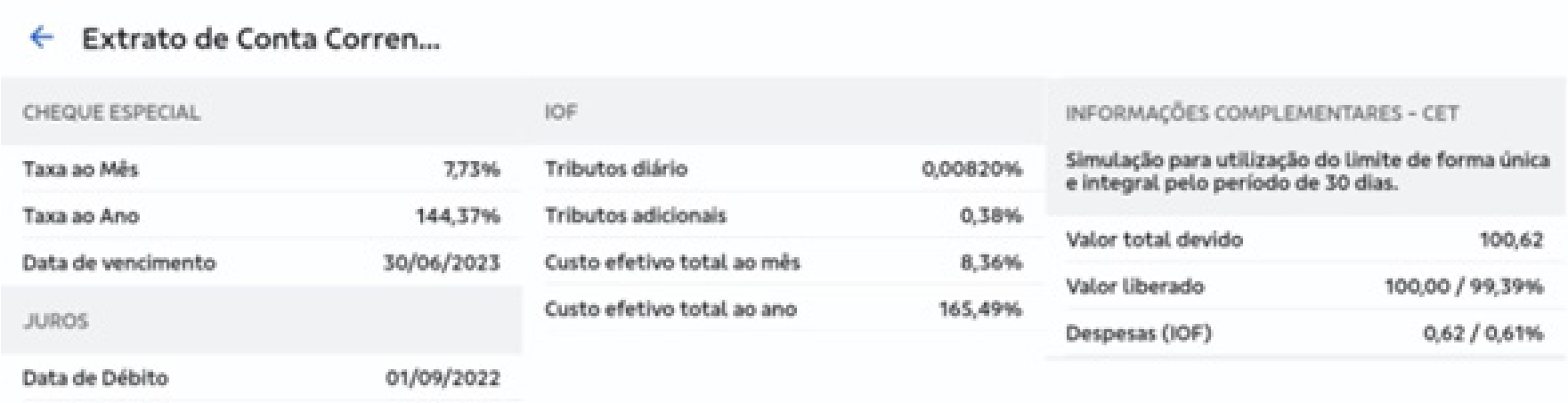
The purpose of this activity is to demonstrate that when an unforeseen event arises and credit is used to meet this demand, it will result in adjustments to the budget and may compromise financial planning. Therefore, this credit operation (the overdraft) must be included in the following month’s budget, which will prompt students to revise their plans and calculate the interest on the operation.
Furthermore, the activity teaches students how to interpret banking information regarding overdrafts, including interest, taxes, and the total effective cost. This information is also present in other credit options, so it is essential to understand how they work.
In activity 1.3, the purpose of the question is to explain how the credit card revolving credit works and to work on different situations involving the amount paid on the invoice and the interest.
Activity 1.3: Credit is an additional source of resources that come from third parties to anticipate the consumption of goods or services. There are several types of credit, including overdraft limits, credit cards, loans, real estate financing, and vehicle financing, among others. A widely used source of funds is the credit card. In this modality, if the customer pays the full bill on the due date, there is no interest payment, but if they pay part of the bill amount, starting from the minimum, the customer will automatically enter the card’s revolving credit, that is, the remaining amount will be included in the next bill plus interest. Revolving interest varies; however, in this case, an interest rate of 15% per month will be used. Therefore, consider an invoice of R$1,000.00 with a minimum payment of R$200.00. Based on this information, simulate how much will be charged on the next invoice if you pay the minimum amount, R$500.00 and R$800.00.
The aim is for students to understand that if it is not possible to pay the total bill, the remaining amount will be increased by interest and will be included in the following month’s bill. This teaching aims to help students understand that paying the minimum is not the best choice.
4.2. Second block of activities
The second block addresses issues involving CDB, as it is an investment that is simpler to understand and presents an excellent alternative for studying interest and income tax in the context of this type of investment. Furthermore, investing requires planning, and using it to achieve one’s goals is crucial for maintaining good financial health. Here is the first activity of this stage:
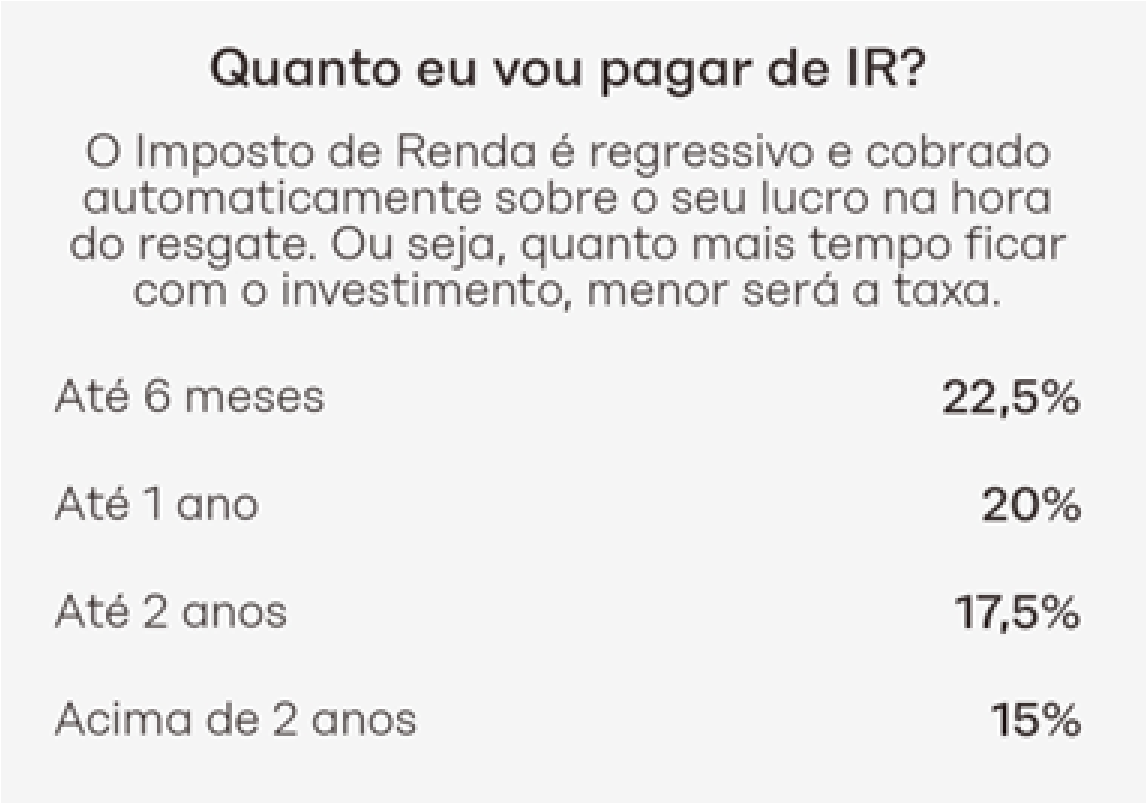
Activity 2.1: Income tax is present in several investments; in CDB, it is applied as illustrated in Figure 3:
A young woman decided to invest, but when analyzing the options, she was in doubt between two CDBs, as shown in Figure 4:
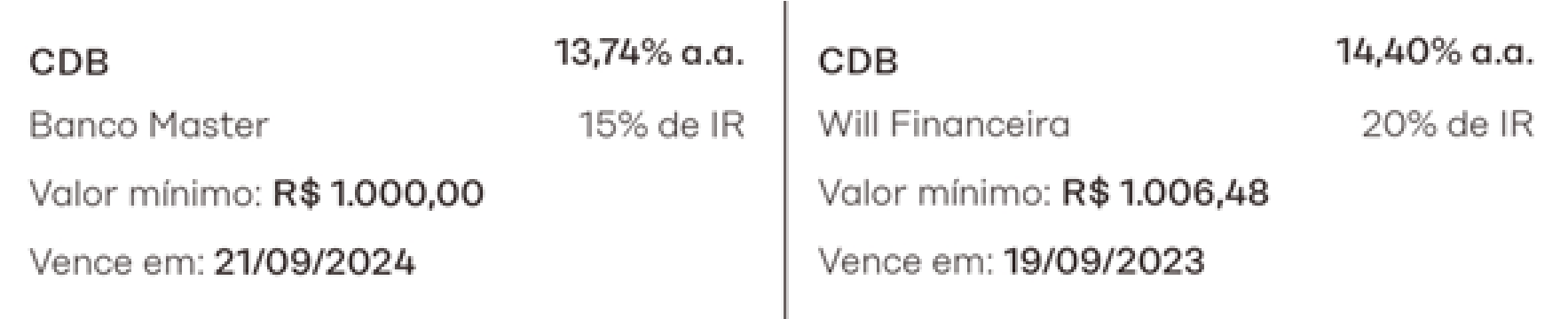
Based on this information, which of the two investments would be the best option for the young woman?
This activity works with simple and compound interest when analyzing CDBs and income tax discounts. Furthermore, students must check which is the best investment under equivalent time conditions. Next, in Activity 2.2, students must find the monthly yield of the CDI rate using exponential and logarithmic relationships. After that, they must perform the temporal calculations of the monthly installments, applying compound interest. This way, students will realize that making the best choices helps them achieve their goals in less time.
Activity 2.2: A young man, while studying finances, saw that it is very important to create a financial reserve equivalent to six times his monthly expenses and daily liquidity. This resource is essential to overcome any financial crisis. With these requirements, he saw that the simplest options are savings and remunerated digital accounts, such as Nubank and PicPay, among others. The yield on savings accounts is approximately 0.5% per month, and they are exempt from income tax. Digital accounts typically yield 100% of Interbank Deposit Certificates (Certificados de Depósitos Interbancários–CDI), which is based on the Selic rate. Taking into account that the CDI was at 13.65% per year, and in this investment, income tax is discounted according to Figure 3 (for simplicity, consider a 20% discount). Consider that the monthly expense is R$1,000.00 and that he can save R$200.00 per month. With this information, project how long it would take to save R$6,000.00. (Tip: Use spreadsheet software).
It is worth noting that CDIs are securities that function as very short-term loans made between financial institutions to balance their cash flow. As a result, the rates charged guide the credit market. Applications in some digital banks, for example, can yield 100% of the CDI daily (Reis, 2021).
Finally, Activity 2.3 addresses a very common practice, financing, as illustrated below.
Activity 2.3: A person is planning to buy a motorcycle, so he or she decides to analyze the possibilities to make the purchase of the vehicle viable. The manufacturer’s website displays a cash sale value of R$19,911.00 and a financing simulation with a down payment of R$3,983.00 and 36 installments of R$734.00, featuring a rate of 2.39% per month. The person noted that in the investment broker’s app, there was a CDB with a minimum value of R$1,000.00, yielding 13.52% per year with a maturity of 36 months and a 15% income tax discount on the yield. In the digital bank app, the money in the account yields 100% of the CDI, a rate based on the Selic, which was at 13.65% and offers daily liquidity. Be aware that the Selic rate may change according to COPOM (the Monetary Policy Committee), and take advantage of the 20% income tax discount on your income. Develop a strategy for purchasing this vehicle based on the provided information. (Tip: Use spreadsheet software).
In this case, students could compare the final value if they choose financing with the option of investing the money that would be the downpayment and installments. With this approach, one can notice that it is possible to acquire the vehicle in a much shorter time and pay in cash, as long as one plans and invests the money instead of financing it.
5. Data analysis
On October 17th and 18th, 2022, the didactic sequence presented in this work was presented to the Supervised Practicum II and IV classes of the mathematics teaching degree course at the Federal University of Rio Grande do Norte, Caicó campus. The objective of this presentation was to evaluate, together with prospective teachers, the proposed activities, reflecting on some questions: How could they be improved? How would the skills and competencies that can be developed through this proposal be addressed in basic education? Furthermore, we sought to carry out reflections based on the performance of the undergraduates themselves.
The teaching sequence in the first block begins with a budget. Figures 5 and 6 show examples of budgets students presented in Activity 1.1.
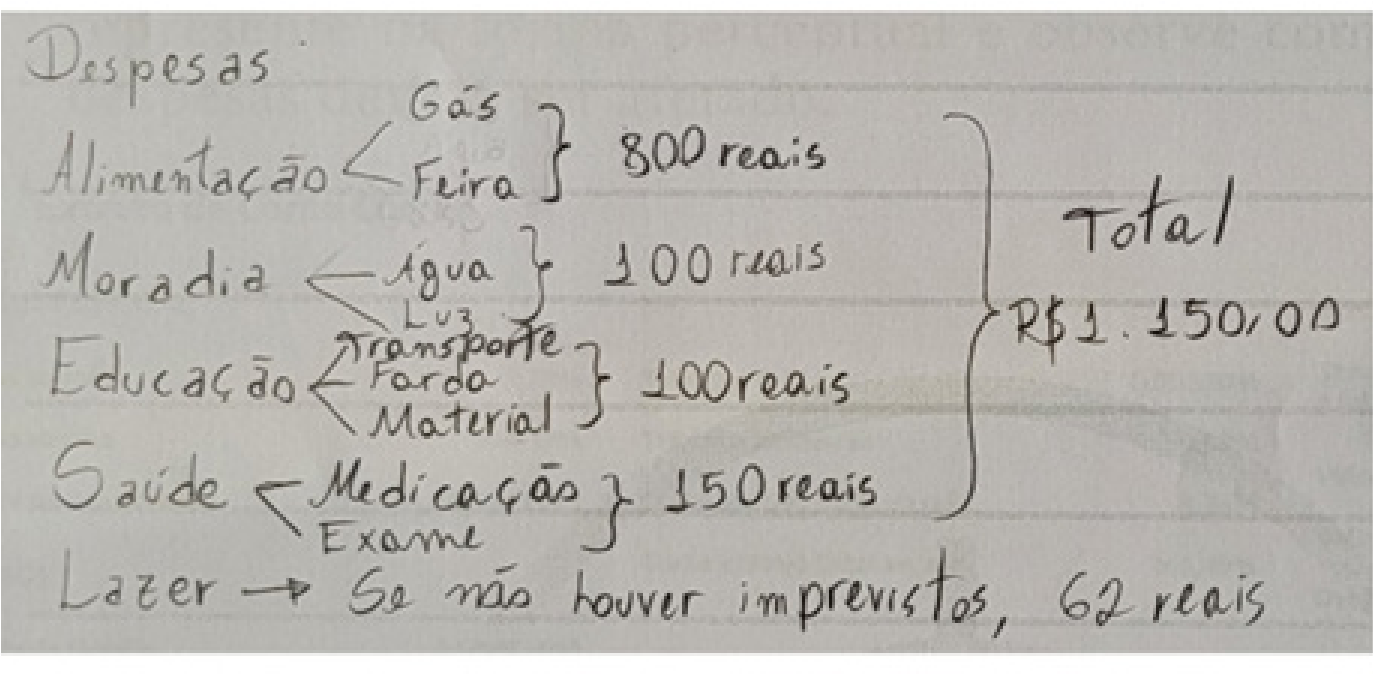
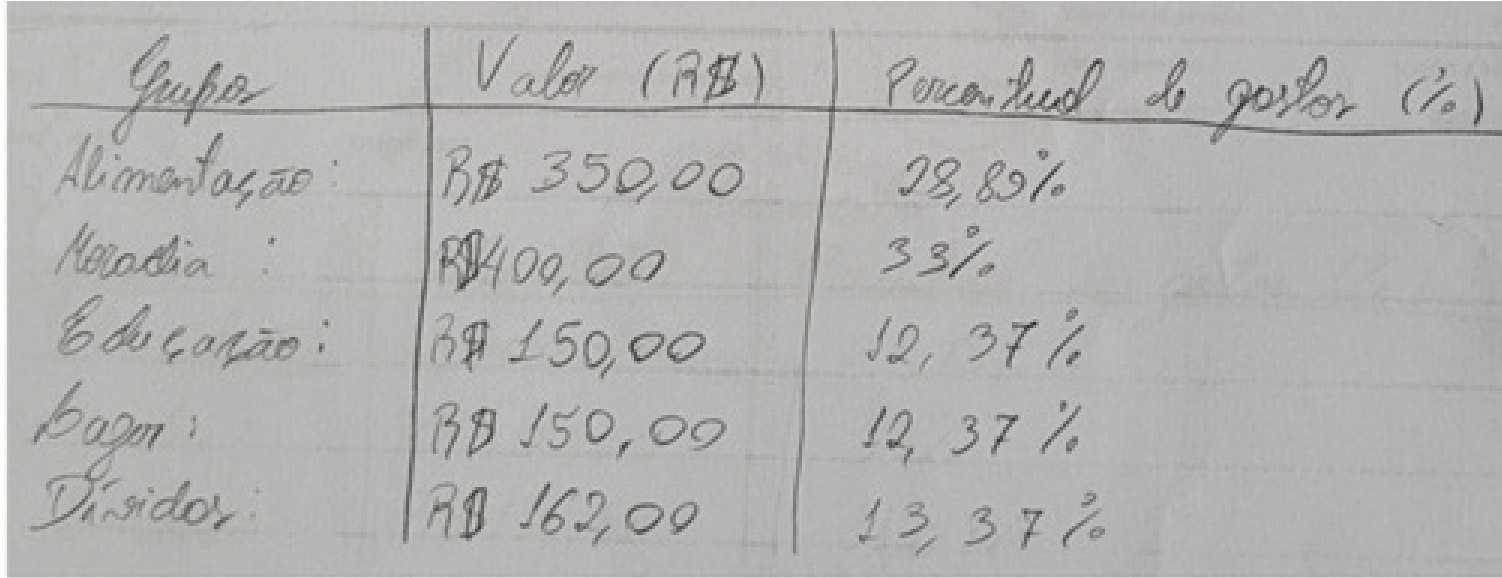
In most budgets, as shown in the previous figures, food and housing expenses accounted for a significant portion of the income, which is expected since they are among the essential expenses. Other spending categories were also present in several budgets, including health, leisure, and education; however, they had a lesser impact on finances. In budgets that included a debt category, it was typically filled with the excess of other expenses, meaning that they would be paid whenever there was a surplus of money.
In some budgets, there was a surplus of money, meaning that it could be applied to achieve a personal goal. In the others, all the money had been spent, which would put them in a risky situation, as any unforeseen event would compromise future finances and lead them into debt.
The budget, in the problem-solving methodology, represents the group’s vision of what was being requested in the activity. Note that there are several budget options, and no choice is right or wrong; it will depend on the group’s profile and objectives. However, it is possible to make some improvements. To this end, the stages of presenting resolutions on the board, in plenary, and through consensus are fundamental to promoting debate among students and providing meaningful learning experiences.
Activity 1.2 aimed to establish contact between students and banking information, which they would use to solve the proposed problem involving a debt of R$200.00 on an overdraft that needed to be paid the following month. Figure 7 shows a comparison of the budget for Activity 1.1 with that of activity 1.2.
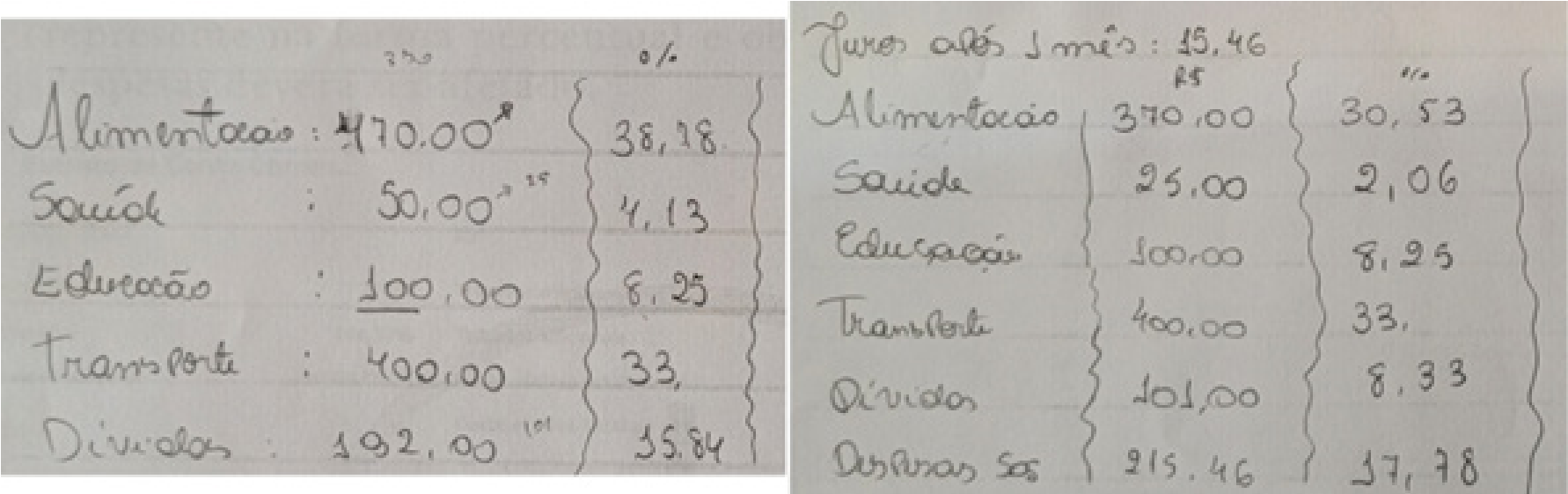
Most of the activities analyzed made a common mistake in their calculations, namely, failing to consider the IOF taxes related to overdrafting. Many people make this mistake in real life, failing to accurately calculate their overdraft debt and ending up with a debt that is slightly larger than expected. Some simply stated that it would not be necessary to use an overdraft or estimated a value without making the necessary calculations. Additionally, this activity placed students in a situation where they had to replan their budgets and observe how this affected their initial planning.
The data provided in the activity had the following information: total effective cost per month. This report can be calculated by adding the monthly rate of 7.73% to the additional taxes of 0.38% and the equivalent of the daily taxes of 0.0082% relating to time. Therefore, the effective cost per month would be 8.36%. This can be addressed during the study of compound interest.
When observing that taxes were neglected during the solution of Activity 1.2, it is possible to appreciate once again the importance of the stages of the problem-solving methodology, as the process requires students to engage in both individual and group reading. In the resolution, they must develop the problem as they understand it. In the following stages, which consist of presenting and debating the resolutions, the teacher should make notes regarding the taxes and then formalize by showing the mathematical content involved.
Activity 1.3 aimed to work on credit card revolving credit, as it is one of the resources most commonly used by people and the primary source of debt. A solution to this issue can be seen in Figure 8. Students should realize that the greater the amount that would be invested in the revolving credit, the greater the interest that would have to be paid later; in other words, this interest would compromise part of their income the following month.
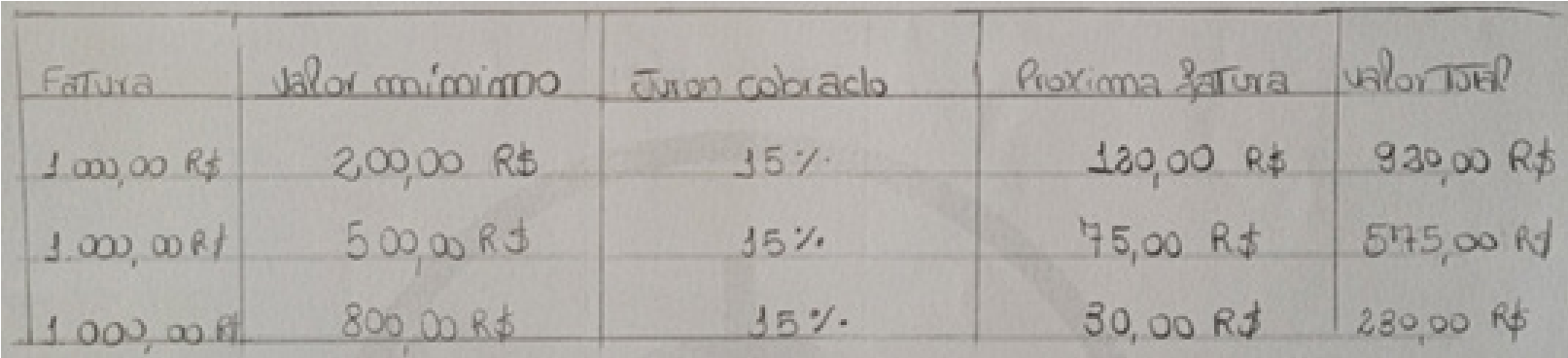
In this activity, students did not have great difficulty in understanding and solving the problem. The mathematical content with the greatest emphasis was simple interest, but inserted in a financial context that affects many people, according to research by the National Confederation of Commerce, Industry, Services, and Tourism (CNC).
In Activity 2.1, two investment possibilities in CDB were presented, with different rates and periods, so that students had to calculate which investment would be more advantageous. First, the same amount should be applied to both CDBs. Then, the total amount should be calculated from this amount without discounts, after which income tax would be applied, and finally, the annual income would be calculated. The solutions presented by the students contain some mistakes, as can be seen in Figure 9:
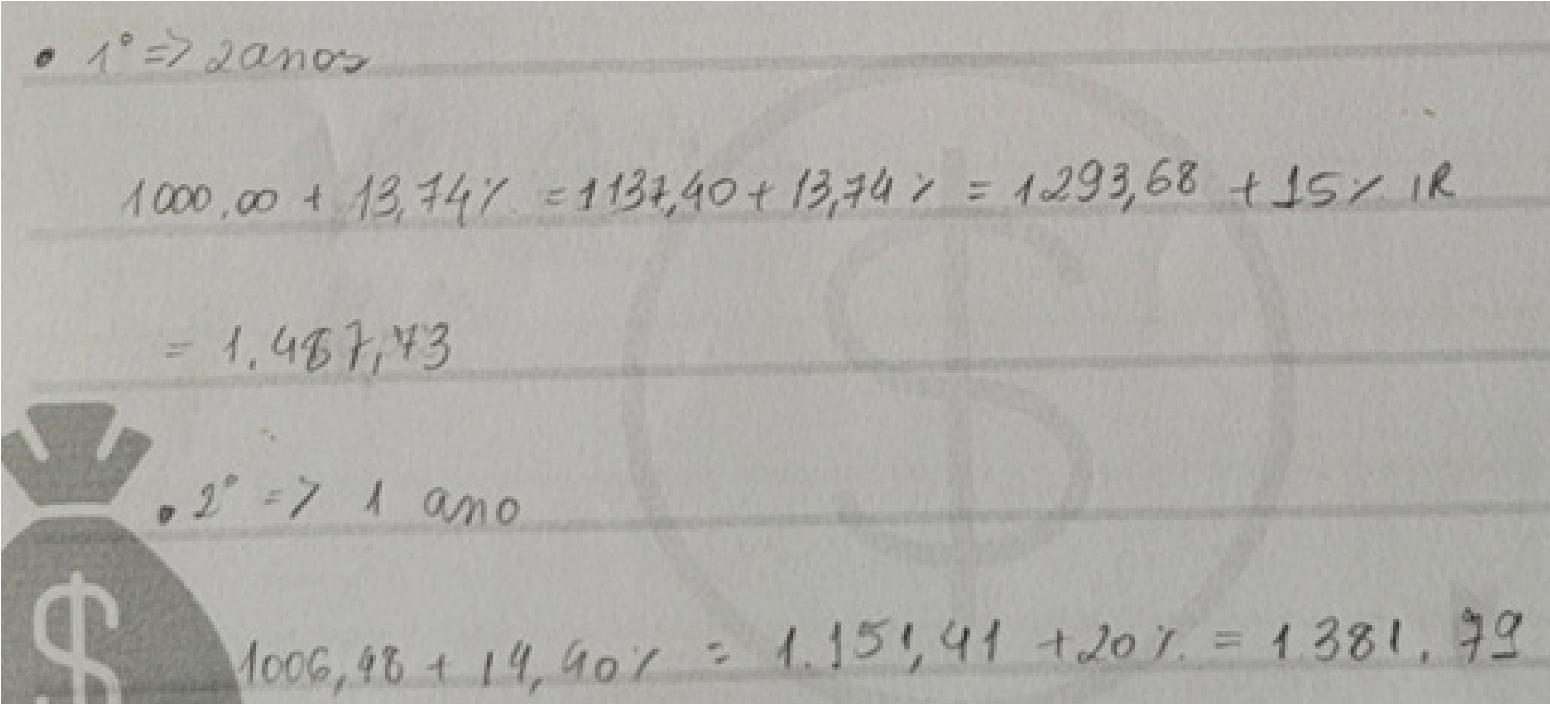
In the previous figure, neither student subtracted the percentage corresponding to income tax that should be calculated from what the invested capital yielded, that is, from the interest. Instead, they added the percentage as if they were adding the value from the total amount.
Given these situations, it is worth highlighting the relevance of the stages of the problem-solving teaching trend because, in this case, where there was a lack of understanding on the part of the readers, the teacher could intervene to ensure they understood the problem correctly and discuss the mistakes made.
Unfortunately, the other two activities were not answered, as they required more time, which is why the use of electronic spreadsheets to develop the calculations was recommended. In Activity 2.2, there were two situations: the first involved monthly investments of R$200.00 in savings, and the other involved the same amount of monthly investments, however, in digital accounts. For this, the monthly income of the digital accounts would need to be calculated, and income tax would be discounted at the end of the period.
The last activity in block two is about developing a strategy for purchasing a motorcycle. It presents a financing simulation, with the expectation that the financing conditions would be transformed into an investment strategy. Initially, students would have to apply the downpayment amount to a CDB with a maturity of 36 months, the same period as the financing. Then, the installment amounts would have to be applied to a remunerated digital account. The teacher could point out that there is a possibility of improving this situation, for which the student would have to find more profitable investments with a maturity period of less than 36 months to apply the amounts of the financing installments.
After analyzing the teaching sequence applied to students in Supervised Practicum II and IV classes, it was possible to gain some insights into the financial understanding of this group. Students know how to solve questions involving percentages and interest in more common situations, but when they enter into situations involving investments, taxes, and income tax, some difficulties arise, such as: How does one convert annual interest to monthly interest? How does income tax deduction work? How are taxes charged on credit transactions?
Another important point was the lack of knowledge about spreadsheets, as they are essential tools in and for financial calculations.
6. Final considerations
Having a healthy financial life requires a lot of control and planning, but this is not the case for most people, which is confirmed by the National Consumer Debt and Default Survey [Pesquisa Nacional de Endividamento e Inadimplência do Consumidor], which states that more than 78% of Brazilian families are in debt (CNC, 2024). Furthermore, few people have the habit of investing and making their money work for them.
Based on these two issues, the following question was asked: What are the possible contributions that a didactic sequence on financial education using problem solving can make to the education and teaching practice of mathematics undergraduates?
To answer this question, it was necessary to carry out a more in-depth study on financial education and the problem-solving methodology. In view of this, the present work aimed to develop a planned teaching sequence incorporating financial applications for use in the classroom. The sequence addresses financial education by focusing on financial mathematics through problem solving.
Problem-solving methodology applied to financial education enables students to expand their knowledge in real-world situations, such as loans, credit card interest, investments, and other financial products. In this sense, financial education is linked to the process of inserting individuals into society, providing them with competencies and knowledge that help them to consciously use the available financial resources (SOUZA, 2012).
Through the application of the didactic sequence with students from the Practicum II and IV classes of the mathematics teaching degree course at UFRN, we assessed the financial literacy of these students based on the knowledge acquired during basic and higher education, as well as in life.
Thus, given the activities delivered, we noted that students were intrigued by and engaged with the methodology used, particularly in clarifying doubts about how income tax deductions worked in matters involving investments. The teacher’s role in this case would be that of a mediator, clarifying any doubts that arise, which places the student at the center of the teaching and learning process. To achieve this, the teacher must be prepared and seek quality continuing education.
It is worth highlighting that the steps presented by the teaching methodology through problem solving proved to be necessary. This process begins with the elaboration of the problem, followed by the individual and group reading stages, in which students develop their understanding of the problem and solve it as they comprehend it. Furthermore, the resolution stages on the board, plenary, and consensus make the teaching process more democratic since everyone can participate and, therefore, generate debates about the resolutions. Finally, the teacher must formalize the content, presenting the relevant information, as well as formalize the solution if necessary.
As previously explained, the problem-solving methodology can be a valuable alternative for the teaching and learning process of financial education, as it enables teachers to address issues related to planning, credit operations, and investments, referencing the content that should be taught to students. Furthermore, it provokes curiosity in students and, consequently, motivates them to seek knowledge in order to solve the problems they have been challenged with.
Another important point to highlight is the development of activities in the Supervised Practicum II and IV classes. We understand that prospective teachers need to experience activities that facilitate discussions about financial education so they feel more encouraged to incorporate financial education into their basic education classes.
Therefore, this work also hopes to expand discussions on financial education, both in basic education and in the education of prospective mathematics teachers. This is because, despite financial education being present in the guidelines of documents that govern education, such as the National Curriculum Parameters and the Common National Curriculum Base, this subject is still little addressed in schools, and mainly in undergraduate courses, which must prepare prospective teachers to teach in basic education.
7. References
ALLEVATO, Norma Suely Gomes; ONUCHIC, Lourdes de la Rosa. Ensino-aprendizagem-avaliação de matemática: por que através da resolução de problemas?. In: ONUCHIC, Lourdes de la Rosa; ALLEVATO, Norma Suely Gomes; NOGUTI, Fabiane Cristina Höpner; JUSTULIN, Andresa Maria. (org.). Resolução de Problemas: Teoria e Prática. 2 ed. Jundiaí: Paco Editorial, 2021, p. 44-64.
ASSIS, Samuel Alves de. Diálogos entre educação financeira e educação matemática crítica: uma pesquisa bibliográfica analisando dissertações defendidas em mestrados profissionais de Minas Gerais. 2020. 105 f. Dissertação (Mestrado Profissional em Educação Matemática) – Instituto de Ciências Exatas e Biológicas, Universidade Federal de Ouro Preto. Ouro Preto. 2020.
BRASIL. Banco Central do Brasil. Caderno de Educação Financeira–Gestão de Finanças Pessoais. Brasília, DF: BCB, 2013.
BRASIL. Base Nacional Comum Curricular (BNCC): educação é a base. Brasília: MEC/CONSED/UNDIME, 2018.
BRASIL. Secretaria de Educação Fundamental. Parâmetros Curriculares Nacionais: matemática. Brasília: MEC/ SEF, 1998. 146 p.
CNC (Confederação Nacional do Comércio de Bens, Serviços e Turismo). Pesquisa de Endividamento e Inadimplência do Consumidor (Peic) – abril 2024. Disponível em: Pesquisa de Endividamento e Inadimplência do Consumidor (Peic) – abril de 2024–Portal do Comércio. Acesso em: 18 jan. 2025.
ENEF (Estratégia Nacional de Educação Financeira). Brasil: Implementando a Estratégia Nacional De Educação Financeira. 2010. Disponível em: https://www.bcb.gov.br/pre/pef/port/Estrategia_ Nacional_Educacao_Financeira_ENEF.pdf; acesso em 26 Jul. 2022.
GARNICA, Antonio Vicente Marafioti. Pesquisa qualitativa e Educação (Matemática): de regulações, regulamentos, tempos e depoimentos. Mimesis, Bauru, v. 22, n. 1, p. 35-48, 2001.
GIL, Antonio Carlos et al. Como classificar as pesquisas. In: ____. (org.). Como elaborar projetos de pesquisa. 4ª ed. São Paulo: Atlas, 2002, p. 41-57.
MORAIS, Rosilda dos Santos; ONUCHIC, Lourdes de la Rosa. Uma abordagem histórica da resolução de problemas. In: ONUCHIC, Lourdes de la Rosa; ALLEVATO, Norma Suely Gomes; NOGUTI, Fabiane Cristina Höpner; JUSTULIN, Andresa Maria. (org.). Resolução de Problemas: Teoria e Prática. 2 ed. Jundiaí: Paco Editorial, 2021, p. 27-43.
OLIVEIRA, Maria Victória. Educação financeira nas escolas impacta alunos, professores e famílias. São Paulo, 19 de outubro de 2021. Disponível em: https://porvir.org/educacao-financeira-nasescolas-impacta-alunos-professores-e-familias; acesso em 08 set. 2022.
PÓLYA, G. A arte de resolver problemas. Tradução de Heitor Lisboa de Araújo, Interciência, 1978. Do original em inglês: How to solve it, 1944.
PUCCINI, Ernesto Coutinho. Matemática financeira e Análise de Investimentos. 3 ed. Florianópolis: Departamento de Ciências da Administração / UFSC. CAPES: UAB, 2016. Disponível em: https:// educapes.capes.gov.br/bitstream/capes/401417/1/Matematica%20Financeira%20e%20Analise%20 de%20Investimentos%203ed%20GRAFICA.pdf; acesso em 06 jun. 2022.
REIS, Tiago. CDI: o que é? Descubra como ela influencia seus investimentos. Suno. Disponível em: https://www.suno.com.br/guias/cdi/; acesso em 15 nov. 2022.
SEVERO, Alan Junior. Literacia Estatística no Ensino Médio: Desafios e Possibilidades em Uma Proposta a Partir da Resolução de Problemas segundo o GTERP. 2021. 182f. Dissertação (Mestrado em Educação Matemática)–Instituto de Geociências e Ciências Exatas da Universidade Estadual Paulista “Júlio de Mesquita Filho”. Rio Claro. 2022.
SODRÉ, Aline Amanda Sousa Lopes. Investigando uma sequência didática sobre juros compostos para a formação em educação financeira de alunos do ensino médio. 2018. 200 f. Dissertação (Mestrado em Educação Matemática) – Instituto de Ciências Exatas e Biológicas, Universidade Federal de Ouro Preto. Ouro Preto. 2018.
SOUZA, Luciene de. Resolução de problemas e simulações: investigando potencialidades e limites de uma proposta de educação financeira para alunos do ensino médio de uma escola da rede privada de Belo Horizonte (MG). 2012. 182 f. Dissertação (Mestrado Profissional em Educação Matemática) – Instituto de Ciências Exatas e Biológicas, Universidade Federal de Ouro Preto. Ouro Preto. 2012.
ZABALA, Antoni. A prática educativa: como ensinar. Porto Alegre: Artmed, 1998.