

The Culture of prevention and safety and health at work in times of crisis
La Cultura de la prevención y la seguridad y salud en el trabajo en tiempos de crisis
 Diana Marcela Roa Baquero diana.roa-b@uniminuto.edu.co
Centro Sur
Universidad Nacional de San Agustín, Perú
ISSN-e: 2600-5743
Periodicity: Semestral
vol. 5, no. 3, 2021
Received: 13 April 2020
Accepted: 26 October 2020

Abstract: Article is a critical reflection on the culture of prevention and the role Occupational Safety at work in times of crisis worldwide due to the presence of the COVID-19 virus in work environments, the challenges that organizations face to preserve the physical, mental and social health of the workers and accelerate the economic reactivation in conjunctural times. The research is qualitative by reviewing the World Health Organization guidelines for safe return to work and the International Labor Organization and other authors to manage resilient Occupational Health and Safety Management Systems, in response to this crisis occupational health and safety must be reinvented in the present and future context.
Keywords: COVID 19, occupational safety and health, wellness, pandemic.
Resumen: Este artículo es una reflexión crítica sobre la cultura de la prevención y el papel de Seguridad y Salud en el trabajo en tiempos de crisis a nivel mundial por la presencia del virus COVID-19 en los ambientes de trabajo, los retos que enfrentan las organizaciones para preservar la salud física, mental y social de los trabajadores y acelerar la reactivación económica en tiempos coyunturales. La investigación es cualitativa mediante la revisión de los lineamientos de la Organización Mundial de la Salud para el retorno seguro al trabajo y la Organización Internacional del Trabajo y otros autores para gestionar Sistemas de Gestión de la Seguridad y Salud en el Trabajo resilientes, como respuesta a esta crisis la seguridad y salud en el trabajo debe reinventarse en el contexto presente y futuro.
Introduction
There is currently growing concern about the exponential increase of infections caused by COVID 19 in the world, which led the WHO to declare a pandemic state on March 11, 2020, due to the virus originating in Wuhan - China. The result is an unprecedented health, economic and social crisis, which has exposed and intensified the inequality gap and increased poverty in regions such as Latin America. It is estimated that 25 million people will be in poverty due to increased unemployment and underemployment. This panorama shows the dichotomy between economy and health, for which the states declare a state of emergency. According to WHO, the world has registered 164,622,686 confirmed cases of SARS-CoV-2 coronavirus infection and 3,411,089 deaths to date (17/05/2021).
| Country | Number of confirmed cases | Number of deaths | ||||
| United States | 33.750.602 | 600.609 | ||||
| India | 25.457.976 | 282.547 | ||||
| Brazil | 15.661.106 | 436.862 | ||||
| France | 5.881.137 | 107.812 | ||||
| Turkey | 5.127.548 | 44.983 | ||||
| Russia | 4.957.756 | 116.575 | ||||
| United Kingdom | 4.452.756 | 127.684 | ||||
| Italy | 4.167.025 | 124.497 | ||||
| Spain | 3.615.860 | 79.432 | ||||
| Germany | 3.609.912 | 86.943 | ||||
In the face of the possible scenarios, there are containment models such as rapid mass social confinement and subsequent adaptation of response capabilities, which was applied in China, the model of strict investigation of infection clusters and rapid scaling up of health system capabilities by means of mass diagnostic tests and intelligent follow-up, led by Korea and applied by the United States and the United Kingdom, minimal social containment by betting on collective immunity, and the Swedish model, unique in the world and in Europe, where confinement has not been imposed and mass immunity is expected. Although the models used are predictive, decisions have been made on the basis of trial and error, and the virus has resurfaced in spite of all the containment measures and public policies adopted.
WHO warns that South America is becoming the new epicenter of the pandemic, Brazil being the country with the highest number of cases and deaths due to Covid-19, the number of cases is growing rapidly, from the analysis made by Pinheiro: "Chile is the South American country that presented the best coping strategy for Covid-19. It is recommended to verify whether the public policies used by Chile are viable to the reality of other South American countries, in view of the appearance of new waves of new cases that have not yet been infected due to the social isolation applied". (Pinheiro et al., 2020).
| Country | Number of confirmed cases | Number of deaths |
| Brazil | 15.657.391 | 436.537 |
| Argentina | 3.335.965 | 71.027 |
| Colombia | 3.131.410 | 81.809 |
| Peru | 1.893.334 | 66.471 |
| Chile | 1.295.862 | 27.965 |
| Ecuador | 410.870 | 19.786 |
| Bolivia | 334.824 | 13.566 |
| Paraguay | 315.547 | 7.692 |
| Uruguay | 242.784 | 7.913 |
| Venezuela | 216.415 | 2.411 |
According to Cabezas (2020) and The Economic Commission for Latin America and the Caribbean (ECLAC) has pointed out the structural challenges that COVID-19 has brought to the region. The economic and social effects and its impact in the short and medium term, which exacerbates poverty and the inequality gap, also demonstrates the vulnerability and inefficiency of health systems to address a pandemic of this magnitude, which taking into account the comorbidities due to Non-Communicable Diseases (diabetes, hypertension, ischemic heart disease, obesity, asthma, among others). The population has a higher risk of clinical complication and a fatal outcome.
| Medium and Long Term Effects | Short-term effects |
| -Company bankruptcies -Reduction of private investment Slower economic growth Less integration in value chains Deterioration of productive capacities and human capital. | Higher unemployment Lower salaries and income -Increase in poverty and extreme poverty Health systems : higher costs, fragmentation and inequalities of access |
| Department | Number of confirmed cases | Number of deaths |
| Bogotá | 870.533 | 17.317 |
| Antioquia | 506.913 | 11.095 |
| Atlantic | 260.242 | 7.983 |
| Cauca Valley | 253.244 | 7.969 |
| Cundinamarca | 143.855 | 3.910 |
| Santander | 118.631 | 4.075 |
| Bolivar | 91.904 | 1.783 |
| Tolima | 73.351 | 2.335 |
| Caldas | 66.354 | 1.361 |
| Magdalena | 65.728 | 2.502 |
In Colombia there are 3,131,410 confirmed cases and 81,809 deaths due to COVID-19, the 10 most affected regions are:
Departments of Colombia with more cases and deaths due to COVID-19
In the country, the Chinese model was adopted, which seeks a balance between public health and economic impact, according to the evolution and epidemiological trends of the pandemic, smart containment is chosen, however, the containment since March 2020, has impacted the national economy and business dynamics, the unemployment rate presented by the DANE for the month of March 2021, in the country is 16.8% which meant an increase of 3.5 percentage points compared to the same month last year (13.4%). In this context, "Informality is increasing, and added to the above, the gaps that for years had been trying to close deteriorated again, and even this time the road to recovery seems more difficult than before" (Urrea and Pirajan, "Informality is increasing, and added to the above, the gaps that for years had been trying to close deteriorated again, and even this time the road to recovery seems more difficult than before". (Urrea and Pirajan, 2020, p. 4).
This situation is not alien to the business sector, which has had to reinvent the operation of its businesses to continue producing goods and/or services in the midst of the crisis. The provisions of the National Government led by the Ministry of Health and the Ministry of Labor allow the economic reactivation in a gradual manner in some economic sectors (construction, health and complementary, financial services, among others): (construction, health and complementary, financial services, among others), this opening is possible through compliance with security protocols. Resolution 666 of 2020. By which the general biosecurity protocol is adopted to mitigate, control and carry out the adequate management of the coronavirus pandemic - COVID 19 and the Ministry of Labor Circular 017 "Minimum guidelines to be implemented for the promotion and prevention for the preparation, response and care of cases of illness due to coronavirus - COVID 19", response and care of cases of COVID-19 (Coronavirus) disease" and Circular 018 of 2020 of the Ministry of Health "Actions of containment before the covid-19 and prevention of diseases associated with the first epidemiological peak of respiratory diseases" and others that have arisen with the evolution and spread of the virus in the National territory. Where the employer or contractor must ensure occupational health and safety in the work environment. This situation is more acute in micro, small and medium enterprises (MSMEs), due to the scarcity of resources for the implementation of measures for the prevention and control of the pandemic. According to ANDI, 70% of the country's companies are at risk of bankruptcy and insolvency.
Under this premise, the country, society and companies have a challenge to face and Occupational Safety and Health play a fundamental role in the economic reactivation and productivity of the country.
In the framework of an international conference of the ILO. (2009) on "Implementation of occupational safety and health standards worldwide". In situations of instability and crisis, workers feel fear and stress of losing their jobs. In the absence or decrease of income due to economic stagnation, resources allocated to health and safety may decrease. Relevant agencies and authorities may also have to operate with limited resources. The consequence could be a significant increase in accidents, injuries and fatalities at work. The ILO's message is that prevention is also good business. In the long term, investments in the physical and mental health of staff are profitable If companies cut back on occupational health and safety spending now, they will pay the price in the not too distant future. "The crisis is not an excuse but a new opportunity to continue investing in Occupational Health and Safety." (Corral, 2011 p. 45).
International labor standards on Occupational Safety and Health (OSH) are a point of reference to review the rights and duties of social actors in the face of the crisis caused by COVID-19, in particular: Article 16 of the Occupational Safety and Health Convention, 1981 (No. 155) provides that: "Employers shall be required, so far as is reasonable and practicable, to ensure that workplaces under their control are safe and free from accidents and occupational diseases, and to ensure that the workplaces under their control are safe and free from accidents and occupational diseases. 155) provides that: "Employers shall be required, so far as is reasonable and practicable, to ensure that workplaces [...] under their control are safe and without risk to the safety and health of workers". Convention No. 161 on Occupational Health Services and Convention No. 187 Promotional Framework for Occupational Safety and Health. However, only Convention 161 has been ratified by Colombia.
The current management of occupational risk prevention must adapt to the exceptional situation and make a transition to an unknown normality, reorganize work methods and establish protective measures derived from emerging risks due to technological, demographic, environmental and social changes.
A weakness that is evident is the lack of planning in occupational safety and health in companies to face this contingency, due to insufficient resources to meet the challenges that the pandemic represents and workers who may not be adequately trained to perform their work activities under these circumstances, situations that if not controlled can generate risks to individual and collective health, when there is a generalized spread. (Department of Labor United States of America, 2020).
If workplaces have a comprehensive emergency preparedness plan to deal with health crises and pandemics, they are better prepared to formulate a rapid, coordinated and effective response. (ILO, 2020, p 34).
In this sense, continuous monitoring of working conditions and environment, and risk assessment, transmission routes, exposure level, will allow organizations to establish control measures to minimize the risk of contagion. Monitoring is necessary to evaluate whether other risks such as psychosocial, physical and ergonomic risks are derived or increased. One recommendation is to be especially careful with the underestimation of occupational risks, a situation that often occurs when workers are involved due to the low perception of risk in their daily work activities. Honkasalo (2000).
The ECLAC / ILO report Labor Situation in Latin America and the Caribbean Labor in times of pandemic: challenges in the face of the coronavirus disease (COVID-19) highlights the importance of occupational health policy as an essential pillar of employment policy "In this regard, it is proposed that, in the context of the crisis caused by the COVID-19 pandemic, it is necessary to prioritize occupational safety and health policies so that the reactivation of production and employment is safe and healthy. In addition, it is also emphasized that, through an adequate and participatory management of the occupational risk of exposure to the coronavirus, it will be possible to facilitate the recovery process that the economy needs, without neglecting people's health". (ECLAC, 2020).
In the analysis of the Colombian case, a critical reflection is given in order to "perform work efficiently, it is necessary to be calm, healthy and safe in the labor exercise that helps the integral development of the person in his personal and labor aspirations, in his longings and in the guarantees of protection and social integration. However, the work developed in conditions of risks of occupational accidents and occupational diseases increases anguish and damage in the life of the worker due to the absence of adequate, safe and healthy working conditions" (Hernandez et al, 2017, p. 49).
To counteract this situation it is necessary to implement and manage change, according to Kotter from his administrative approach, culture is a fundamental aspect to produce a change and this has a human component and the change will not occur outside this plane, also within these processes a phenomenon known as resistance to change may occur. (Kotter, 1997, p.52).
The crisis will be a unique opportunity to revalue the importance of occupational safety and health as one of the fundamental conditions for decent work, as pointed out in the ILO Tripartite Declaration of the Centenary for the Future of Work (2019). After overcoming the health crisis, it will be a key aspect to consider in the productive activation and economic recovery, in order to avoid new outbreaks and contagions both for workers at home and those returning to their activities.
A lesson from this crisis is to plan and learn for the future, a management system is not static and the involvement of workers and their representatives in the management of occupational health and safety is key to success, a legal obligation is to communicate and consult on planned changes and how temporary processes will be implemented, including workers in risk assessment and the development of solutions is an important part of good health and safety practice and that these are effectively implemented. We live in an era of fast-moving events, with a high level of uncertainty and anxiety among workers and the general population.
Finally, Cooper (2000) defines safety culture as "the product of multiple interrelationships between different interests that exist in an organization: between people (psychological), work (behavior) and the organization (situational). The resilience capacity of organizations and workers to face this crisis, it is necessary to strengthen the culture of self-care and prevention in organizations, to make it experiential and put it into practice.
Taking as a reference Parker's (2006) safety and health management pathway, as a model that allows evaluating the preventive culture in organizations that presents five levels of maturity of the Safety Culture.
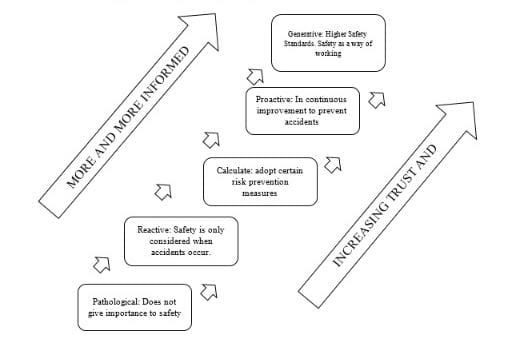
The management of prevention in an integrated manner goes beyond taking care of those technical aspects in safety and management, it also refers to the way in which the organizational culture of a company addresses aspects of occupational safety and health. (Arevalo, 2018). The author also states for all the above the preventive culture cannot be dismembered or segregated from the organizational culture of the company, strictly speaking these living concepts, are generated through the interactions between the different members of the company. In times of crisis the reaction can be proactive or reactive.
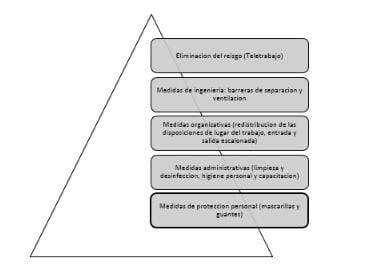
The crisis caused by the COVID-19 pandemic impacts the planning and management of the Occupational Health and Safety Management System in organizations whose responsibility lies with the employer or contractor, who must provide the necessary resources derived from change management, identifying the hazards and evaluating the risks derived from the virus and others that may arise due to changes in the work and social dynamics (physical, ergonomic, psychosocial), adopting appropriate prevention and control measures to mitigate the risk of contagion, to maintain adequate hygiene conditions. Cleaning and disinfection of facilities and workstations, as well as training workers in the promotion and prevention of occupational hazards.
Materials and Methods
The methodological approach is qualitative, according to Jiménez, quoted by Salgado, "based on the basic assumption that the social world is constructed of meanings and symbols" (Salgado, 2007, p. 30). The research is based on the literature review, which, according to Rodríguez & Valldeoriola "constitutes one of the main pillars on which the research is based", since it is a process that allows to verify the state of the question and, therefore, that the researcher does not repeat the theories of authors, but builds in a critical and reflective manner, his own conception about a given object of study Barros y Turpo, (2018)(Rodríguez Gómez & Valldeoriola Roquet, 2006).
Since this article is of a reflexive type, subjectivity is allowed, the latter being conceived as the differentiating element, where the perception and experiences that the author generates through a process of reflection and self-criticism to formulate judgments on the problem, object of research or perspective adopted take precedence. This study provides a critical and reflective position on the culture of prevention and occupational health and safety in times of crisis, a situation derived from the COVID-19 health emergency from a human, economic and social context, at international and national level, and what has been the impact of this pandemic on work environments.
The study is divided into three parts: the first part is a review of the bibliography related to epidemiological data on active cases of COVID-19 according to statistics from the World Health Organization (WHO), the Pan American Health Organization (PAHO) and the National Health Institute (INS) in Colombia. In the second part, a review of the conventions of the International Labor Organization (ILO) and the recommendations and guidelines of the World Health Organization (WHO) for the safe return to the workplace and the gradual reactivation of the economy and the role of occupational safety and health in this process is made.
The third part describes the challenges that the discipline of Occupational Safety and Health has in times of crisis and how through the guidelines of the ILO and WHO and even the Ministry of Health and Labor contributes to the welfare, health and safety of workers and the economic and productive reactivation of the country. This analysis seeks to highlight the importance of occupational health and safety management systems and their planning in times of economic and social crisis pandemics, as well as plans for business continuity.
Results
The changes derived from the pandemic will allow a historical evolution of occupational safety and health, promoting innovation, new models and methods in the field of occupational risk prevention. A review of the literature reveals deficiencies in mechanistic models that ignore the fact that the world of work has changed and that risk prevention is not limited to engineering controls. The ILO in the framework of the conventions and guidelines for the safety and health of workers in the world, has allowed nations to advance in the prevention of occupational hazards, Convention No. 155 and its recommendation offer prevention and protection measures to mitigate the negative effects on safety and health in the world of work of pandemics such as COVID-19. In the case of Colombia, it has issued legislation with a preventive tendency such as the Sole Regulatory Decree of the Labor Sector 1072 of 2015 book 2, part 2, title and chapter 6 and Resolution 0312 of 2019 of the Ministry of Labor that establishes the Minimum Standards in Occupational Safety and Health for employers and contractors in the country according to the economic activity, number of workers and risk level of the companies providing special attention to agricultural production units and MSMEs in the country, and recently the Decree 500 of 2020 issued by the Presidency of the Republic by which measures of labor order are adopted, related to the allocation of resources of the contributions of the Labor Risks Administrator of public character in the framework of the State of Economic, Social and Ecological Emergency, resources are allocated for the purchase of personal protection elements for workers directly or indirectly related to the health sector and education, promotion and prevention campaigns for companies to comply with the basic level of the annual plan of safety and health at work.
The results of the research allow us to deduce that the pandemic has accelerated the process or interest in installing the Culture of Risk Prevention in the workplace and in Society as a whole. In the country, this need is made visible in the National Plan for Safety and Health at Work (2013-2021), which seeks the transversality of safety and health at work in all public policies, the strengthening of institutions, the promotion of safety and health of workers, the prevention of occupational hazards and the optimization and recognition of benefits to workers in the General System of Occupational Risks.
Rethink safety as a competitive advantage in organizations and include sciences such as Economics and Administration, which will support occupational health and safety management, favoring the application of the cycle (P,H,V,A) in any context, aligning the strategic objectives of the organization to the needs in prevention, thus occupational health and safety contributes to the sustainability of the business and the welfare of workers, One of the deficiencies detected in the Management Systems is the Management of Health in Workers is the absence of health promotion and prevention programs and epidemiological surveillance systems, with the current situation these will play a vital role to maintain and improve the health conditions of the working population, promotion of healthy lifestyles to address the increase of non-communicable diseases and prevention of diseases of occupational origin.
The study allows through a critique and reflection of the situation to glimpse the socio-economic impact of the COVID-19 pandemic and the implications and transformation of occupational health and safety in organizations. However, this is still an unknown normality for all social actors who require emergency and containment measures for the return to economic, labor and social activities.
Due to the magnitude and scope of the crisis, the exposure and the economic and social impact of workers in the informal economy, the statistics of diagnosed diseases of occupational origin related to the virus in health personnel, the statistics of common origin and the occupations that report more cases of contagion, the evaluation of the effectiveness of the control measures implemented at the source, environment and worker and the result of good practices in occupational safety and health are unknown. Academic and personal interest will arise to investigate these issues in depth and create prevention models aimed at the working population.
The adoption of new measures and forms of work organization have generated new habits and lifestyles in the working population, the role of women in the home has increased their workload and even domestic violence, social distancing and the excessive use of ICTs has generated mental health problems worldwide and has even increased the report of musculoskeletal symptomatology.
The above shows that occupational safety and health has ceased to be a discipline influenced by the positivist current focused on hygiene and prevention, to give way to a systemic approach such as the contingency theory that contemplates the internal and external factors that impact its management and open the way for new approaches such as endosafety, a new way of prevention, the competencies of professionals and personnel in training for the prevention of occupational hazards must be rethought from the academy to ensure the competencies (knowledge, skills and attitudes) required in the productive sector and labor field, training that goes beyond technical knowledge.
Conclusions
The International Labor Organization maintains a system of international labor standards aimed at promoting decent, safe and productive work, and are a useful framework for reference in the context of the response to the crisis caused by the outbreak of COVID-19, while the World Health Organization establishes guidelines for adapting workplaces and protecting workers. Social dialogue is necessary for joint action to ensure safe and healthy work environments. International collaboration is important, in particular WHO and ILO provide guidance aimed at disease prevention and containment for the sustainable well-being of nations, communities and workers. The pandemic demonstrates the role that occupational safety and health plays for a decent and safe work, from the effective management of the occupational safety and health management system and the establishment of measures for the prevention and control of occupational risks, it will be possible to give continuity to the economy and promote employment. Social, economic, technological and demographic changes resulting from global trends and the health, human and economic crisis have posed challenges for occupational safety and health, management with a gender focus, demographic changes and migration, technological advances and information and communication technologies, atypical forms of employment and labor flexibility, climate change and the green economy. These changes also increase psychosocial hazards, mental health and techno-stress, ergonomic risks, physical risks, harmful chemical substances and changes in work methods and reengineering of prevention and control measures.
References
Arévalo, C. and Jaen, A.(2018). Technical manual on preventive culture in the company: evaluation and improvement methods. [online]. Madrid: Agustín de Betancourt Foundation; Regional Institute of Occupational Safety and Health, 2018. 144 p.
Barros Bastidas, C., & Turpo Gebera, O. (2018). Factors influencing the scientific production of university professors: a systematic review. Revista Pensamiento Americano, 11(22).
Cabezas, C. (2020). Pandemic COVID-19: storms and challenges. Peruvian Journal of Experimental Medicine and Public Health [online]. 2020, 37(4), 603-604. https://doi.org/10.17843/rpmesp.2020.374.6866
Circular 017 of 2020. [Ministry of Labor]. Minimum guidelines to implement promotion and prevention for preparedness, response and care of cases of disease by COVID-19 (Coronavirus)". February 24, 2020. https://www.mintrabajo.gov.co/documents/20147/0/Circular+0017.pdf/05096a91-e470-e980-2ad9-775e8419d6b1?t=158264787828087 .
Circular 018. [Ministry of Health and Social Protection]. "Containment actions in the face of covid-19 and prevention of diseases associated with the first epidemiological peak of respiratory diseases." March 10, 2020. https://www.funcionpublica.gov.co/eva/gestornormativo/norma.php?i=108934 .
Economic Commission for Latin America and the Caribbean. (2020). Special Report No. 1 COVID-19 Latin America and the Caribbean facing the COVID-19 pandemic. Economic and Social Effects https://repositorio.cepal.org/bitstream/handle/11362/45337/4/S2000264_es.pdf
Cooper. (2000). Toward a Model of Stafety. Culture Safety Sciencie. 36( ) , 111 -136. http://www.behavioral-safety.com/articles/Towards_a_model_of_safety_culture.pdf
Corral L. (2011). Preserving Occupational Safety and Health in Times of Crisis. Gestión Practica de Riesgos Laborales, 82( ). 38- 40.
National Administrative Department of Statistics. (2021). Technical Bulletin Gran Encuesta Integrada de Hogares. Main labor market indicators. https://www.dane.gov.co/index.php/estadisticas-por-tema/mercado-laboral/empleo-y-desempleo
Guerrero, J. Amel, I. and Campis, I. (2004). Information, communication and surveillance of worker's health: some reflections. Ciencias Holguín Journal. 10(4), 1-17. http://www.ciencias.holguin.cu/index.php/cienciasholguin/article/view/283/157
Hernández, H., Monterrosa, F., & Muñoz, D. (2021). Prevention culture for occupational safety and health in the Colombian environment. Advocatus, (28), 35-43. https://doi.org/10.18041/0124-0102/advocatus.28.889
Honkasalo, A. (2000). Occupational health and safety and environmental management systems. Environmental Science & Policy 3 ( ), 39 -45. https://isiarticles.com/bundles/Article/pre/pdf/6447.pdf
National Institute of Health Colombia. [INS]. (2021, May 18). Case report https://www.ins.gov.co/Noticias/Paginas/Coronavirus.aspx
Kotter, J. El líder del cambio, Paulina Diaz Cortez (Trad), México D.F., McGraw-Hill Interamericana Editores, (1997).
International Labour Organization. [ILO]. (2020, May 29). ILO standards and COVID-19 (coronavirus) Frequently Asked Questions Core provisions of international labour standards relevant in the context of the COVID-19 outbreak. Version 2.1. https://www.ilo.org/wcmsp5/groups/public/---ed_norm/---normes/documents/publication/wcms_739939.pdf .
International Labor Organization [ILO]. (2020,May 18). COVID-19 and the world of work: Implications and responses https://www.ilo.org/wcmsp5/groups/public/---dgreports/---dcomm/documents/briefingnote/wcms_739158.pdf .
International Labour Organization. [ILO]. (2020). Facing the pandemic ensuring safety and health at Work (ISBN 9789220321362 (web pdf)). https://www.ilo.org/wcmsp5/groups/public/---ed_protect/---protrav/---safework/documents/publication/wcms_742732.pdf .
International Labour Organization. [ILO]. (2009). ILO conventions on occupational safety and health: an opportunity to improve working conditions and the working environment. https://www.ilo.org/wcmsp5/groups/public/---americas/---ro-lima/---ilo-buenos_aires/documents/publication/wcms_bai_pub_118.pdf
Parker, D., Lawrie, M., & Hudson, P. (2006). A framework for understanding the development of organisational safety culture. Safety Science, 44(6), 551-562. https://doi.org/10.1016/j.ssci.2005.10.004
Pinheiro, N., Freitas, J., Saul. (2020). Current status of COVID-19 in South America. Revista chilena de infectología, 37(3), 311-312. https://dx.doi.org/10.4067/s0716-10182020000300311.
Resolution 666 of 2020. [Ministry of Health and Social Protection]. Whereby the general biosecurity protocol is adopted to mitigate, control and carry out the adequate management of the COVID-19 Coronavirus pandemic. April 24, 2020. https://www.minsalud.gov.co/Normatividad_Nuevo/Resoluci%C3%B3n%20No.%20666%20de%202020.pdf
Rodríguez, D., and Valldeoriola, J. (2014). Research Methodology. Universitat Oberta de Catalunya. http://openaccess.uoc.edu/webapps/o2/bitstream/10609/77608/2/Metodolog%C3%ADa%20de%20la%20investigaci%C3%B3n_M%C3%B3dulo%201.pdf
Salgado L., A. (2007). Qualitative research: designs, evaluation of methodological rigor and challenges. Liberabit. Revista Peruana de Psicología, 13 ( ), 71-18. https://www.redalyc.org/comocitar.oa?id=68601309
Urrea-Ríos, I. and Piraján, J. (2020). Impacto De La Pandemia Covid-19 Sobre El Mercado Laboral En Colombia: El Papel Del Empleo En La Recuperación Económica. Documentos Escuela de Economía N° 111. Universidad Nacional de Colombia. SSRN: https://ssrn.com/abstract=3738980 or http://dx.doi.org/10.2139/ssrn.3738980

