

Artículos
Architecture and literature
Conversaciones…
Instituto Nacional de Antropología e Historia, México
ISSN: 2594-0813
ISSN-e: 2395-9479
Periodicity: Bianual
no. 12, 2021

Architecture and literature
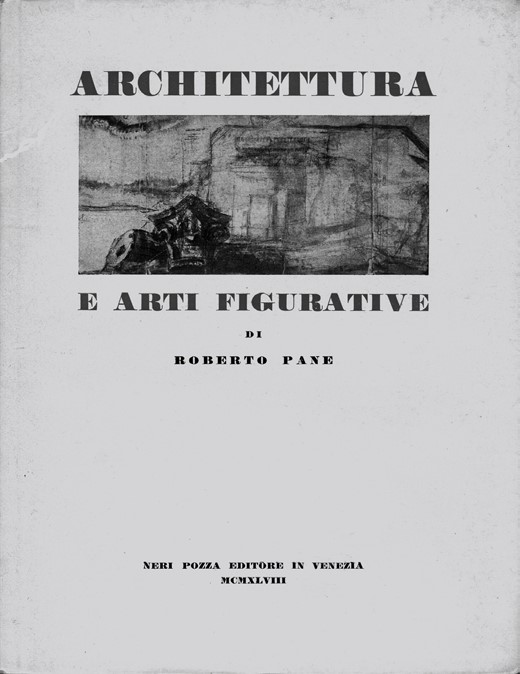
Original publication: Roberto Pane (1948) “Architettura e letteratura”, in: Architettura e arti figurative, Neri Pozza, Venezia, pp. 63-71.[1]
Translation by Valerie Magar
The current controversy about the definition of what should be meant by architecture seems to have reached an impasse. On the one hand, assertors of modern functional and technical trends[2] declare themselves dissatisfied with idealistic aesthetics because expressions and needs typical of our time do not seem to find a place in it. On the other hand, some followers of Croce’s ideas, unwilling to draw from the philosopher’s writings any legitimate deductions or analogies, merely repeat that architecture is art, that practical motives do not constitute a separate act from expression but are rather its prerequisite; that, in order to be able to think historically, architects must undergo a philosophical diet, and so on.
The opposition appears to be accentuated by the current widespread tendency to formulate a new language rigidly consistent with the new possibilities of technology, to deny the easy aestheticism of imitation that, until a few decades ago, completely dominated the field; to accentuate, as a reaction against yesterday’s insincerity, a rationality of building adherent to the reality of needs, to doubt even the validity of a cultural tradition and the values it expresses.[3]
There seems, in short, to be no possibility for mediation, and as is often the case when, between two disputants, each repeats the same thing over and over again, the controversy ends up taking on a comic aspect: one wants to assert his practical work and conduct it in the most strictly professional manner, without becoming too entangled with a lyricism that seems to him alien to the concreteness of his work and which, in any case, he feels is too detached and hypothetical for it to constitute a true and supreme instance; the other insists by repeating that only in that lyricism can the work be historicized and that architects have yet to learn to overcome the dualism between artistic value per se and technical-practical value in order to arrive at a single concept, that of expressive synthesis.
Yet it is precisely Croce’s aesthetics that, in their latest elaboration, can provide valuable clarification to our current need to overcome uncertainty and diminish misunderstanding. Consider, in fact, his distinction between literature and poetry and place next to it, almost as the second term of an ideal proportion, architecture and art.
The concept of literature, understood as an autonomous value with respect to that of poetry, belongs to those recent studies in which, as Croce himself states, the rigidity of his early aesthetics has been attenuated into a more mature development. Read the volume La Poesía and in particular the chapter dealing with literary expression. Here, he distinguishes between poetic faculty and literary or practical faculty: the former in its abandonment to the universal, the latter in its proper purpose of never losing sight of that “reason” which is the guide and support for practical working. The distinction becomes more subtle when it comes to defining the concept of taste in the two different spheres: in the first, consciousness of poetry “which is created and which controls its own creation,” in the second, a taste that can also be called “tact” and which also has its inspiration; not that of “sacred fury” but that other which is “the serious preoccupation with the things to be said, the love of thought, of action, of one’s own feeling. And this inspiration, too, requires warmth, spontaneity, and ‘fluent writing.’”
Thus, an expressive quality is defined that is autonomous from that of poetry, not subject to it, almost an inferior degree of spiritual activity, but independent, since its object is different, specifically, not that of pure contemplation and abandonment to the universal, but of constant care that turns to a practical end. However, the talk of vein, of warmth, of spontaneity and even of a particular and different inspiration means that the bare and logical exposition of practical matters will not suffice to make literature, and that it is the need for taste that induces one to give a writing or discourse an attribute of form that may not even be implicitly necessary to the practical end one sets out to achieve. The presence of this taste defines a particular climate of civilization and reflects its particular character. The old cliché that architecture is a mirror of the times takes on its most precise meaning in the sense that it is an expression of society just as literature is a mirror of civil, moral, religious and intellectual life.
The consequence that can be drawn from such considerations, in the field of architecture, seems obvious to me: the attributes, so often invoked today, and which pass under the name of rationality, functionality and organicity can never suffice nor act alone: they must be subordinated to a taste; and, whatever tendency taste it is colored by, is aesthetic in nature and not rational. But here one might ask: if we understand poetry and art as partakers of a single fantastic and lyrical world, and if we assert a similarity between literature and architecture, does this mean that the word architecture will cease to have its traditional meaning of art? It seems to me that we should answer to such objections as follows: architecture is art when it is, and I would add again: when it wants to be, that is, very rarely. The immense work that is done in the world, building and writing, is only on some occasions to be accorded a value other than what is normally required and dictated by practical reasons. And this is not to be recognized as valid only for our time but also for the entire past also not strewn, in its long journey, with artistic works. By this route it succeeds, therefore, in overcoming that initial proposition rigidly held by others, that architecture is and can be nothing but art, and in understanding why it has not only failed to help resolve the current controversy but has reaffirmed the very reasons for the misunderstanding.
After all, it is precisely in Italy that, because of the greater authority exercised there in the past, architecture has retained, even today, the exclusive meaning of art; while elsewhere, as among English-speaking peoples, architecture is normally synonymous with building, hence the proposal[4] already made by some to substitute the second word for the first in common parlance. In any case, what matters is that the distinction be deemed legitimate in the sense already mentioned, particularly, that architecture, like literature, finds its expressive value in the same practical reason. Therefore, it should not be recognized, as has often been done, as an insuperable obstacle to imagination in the complexity and urgency of practical needs, but a distinctive character that is and wants to be determined by these same needs; that does not want to conceal them in order to take on the guise of something else, but to satisfy and express them while configuring them in a form that is not the pure and simple expression of rationality. Nor can the present multiplicity of means and demands imposed on the architect’s tasks provide a new efficacy to the old distinction between free and non-free arts, a distinction already rejected by Croce for over forty years. Indeed, it is not to art itself that an a priori limit can be placed, whatever the subject matter in which it expresses itself. It is enough to think of the vague and empirical approximation to which the series of arts that are not free, or somewhat less free, or free altogether would give rise to understanding how it cannot but remain foreign to aesthetic meditation.
The distinction between poetry and architectural literature finds its significant confirmation in our recognition that it is not the few monuments that create the environment of our ancient cities but the many works that help determine a particular local character. What is this if not a judgment in which, already implicitly, the poetic work (which in its exception belongs to world history) is distinguished from those that are the expressions of a particular civilization and culture and form what we might call the literature of stones?
It is convenient to follow the enunciation of this analogy of positive values with negative examples, namely, to mention those works which, because they were conceived and realized under the influence of a substantial aesthetic misunderstanding, offer only a contribution of documents for the history of the ugly; documents in every way similar to those offered by bad literature. Indeed, one thinks of the many buildings of the second half of the 19th century and the beginning of our century in which a passive imitation of art is almost always expressed. Romantic anarchy, in the form of the exhumation of so-called architectural styles, initiated such imitation by ensuing that the neoclassical current which, in the vain persuasion of being able to rediscover the sources of an original formal purity, had at times achieved its own nostalgic distinction and coherence. The past became a museum from which it was permissible to extract, with eclectic indifference, details and fragments that were believed to have, in themselves, an expressive virtue; it was as if they could live a life of their own outside the unity that justified them in the original works. It then appeared legitimate to have recourse to individual artistic epochs so that they might lend, according to different occasions, the aid of those forms which a conventional judgment deemed suitable for a given sphere of representations; thus, arose the medieval villas because the forms of the Middle Ages lent themselves to the effects of the picturesque; the Renaissance houses and palaces because the Renaissance had created the civil building; the Gothic churches because no taste was as suited to signify mystical religiosity as the Gothic; the Egyptian tombs because the Egyptians had created funerary architecture; and so on. The assorted presences of all these surrogates of art have determined the face of our modern cities, whether in the modest programs of social or bourgeois housing or in the more imposing structures of public use. The last test, at least in Italy, was made with the Baroque,[5] because it was thought that the first manifestations of building understood in the modern sense were to be recognized in the houses from the 17th and 18th centuries; this artificial purpose of choosing and legitimizing a tradition was aided by that superficial aesthetic judgment that had aimed at rehabilitating and exalting, without discernment, all the production of that age, in opposition to the condemnation already pronounced by the neoclassicists.
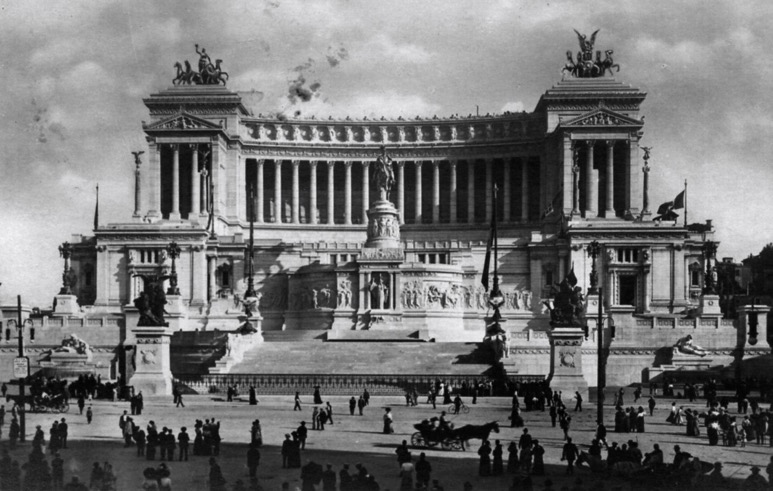
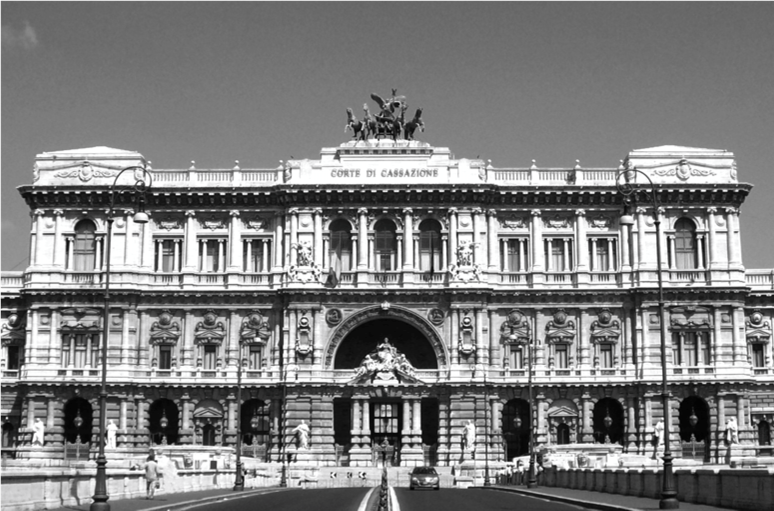
The lack of a serious ability to think critically caused even the best geniuses to produce things that, at a distance of time, seemed intolerable and absurd, as is usually the case with aspects of an outdated fashion. And this happened not only for the new churches and ministries, but also for the greatest works to which every possibility of space and material was offered so that a full expression of architecture as art could be achieved: the two great national failures, the monument to Vittorio Emmanuele and the palace of justice in Rome, are evidence of a loss of the sense of form that the virtuosity of the particular fails to redeem. To praise their invention of a cornice, a column or any other ornament implies the tacit recognition of the absence of a rhythm. Their inspirational motifs, whether they were the Pergamon altar or the scenographies by Bibbiena, remained recognizable as detached and extraneous models while the masses, failing to appear monumental, turn out to be grand only as matter.
Thus, these and similar works, which failed as poetry, also failed as literature. Those who propose to banish from the architectural language the word “monumental” appeal to their negative example, as if it must necessarily mean something rhetorical, or at any rate worthy of derision, and has no more reason to indicate an artistic quality. Overlooking the fact that such a proposal is suggested by precisely those who, until a few years ago, perpetrated false monumentality in Italy, it is worth noting that, since the tendency to a certain emphatic accentuation of forms is very widespread among us, what should instead be recommended is not the condemnation of the monumental, but of the equivocation of the monumental, namely,
of that coarse showiness and exaggeration which is so contrary to the measured taste of good architecture; and it should be added that such an ugly inclination to want to distinguish oneself at all costs, accentuating the effects, is, unfortunately, inherent in our education and custom, as evidenced not only by the construction of yesterday and today, but also by the oratory of forums and political gatherings.
Returning to our recent past, the failure of the building experiences of the last century and the first decades of ours provides the most valid argument for the modern rationalist propaganda of architecture. Après coup ornamentation and its attendant fashions now seem to be gone forever. But, if one danger has been averted, can we really say that others are not present? While it is true that having done justice to what had ceased to satisfy a living need of taste may foster a better understanding of the art of the past, since it enables one to contemplate it with an eye no longer clouded by a misunderstood sense of tradition, it is also true that mechanistic equivocation tends to substitute patterns of structure for the old outward and formalistic patterns, so that, despite the antithesis, the danger of error continues to exist. The contrast between today and yesterday could be defined by a caricature image: whereas the 19th century believed that it had to make art at all costs, today it is believed, at all costs, that it has to do without.
It is hoped that an absolute and geometric nudity will better defend us from changing tastes; but, just as yesterday’s construction appears today worthy of compassionate mockery for its false exuberance, so the present one may appear tomorrow as the very image of barrenness and desolation; and as for the likelihood of making posterity laugh, pure mechanists should remember that nothing in the world offers an easier and more immediate cause for hilarity than a machine that has become antiquated.
Yet a revolution has taken place. Something that, unlike the old and superficial decorative variations, is a consequence of modern industrial and scientific progress and touches the very conception of modern construction and its technical means. The reasons for a new orientation are so vital and profound that they call into question the meaning of architecture and its destiny. Whereas the architects of yesteryear were handed down an experience that had hardly changed for many generations, those of today are offered totally new and everchanging means. But for these particular conditions to be rightly understood, it is necessary to bring them back to a more general view of the modern world, to that sense of instability and unlimited possibilities that defines our present life and that makes it so arduous, and, at the same time, so necessary to regain a faith on which we can base a new humanism, a renewed mastery over the tools we ourselves have created and whose control seems to escape us today.
For now it can be said that the life of the city seems to have no other purpose than that of multiplying the mechanical means of existence, and society no other stimulus than that which is aimed at achieving a condition of well-being. Often architects, conforming to these more widespread tendencies, take the machine as their model because they regard architecture itself as a mechanical instrument and beauty as the expression of achieved and perfect functionality. Consistently they make the trial of the past, and absolving only those works that seem to demonstrate a sincerity of structure, they affirm that at the origin of every architectural form is to be recognized the elementary manifestation of a necessity, without understanding that already this first necessity had to present itself in a fantastic form, that is, to be born as a product that was not simple and elementary rationality. And for that matter, since nothing can be built by pure logic, the mechanistic edification also shows its own equivocal way of being fantastic: that which consists in flaunting its constructive means and everything that can be done with them, thus realizing a rhetoric of mechanicism that is not infrequently more costly and illogical than the modest and superficial compromises of the past.
With all this, one does not wish to deny the legitimacy, now often invoked, of a more serious practice of building and a more precise technical definition, but only to insist that the presence of such attributes cannot suffice to configure an architectural literature unless the attributes themselves, while retaining their character, are invested by taste and imagination.
The interpretation of architecture, in the sphere of literary expression, while on the one hand will help to make the misunderstanding of the old formalism of imitation understood historically, will on the other hand satisfy the current widespread need for clarification regarding the aesthetic character of architecture: no longer a rare exception in comparison with which all else is only vague approximation and error, but an expression of civilization and culture in which practical needs take on the imprint of human dignity, warmth and welcoming sympathy. The exception of architectural poetry will continue to be possible in its transcending all practical interest. To spirits incapable of aesthetic judgment it will seem absurd, as they also find the architecture of Michelangelo or Palladio absurd. As in the past, it will not obey any rationality or unit of measure, and therefore it will not be possible to predispose its creation or to say how best it agrees that it should be. For it will express, in the unique and superior coherence of its form, its own rationality and its own measure.
The[6] distinction between architecture and construction, which I proposed in this paper published eleven years ago has, on the whole, been favorably received; proof of this, in addition to the frequent references to the paper itself, is the current widespread use of the term “literature” to indicate the choral values of the urban environment. I cannot say, however, that aspects of practical working have in any way been influenced by the above-mentioned distinction; which, however, does not aspire to be merely an opportune clarification of an aesthetic order but was intended and is intended to suggest to architects a commitment to a more precise responsibility. The attempt, so often renewed today, to justify under an aesthetic species what is merely the indifferent mechanistic formalism with which we use to disguise our past obedience to a program we know to be inhuman, stands to prove what a distance stands between the recognition of a just principle and the courage to accept it as a rule of life.
In mentioning, in 1948, the vague and nostalgic forms of the old styles, as a conglomeration of errors that the new fashions would make appear intolerable and absurd, I did not even remotely imagine that a true and desperate horror was yet to come; on the contrary, that it would be such as to induce, as a legitimate reaction, every non-superficial judge to a less unfortunate judgment about the building activity that preceded the present one. For it has happened that, while vulgar barrenness and mercantile indifference have progressively conquered our cities, we have been more and more impelled by a motion of sympathy for the old bad taste, being pleased to appreciate certain handcrafted survivals of it for that margin of gratuitousness which, even in its mediocrity, still implied a way of being civilized.
In this regard, it seems appropriate to recall a significant episode. Recently, while I was in the company of some distinguished architects and professors, one of them deplored the tendency, nowadays rather widespread among architecture students, to take an interest in the forms of Art Nouveau, going so far as to draw inspiration from them. To the colleague who denounced this fact as a worrying indication of deviation from the achievements, now to be considered definitive, of the “modern movement,” I thought it appropriate to point out that this snobbish fashion was not to be condemned without some extenuating circumstances since, while it renewed error in a vague and extrinsic form, it was also to be justified as the symptom of a state of rebellion and weariness in the face of the continuing empty and deadening mechanistic academy; I then added that nothing was so much to be encouraged in young people as unscrupulousness, if only because its manifestation is closely linked to the need that human dignity be, above all else, respected and protected. In essence, concentration camps and high-rise housing are the consistent aspects of the same economic and “functional” logic that has become the exclusive master of our society. And it cannot be repeated enough, especially to those who resort to the usual pretexts to justify their conformism in the face of the supposedly irresistible tools of modern operations, that it was precisely the failure of the new city that increased nostalgia for the old city.
Still concerning the mechanistic misunderstanding, it seems to me that I must reiterate a clarification, already mentioned in the paper above, about the rationalistic claim that at the origin of every architectural form is to be recognized the elementary expression of a necessity; that therefore beauty is present in an attained and perfect functionality, which would then be frequently lost through the fatal ritualization and estrangement of the primitive form from functional to decorative.
I recall having already pointed out that, in my opinion, the error of this interpretation, which is still current, lies in not understanding that already that first functionality could not fail to manifest itself under a fantastic species; that is, it could not arise as the product of pure and simple rationality, but only as a synchronous and inseparable expression of logic and fantasy.
It is also important to note that the appeal of old and new rationalism is to a functionality whose attributes do not exceed the requirements of animal welfare, understood in the strictest sense of the word. It is enough, in fact, to raise any objection suggested by the consciousness of man’s deep irrational needs for “rational” reasons to be undermined; thus, for example, it is enough to examine modern dwelling phalanstery from the point of view of modern psychiatry (to which the needs and characters of the human being are known and which today’s architect very often shows to be ignorant) to discover and understand at what price a poorly governed society is nowadays forced to pay for the advances of technology.
As for our country, while it is true that changing environmental conditions exert considerable influence on the education of new generations, we certainly cannot claim that the new conditions provided by our building are such as to ensure better development for the people of tomorrow.
*
Notes