

Artículos
Theoretical contributions of Camillo Boito and Gustavo Giovannoni and their possible applications in Brazil
Conversaciones…
Instituto Nacional de Antropología e Historia, México
ISSN: 2594-0813
ISSN-e: 2395-9479
Periodicity: Bianual
no. 4, 2017

Abstract: This text was the result of the discovery that there was a wide gap between theory and practice in the works of most of the Brazilian architectural conservators. Therefore, the aim was to carry out a brief historical review, using the contributions to the construction of a theoretical field of conservation made by some authors over time, especially Camillo Boito and Gustavo Giovannoni. The length of the discussion process is also emphasized. The development of Brazilian legislation and of the idea of cultural heritage preservation in Brazil is also shown, with the aim of highlighting the conservation practice that has been taking place, particularly in the state of Rio Grande do Sul. This evidenced the initial perception that such practice is far removed from theory. However, it is very important to stress that the gap that was identified is common all over the country. It is rare to find cases of conservation of cultural heritage where a methodological and theoretical precision can be observed.
Keywords: Theory, Brazilian cultural heritage, practice, restoration..
Theoretical contributions of Camillo Boito and Gustavo Giovannoni and their possible applications in Brazil
Translation by Valerie Magar and Zulema Ayerin González Gamboa
Introduction
In 2009, when the XVIII Congresso nacional da associação brasileira de conservadores e restauradores[1] (ABRACOR) was held in Porto Alegre, an alarming dissociation between conservation theory and practice was verified in several, although not in the majority, of the works presented. It was clear that the theoretical concepts of conservation that have been developed for at the movable and the immovable cultural heritage, whether isolated, or as part of ensembles. This concern became more serious when various conservation and intervention projects on the immovable cultural heritage, funded by official institutions, did not take into consideration the theoretical approaches of the discipline.
Based on these findings, the Associação de Conservadores e Restauradores de Bens Culturais do Rio Grande do Sul[2] (ACOR/RS), of which I am member, proposed the organization of a seminar focused on theoretical discussions, that would seek to strengthen the conceptual foundation of its members and of all those interested in conservation.
After transferring the proposal to other fields, including the “Coordination of Memory” by the Ministry of Culture of the city of Porto Alegre and the Unit of Historic Heritage of the Universidade Federal do Rio Grande do Sul (UFRGS), it took on the format of a continuing education university course with two editions, in 2010 and 2011; these included the presence of outstanding professionals from Brazil and abroad.[3] The themes discussed in the courses dealt with the theory and practice of conservation, and on the discussion of the preservation of authenticity of cultural heritage, which is always exciting and relevant.
More than a century after Ruskin, Morris and Boito, and almost a century after Giovannoni, it would seem that all the criticisms they presented during that historic period, concerning the practice of conservation and the preservation of the authenticity of monuments and ensembles recognized as cultural heritage, has now been forgotten. Now we are returning to the past, which makes it necessary and urgent to review such concepts.
In that publication, it will be possible to analyze the contributions of those authors, the development of their ideas and show how these concepts are currently being applied in Brazil, particularly in its most southern state, Rio Grande do Sul.
The theoretical basis: a retrospective
As mentioned before, the theoretical concepts of the preservation of cultural heritage that are currently valid were consolidated over the course of more than two hundred years. The ideas linked to conservation were defined and accentuated alongside the great transformations that took place in Europe during the 18th century, such as the advent of the so-called Industrial Revolution and the profound changes it created, the emergence of the age of Enlightenment, and the French Revolution. All these events dramatically altered the way in which a given culture relates to its past, causing the creation of a notion of rupture between the past and the present, and giving rise to the need to protect buildings and historic environments in various European countries (Kühl, 2000: 10).
Along this path that was not always linear, theoretical and practical definitions for the treatment of monuments were proposed; they were progressively more detailed and ambitious. These definitions sought above all else, the physical maintenance of the monuments, whether in their original state or not.
Two texts produced during the 19th century, with diametrically opposite proposals, confirmed conservation as a science and defined the role of restorers at that time: The seven lamps of architecture by the English artist John Ruskin published in 1849, and the article “Restoration” by the French architect Eugène Viollet-le-Duc published in the Dictionnaire raisonné de l´architecture française du XIe au XVIe siècle from 1854 to 1868.
John Ruskin and William Morris, his follower, defended the nonintervention of monuments. In his chapter dedicated to the Lamp of Memory, Ruskin established that:
Neither the public, nor by those responsible for the care of public monuments, have understood the true meaning of the word restoration. It means the most total destruction a building can suffer: a destruction out of which no remains can be collected: a destruction accompanied by a false description of the thing destroyed. Do not let us deceive ourselves on this important matter; it is impossible, as impossible as raising the dead, to restore anything that has ever been great or beautiful in architecture. That which I have above insisted upon as the life of the whole, that spirit which is given only by the hand and eye of the workman, can never be recalled (Ruskin, 1849: 161).
Ruskin enriched the idea of “historical monument” by including the concept of domestic architecture and the continuity of urban fabric formed by the most humble buildings. He was the first to include urban ensembles in the same category as isolated buildings. By attributing a sacred dimension to human works, the monument acquired, from Ruskin’s perspective, a universality with no precedent. No matter which civilization or human group should be considered, there would always be a historic monument.
On the opposite end was Viollet-le-Duc, defender of interventions on the monuments. He affirmed at the beginning of his article “Restoration” that “Both the word and the thing are modern. To restore an edifice means neither to maintain it, nor to repair it, nor to rebuild it; it means to reestablish it to a finished state, which may, in fact, never have actually existed at any given time” (Viollet-le-Duc, 1990: 195).
For Viollet-le-Duc, restoration was a legitimate recreation, in which the technician searched for an ideal solution for each case, taking into account technical, stylistic and pragmatic criteria. It was hence possible: to search for its completion based on logic; to add new parts even if they never existed; to enable its conclusion and to reestablish a sense of completeness to the monument.
It is therefore easy to perceive how, during the second half of the 19th century, the subject of the restoration of monuments was defined by broad divergences. However, the position of Viollet-le-Duc seems to have prevailed in a large part of the European countries that were then living under the influences of Romanticism and of the affirmance of their nationalities. Specific styles were selected to embody authentic representations of that nationality, and these had to be preserved. The Gothic style in particular, was the target of this affirmation. There were renowned studies made on the Gothic style in Germany and England since the 18th century. In France, Medieval architecture, widely ignored during centuries, suddenly became the “target of many studies, from 1820 to 1830. It was considered by many to be the true manifestation of national genius, opposed to academic architecture that prevailed since the 18th century”[4] (Kühl, 2000: 9). Thus, for the French, preserving and restoring Gothic monuments turned into a trademark of the times, and Viollet-le-Duc became the author of countless imaginative interventions, reconstructing ruins and eliminating added elements that had been placed on the monuments over time, in a manner of stylistic cleansing that resulted in the creation of false historic Gothic monuments scattered across the country.
It was only during the late 19th century that a third, more conciliatory path emerged that recognized the need to preserve authenticity and to establish a preference for conservation over restoration. This contribution was made by the Italian architect Camillo Boito, and it paved the way for the modern theory of conservation.
Boito was trained in the Fine Arts Academy of Venice. It was in Milan where Boito, as a professor of the Fine Arts Academy of Brera, developed after 1860, a reflexive and critical theory based on the antagonistic theoretical positions on the interventions of historic monuments that were being undertaken in most of Europe. In a text entitled I restauratori, presented at the Turin Exhibition on June 7, 1884, Boito made an important synthesis of the best contributions of Ruskin and Viollet-le-Duc, in order to formulate a “set of guidelines for the conservation and restoration of historic monuments, integrated in 1909 into the Italian legislation”[5] (Choay, 2000: 136-137).
In relation to restoration, Boito affirmed that:
We do not speak here of conservation, which is above all the duty of each civil government, each province, each municipality, each consortium and each man who is not ignorant or vile, to ensure that beautiful ancient works, which are the product of human genius, are closely watched over, so that the world can admire them. But it is one thing to conserve, and another to restore; actually, very often one means the opposite of the other; and my discourse is not aimed at conservators, necessary and distinguished men, but to restorers, who are almost always superfluous and dangerous men[6] (Boito, 2017: 14).
He established seven principles for the interventions of monuments, where he expressed his concern for the monuments’ authenticity, and also for ways to preserve them while carrying out architectural restorations. He anticipated procedures that were perfected over the course of the 20th century, by concluding that:
1. It is necessary to do the impossible, it is necessary to perform miracles to conserve a monument in its ancient artistic and picturesque aspect;
2. It is necessary that completions, if indispensable, and additions, if they cannot be avoided, show not to be ancient works, but contemporary works[7] (Boito, 2017: 30).
If, as we have shown, Camillo Boito had Ruskin and Morris as precursors in his theory of preservation of historic monuments, so did Gustavo Giovannoni in his concern for the preservation of the urban ensembles of historical value. John Ruskin is also mentioned, but principally the Viennese architect Camilo Sitte, who in 1889, wrote his book The construction of cities according to their artistic principles[8], whose first edition in French in 1902 had an important impact, and Max Dvořák, who wrote the Catechism of preservation of monuments[9], published in 1916.
Sitte´s book did not directly address the preservation of the old city, nor its most significant urban spaces per say, but rather “the ancient city, by prescription for the future of the industrial society, is still recognized and constituted as an original historical figure, which invites reflection”[10] (Choay, 2000: 160).
The work was a vast critique of the interventions being undertaken in various European cities[11], as these did not take into consideration their ancient settlement. The projects opened vast avenues and destroyed a large part of the urban ensembles that were important as a group, but that had little significance at an individual level. In turn, the great monuments were being liberated from their surrounding buildings.
Sitte, in turn, was worried about discussing a city as it was perceived by the common citizen.
[...] the city as it is seen by someone who transits through its streets, crosses its territories, rests in its squares, using varied paths through this space that is something of a labyrinth. In short, the city as a place, or as a diversity of places, and not a smooth, homogeneous, undifferentiated space[12] (Monteiro in Sitte, 1992: 4).
According to Sitte: “Not even modern art history, that entails all and any insignificance, has dedicated a space to urban construction, as miserable as it could be.”[13] (Sitte, 1992: 95) At the same time, Max Dvořák’s text condemned the unity of style and clarified the importance of the original implantation of a work; in other words, he distinctly expressed the importance of the preservation of the relationship between the monument and its environment. He established that:
It is also a mistake to believe that through the so-called reforms and reconstructions carried out in the name of fidelity to style, we can restitute the original form of the buildings. Such an attempt is, after all, impossible. As a rule, we do not know what the original form was like, and we must be content to try to reproduce it according to what it might have been approximately[14] (Dvořák, 2008: 95).
He advised that “Whenever possible, it is best to conserve monuments with their original functions and environments; and in the same way, to conserve their shape and their unaltered aspects”[15] (Dvořák, 2008: 109).
About fifteen years later, Gustavo Giovannoni, founder of the Superior School of Architecture in Rome, wrote the book entitled Vecchie città ed edilizia nuova,. In this publication, he elaborated on the theory of Camilo Boito, of whom he was an avid follower. He focused on ancient urban ensembles, to which he simultaneously granted a use value and a museology value. He is considered to be the inventor of the concept of “urban heritage,” integrated in the general conception of territorial organization (Choay, 2000: 169).
The principles of his doctrine can be summarized in the following way: “Any ancient urban fragment should be integrated in a local, regional and territorial organization plan, as it symbolizes its relation to its current life”[16] (Choay, 2000: 172). He warned that:
The concept of historical monument cannot designate a singular building inside its building context. That is why to isolate or “to liberate” a monument frequently means to mutilate it. The vicinity of the monument is bound to this in a special relationship[17] (Choay, 2000: 172).
In this way, “Once these first two conditions are fulfilled, the old urban ensembles require preservation and restoration procedures that are analogous to those defined by Boito for monuments”[18] (Choay, 2000: 172).
Giovannoni also helped in writing the Carta italiana del restauro in 1932, “whose principles underwent frequent resistance, due both to its pioneer character and to the way it challenged the ideology of a regime that was hungry for grand spectacular projects”[19] (Choay, 2000: 173).
A year before, an international meeting was held in Athens, which mainly focused on discussing the preservation the direction of respect, maintenance and safeguard not only of monuments, but also of the physiognomy of the city, especially surrounding these buildings. It also aimed at ensuring the preservation of certain perspectives. In this manner, new international trends were established, which indicated the need to abandon integral reconstitutions of monuments and conveyed a concern for the preservation of urban ensembles; these trends would henceforth prevail.
Brazilian Legislation
In Brazil, the subject of heritage became politically relevant after the 1920´s, and it included the participation of the State, when several attempts to elaborate a national legislation took place.
However, it was not until November 30, 1937, that the Decree-Law 25 was promulgated, defining the institution of the “inscription” as a means of protection of historic and artistic national heritage. It is still in force today without alterations. The term refers to the inscription of cultural heritage in one of the four books of the volume established by that law[20], after their merits have been analyzed by the Advisory Council of the Instituto de Patrimônio Histórico e Artístico Nacional[21] (IPHAN).
The delay in the elaboration of such legislation was due to the fact that “before 1937, a number of projects for the protection of cultural heritage were rejected by the National Congress due to the property rights”[22] (Fonseca, 1997: 114) that prevailed in the Brazilian Constitution of 1891.
It was only until the Constitution of 1934 that limits to property rights were established, and the concept of social function was defined. In that same legal document, the protection of historic and artistic heritage was instituted as a constitutional principle, thus opening the way for the creation of a specific legislation and of an organization that would be responsible for enforcing it within the public federal administration.
From the cultural point of view, the Brazilian legislation for the protection of historic and artistic heritage is inserted in the context of the 1930s, given that the Decree-Law 25 incorporated several themes and concepts that had been proposed earlier, mainly by Boito but also by Giovannoni, who ratified Boito´s views and integrated them in the Athens Charter of 1931. The minister of health and education, Gustavo Capanema, who at the time was also responsible for issues related to the protection of cultural heritage, he stated in the explanatory statement addressed to president Getúlio Vargas, that “the foreign legislation was consulted and reviewed in all that seemed relevant”[23] (SPHAN/Pró-memória, 1980: 110).
Typical of this time, the concept of national historic and artistic heritage referred to “the existing group of movable and immovable heritage in the country, and whose conservation is of public interest, either because of their association to memorable events of Brazilian history or due to their exceptional archaeological, ethnographic, bibliographic or artistic value”[24] (SPHAN/Prómemória, 1980: 111). In other words, heritage was oriented to exceptional works, and those of great interest related to the history of Brazil. During that historical moment, there was a great concern for that national identity that was being formed and for which the inscription of buildings of colonial architecture contributed largely. These were then considered to be authentic Brazilian artistic manifestations.
Just as Boito and the Athens Charter of 1931 had advocated, the Brazilian legislation for the protection of historic and artistic heritage had as a final purpose the conservation of that heritage, as explained in the first article of the Decree-Law 25.
Unfortunately, the idea of preservation of built heritage still took many years to be incorporated into the municipal legislations related with the control of urban growth, the so-called master plans, as they had been advocated by Gustavo Giovannoni. Even then, little was done to integrate them in large-scale urban planning.
The Decree-Law 25 contains only one article that refers to the concern for the urban context, specifying that in the proximity of inscribed edifices, no construction can obstruct or reduce their visibility. A structure that impedes visibility is not only the one that physically obstructs, either by its height or volume, the view of the heritage; this is not the only legal hypothesis… It is now understood that the objective of the article 18 of the Decree-Law 25/37 is the protection of the environment of the inscribed building, that will hence value its visibility and its understanding within the urban space (Castro, 1991: 118).
Just like the Athens Charter, its contemporary, the Brazilian law also understood that “the environment of the historic monument functioned as a “framework” for the protection of an object of exceptional value”[25] (Kühl, 1998: 206).
In addition to that legislation, which gave rise to the preservation of cultural heritage in Brazil, other laws, decrees, and regulations complemented and updated the understanding of this theme in Brazil.
In 1988, with the new Brazilian Constitution, the concept of cultural heritage was expanded and modernized, including in its article 216 all cultural references of diverse ethnicities that shaped the nationality, events and ways of life. It is obvious that everything cannot be protected by the existing legislation, and this has made it necessary, for example, to create the regulation of the Register Institute, whose purpose is the national recognition of intangible heritage.
We could say that today Brazil has a complete set of federal, state and municipal laws for the preservation of its cultural heritage. However, practice has shown and keeps showing that the theory of restauration is still fairly unknown, resulting in the deformations that were previously mentioned in this text, and of which we will discuss further in the following section.
Practice
Since its beginning in 1937, the practice of the restoration of inscribed monuments at the Secretaria do Patrimônio Histórico e Artístico Nacional (SPHAN), currently called IPHAN, was unlike the references pertaining to restoration. That happened during a period in which the international theoretical reference was the Athens Charter of 1931 and the Italian Carta de Restauro of 1932. There were no references to authors or documents in the field; this also extends to a lesser extent, to technical aspects or technical studies, the use of adequate techniques, methods of treatment, etc.”[26] (Kühl, 1998: 107).
What is reflected in the interventions undertaken during the first years of the existence of IPHAN is actually empiricism, whose aim was the valorization of architecture of a specific period in the history of Brazil: baroque heritage from the colonial period. The interventions suffered an enormous variation, both in the principles that were applied and in the quality of the implementation of the works.
Part of this situation is due to the lack of an established practice in critical reflection and in the training of restoration professionals in the country, resulting in the absence of conceptual clarity as well as of appropriate means for the interventions.
The current legislation in spite of the broad, existing administrative spectrum, is absolutely laconic when it refers to the principles of restoration: it does not mention the subject, it does not define modalities of intervention, nor does it remit to or relate to documents related with the issue.
From the 1970´s, the Brazilian states and municipalities began to create their own legislation, as well as their structures for the preservation of cultural heritage. In that same period, the first specialized courses in the field of preservation of heritage were developed, in order to train technical personnel to work on restoration projects in the country. Many of these technicians would end up working inside the preservation institutions, at the three levels of the administration (federal, state and municipal), and some would even end up as directors of such institutions. An important aspect was that for the first time, theory of restoration was studied, including the diverse contributions written over time until the Venice Charter, which would be the most quoted document from then on.
Since its formalization in 1965, the Venice Charter inspired new debates and questionings. Despite previous charters and recommendations, as well as national and international declarations, the Venice Charter remains today an important theoretical reference for restorers all over the world. ICOMOS itself, in its documents, has made constant and reiterated references to that charter[27], considered as the foundation for all the conceptual definitions in this important international organization. Brazil, as a signatory of that document, should follow its recommendations, but that is not what has been observed.
To exemplify this reality, especially in the State of Rio Grande do Sul, some practical examples of intervention treatments on cultural heritage, inscribed in different administrative levels, have been selected. The aim is to try to show, as it was mentioned earlier in this text, that theory has not been followed in practice, with the direct consequence of the loss of original characteristics of cultural heritage in some cases, and in other ones, in the lack of consideration for existing ruins.
Based on these premises, two case studies on the reuse of ruins will be analyzed; these are projects which are currently in progress in Rio Grande do Sul, and both go against the theory of restoration, especially those precepts defended by Boito and Giovannoni and which were inscribed in the Venice Charter, referring to the concept of authenticity. Even if we consider the evolution of discussions on authenticity in the international scene, which takes into consideration the local culture for its preservation[28], and the fact that Brazil is a multicultural country, the truth is that the theory on the authenticity of cultural heritage has not been significantly considered in Brazilian restorations until now.
We will now discuss the ruin of the ancient Home for Girls, located in the city of Novo Hamburgo and the ruin of the Military Infirmary in the city of Jaguarão.
The city of Novo Hamburgo is located about 40 kilometers from Porto Alegre, the capital of the state of Rio Grande do Sul. It is a city that was colonized by German immigrants during the 19th century. The building of the Home for Girls is situated in the neighborhood of Old Hamburg, the historic center of the city. It was built at the end of the 19th century for activities dedicated to the education of the girls of the evangelic community, especially the orphaned ones.
The building underwent several interventions, which gave it an eclectic shape, widely known through photographs, particularly one image from the 1920s. During the 1990´s, the building burned down; only parts of the four brick masonry façades survived, and they were partly destroyed and in a precarious state of conservation. Little survived of its interior areas. During that same time, the ruined building was inscribed by the municipal government; in other words, it was recognized as part of the cultural heritage of Novo Hamburgo. This inscription is extremely important because it acknowledged its relevance in the urban context of the historic center, and at the same time it was also acknowledged as a ruin. For more than ten years, the building remained in a state of a ruin, deteriorating with no conservation or consolidation efforts.
In 2010, the prefecture of Novo Hamburgo decided to carry out a series of valorization actions of the historic center and the cultural corridor, where several diverse buildings are located, and which form a group entitled the cultural corridor. These actions also included other buildings in the center of the city. Among these actions was the intervention project for the ruined Home for Girls; however, the basic project did not specify the type of treatments that would be undertaken.
Once the tender was made and a firm was appointed for the implementation of the preliminary studies was done, the intention of the prefecture to rebuild the ruin was verified; the proposal was based solely on the photograph from the 1920´s, but with no original project, no preliminary survey or any evidence in situ, which could allow the rebuilding of the façades or of the volume of it ancient main front. Worse still, inside the building, there was no material evidence of the flooring left, or of the stairs or paintings. For the back façade, there was also no photographic evidence. Even with this precarious information, the study was undertaken and an executive project was presented, despite the fact that countless meetings with the community had previously warned the prefecture of the error that was being committed.
Today, the work on the project has been halted due to problems regarding the tender or bid itself, but the work that has already been done betrays the intentions of the project. It is possible to perceive a copy of the façade based on the photograph from the 1920´s, with no documentary references. It is also possible to see a large intervention on the annex located at the back of the building. It is a historic falsification. This procedure, which is absolutely contrary to all restoration theory, is even more serious because it received the endorsement from the organization for the preservation of national heritage, IPHAN, which in principle should watch over the preservation of memory, without incurring in scenic artifices, such as in this case.
One can see, just as Beatriz Kühl stated, that:
A historical vision is needed, based on a rigorous method, that would permit acting in accordance with the rupture between the past and present. This would imply a respect for that which exists, in a broad and nonprescriptive manner, in the state with which it has arrived until today, and not by searching a mystical past.
We are facing an arbitrary diminishing of historical testimonies, because its historicity and the features that express the passage of time are considered irrecoverable and irreproducible[29] (Kühl, 1998: 109).
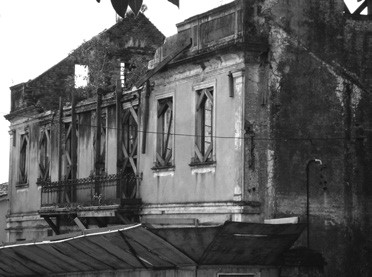
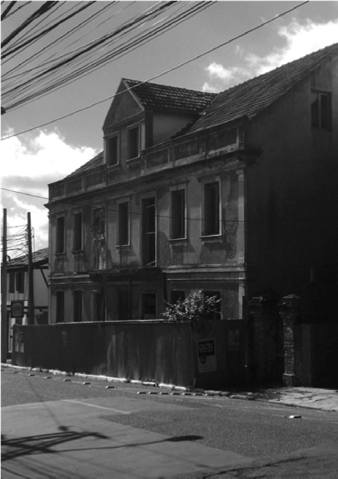
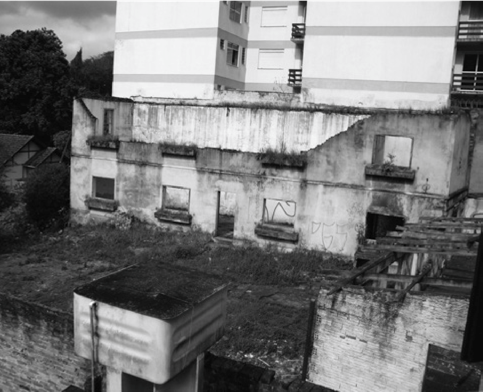
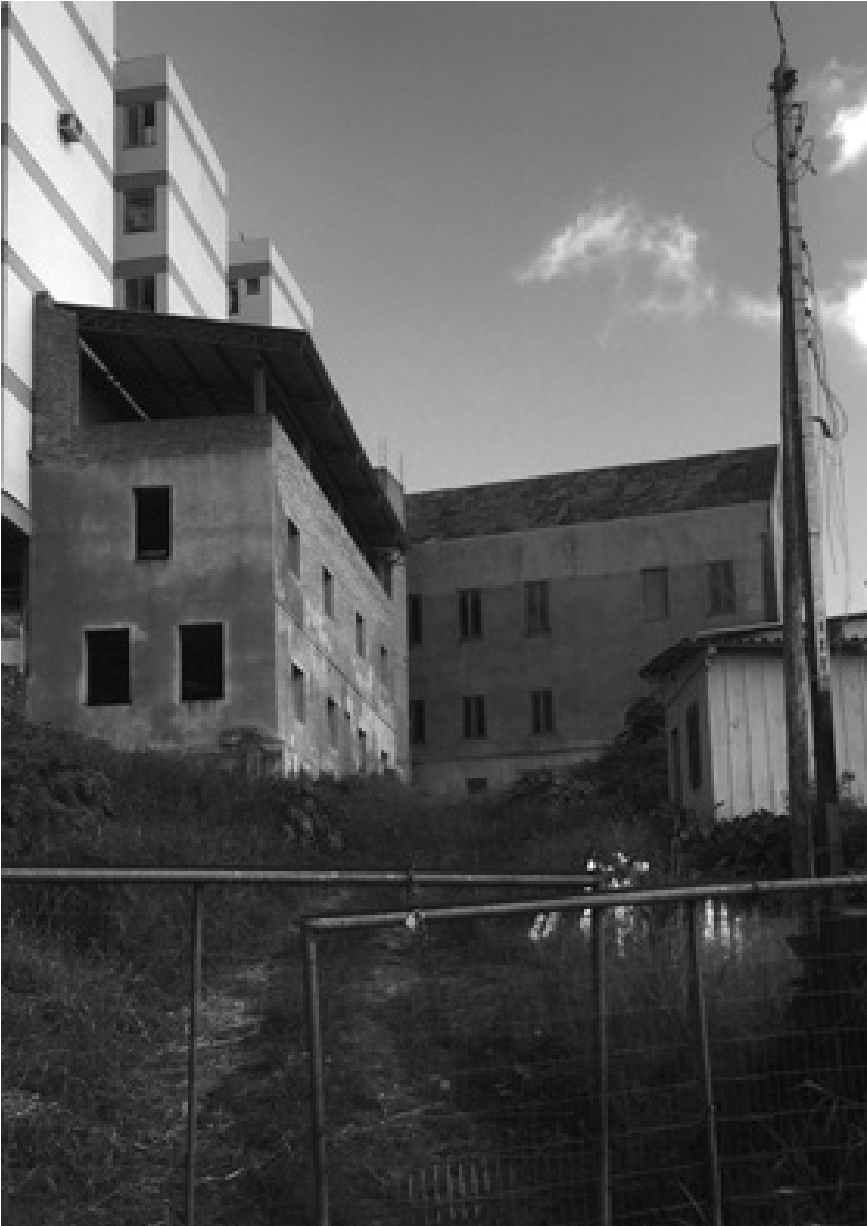
The other case we would like to describe is the ruin of the ancient Military Infirmary located in the city of Jaguarão, on the border with Uruguay, about 400 kilometers from Porto Alegre. The ruin is an imposing stone masonry structure, with Neoclassical characteristics, located at the highest point of the Cerro da Pólvora, an elevation that dominates the city. It was built in 1880, in order to treat officials, other ranking members of the Army, as well as members of the regional community. Along with the abandonment of the building at the beginning of the 1970´s, the historic complex has been depredated, leaving only its external walls standing. The building has been inscribed at the state level, by the Instituto do Patrimônio Histórico e Artístico do Est[30] (IPHAE).
Recently, a project was presented to transform this ruin into the Museu do Pampa. However, the project contains contradictions that evidence a lack of knowledge of the theory of restoration and of the definitions of the Venice Charter for these specific cases.
Within the text used in the presentation of the project, the author wrote the following: “part of the Jaguarão landscape.” The same text later adds that, “A contemporary building in concrete and glass will recompose what time has destroyed, and combined with the recovery of the historical edification, it will thus promote the transformation and suitability of the ensemble to its new life”[31] (Ferraz, 2008: 148).
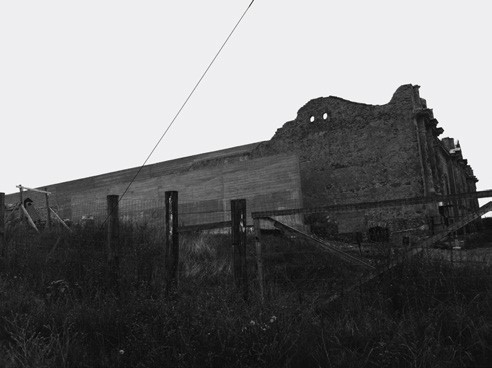
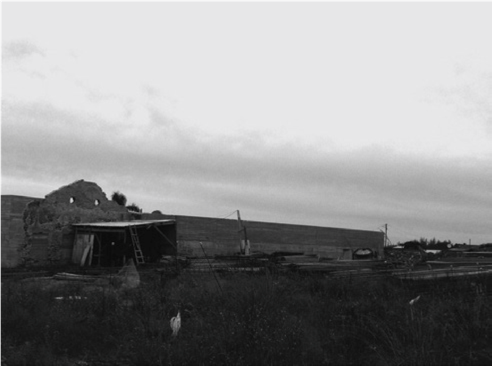
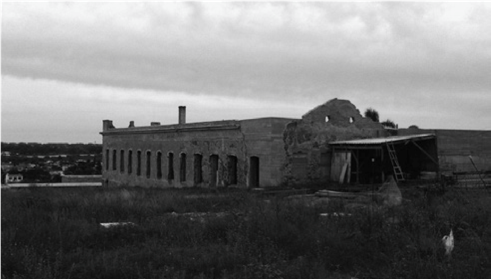
We are once more faced with a historic falsification and a scenic intervention, as it happened here and in other places. Restoration theory only allows anastylosis in interventions dealing with ruins, but what is seen in this case is a strong internal intervention, using the ancient areas of the infirmary, in addition to the construction of a new wing, made of glass and concrete, where the exhibition would be placed, and which would enclose the quadrilateral edification.
If what has been stated did not suffice, the evidence of the creation of a fake historic scenario is also defined by the maintenance of the consolidated facades, in their ruined aspect, and by the use of a flat roof to cover the sections that will be used; this is contrary to the building´s original gabled roof, typical of Portuguese architecture. In other words, the intervention does not even respect the height of the original roof; it aims exclusively at maintaining the aspect of a ruin, which is considered more visually attractive, but which is a complete fake from the conceptual point of view of restoration. Therefore, what we have left is neither a restoration nor a ruin!
This intervention is more problematic given that the building has been inscribed by the organization for preservation of the state of Rio Grande do Sul and because it receives funding from the federal government through IPHAN.
What is proven here is a complete theoretical inconsistency in the assessment of a historic monument, noting the absence of criteria and critical reflection in accordance with formal and documentary values, and regarding the inappropriateness of the techniques employed. In both cases, the transformations have no respect for the historic document, improperly inserting elements and emptying the building of what characterized it; it is been treated like a mere container.
Boito was right when he stated in his famous text, I restauratori, that “The restorer, in the end, offers the physiognomy that pleases him; but I specifically want the ancient one, the genuine one…”[32] (Boito, 2017: 19).
Conclusions
The aim of this text was to present a brief panorama of the relationship between theory and practice in the field of preservation of cultural heritage at Rio Grande do Sul and the possible applications of the theories proposed by Boito and Giovannoni. As we have seen, this panorama is not satisfactory, making it evident that there the distance between the procedures in our cultural environment is great, and this has consequently led to a loss of authenticity in heritage.
The cases presented here are not exclusive and they have had a positive effect on communities and in the academic world; a fact that leaves us even more concerned due to the lack of theoretical knowledge on the subject. Unfortunately, what is seen is a trend for historic monuments to be treated outside of the cultural sphere and of restoration principles, distaining at least two hundred years of systematic experience in this field and damaging their character permanently.
The theme of authenticity, both complex and polemic, has permitted interventions that have caused the loss of character for built heritage; the restoration concepts have been neglected, including by those organizations for the preservation of national heritage in Brazil and in the state of Rio Grande do Sul.
It is necessary that our restoration projects return to the basic foundations and principles of the discipline, and that these are urgently put into practice, so that the authenticity of cultural heritage in Brazil and in Rio Grande do Sul can be preserved, safeguarding our collective memory.
*
References
Boito, Camillo (2017) [1884] “I restauratori”, Conversaciones… con Camillo Boito y Gustavo Giovannoni (4): 33-55.
Castro, Sonia Rabello de (1991) O Estado na preservação de bens culturais, Renovar, Rio de Janeiro.
Choay, Françoise (2000) A alegoria do patrimônio, Trad. Teresa Castro, Edições 70, Lisboa.
Dvořák, Max (2008) Catecismo da preservação de monumentos, Trad. Valéria Alves Esteves Lima, Ateliê Editorial, Cotia.
Ferraz, Marcelo (2008) Um centro de referencia para o pampa. [http://www.ufrgs.br/propar/publicacoes/ARQtextos/pdfs_ revista_15/08_MF_Pampa_040210.pdf], (consultado em 28 de janeiro de 2012).
Fonseca, Maria Cecília Londres (1997) O patrimônio em processo, UFRJ/MinC/Iphan, Rio de Janeiro.
Kühl, Beatriz Mugayar (1998) Arquitetura do ferro e arquitetura ferroviária em São Paulo: reflexões sobre sua preservação, Ateliê Editorial, Fapesp, Secretaria da Cultura, São Paulo.
Kühl, Beatriz Mugayar (2000) “Viollet-le-Duc e o verbete restauração”, em Eugène Emmanuel Viollet-le-Duc, Restauração, Ateliê Editorial, Cotia, pp. 9-25.
Ruskin, John (1849) Seven lamps of architecture, John Wiley, New York.
Sitte, Camillo (1992) A construção das cidades segundo seus princípios artísticos, Trad. Ricardo Ferreira Henrique, Ática, São Paulo.
SPHAN/Pró-Memória (1980) Proteção e revitalização do patrimônio cultural no Brasil: uma trajetória, Serviço do Patrimônio Histórico e Artístico Nacional, Rio de Janeiro.
Viollet-le-Duc, Eugène-Emmanuel (1990) “Restoration”, in The foundations of architecture: selections from the Dictionnaire raisonné, Trans. Kenneth D. Whitehead, George Braziller, Inc., New York.
Notes