

Artículos
The last words of Alois Riegl
Conversaciones…
Instituto Nacional de Antropología e Historia, México
ISSN: 2594-0813
ISSN-e: 2395-9479
Periodicity: Bianual
no. 5, 2018

Resumen: -
Abstract: This text attempts to place Riegl’s last essay New trends in monument preservation of 1905 into a broader context. In order to achieve this, Riegl’s biography and the political and cultural situation of the Danube monarchy are used, as well as an analysis of the lines of thought characteristic of the change of century such as Stimmung, feeling.
Keywords: Alois Riegl, Danube monarchy, change of the century, dealing with heritage, Stimmung as a concept of philosophy..
The last words of Alois Riegl
Translation by Valerie Magar
Before addressing Alois Riegl’s theory on monuments, and especially his last essay New trends in the care of monuments, it may be appropriate to take into consideration the context in which these ideas developed.
The Austro-Hungarian empire was a multi-ethnic state. Over the course of several centuries, a large number of very different and varied territories had fallen under the rule of the House of Austria. Among these, the affiliation to the figure of the sovereign ruler was the most evident common element. This is perfectly shown by the so-called Grand Title of the Emperor, in which the countries belonging to the crown were listed. This list, which each schoolchild in the monarchy was obliged to memorize, begins with the words: “His Imperial and Royal Majesty Franz Joseph by Grace of God Emperor of Austria, King of Hungary, King of Bohemia, Dalmatia, Croatia, Slavonia, Galicia and Lodomeria, and Illyria”, and is then followed by the titles of forty-three other countries and cities, whose inhabitants were subjects of the Habsburgs. The dual monarchy extended from the Adriatic coast of Dalmatia to Galicia (which today belongs to Western Ukraine and Southern Poland) and Vorarlberg on the edge of the Swiss border with Transylvania, which now is located in Romania. Forty-eight million people of different ethnic origins lived in this Empire, where German, Hungarian, Polish, Czech, Serbo-Croatian, Slovene, Ruthenian, Italian and Romanian languages were spoken. On one hand, the administration of this enormous, complex entity was federal (the territories had local parliaments); on the other hand, supervision was carried out by the central empire. The local legislation was controlled by governors. However, the coexistence of the various groups was characterized by conflicts and by an aspiration for national independence. From 1848, after the revolution and various wars, large parts of the Italian territories had united under the new Italian monarchy. While it is true that in Hungary a revolution had been suppressed, the term Ausgleich (1867) – the Austro-Hungarian commitment – implied an important concession of autonomy to the Hungarian half of the Empire, which in turn was composed of different ethnic groups. In spite of this, the majority of the Slavic countries’ demands had not been taken into consideration. For this reason, the central cultural policy of the monarchy was aimed at repressing national trends and, in spite of recognizing the diversity of the crown’s different countries, unitary and supranational interests were pursued. In this sense, especially during the end of the 19th century, hope had been placed on the positive and propitiatory effects of art[1].
By 1850, the k.k. Central-Commission zur Erforschung und Erhaltung der Baudenkmale –the Imperial and Royal Central Commission for the Research and Preservation of Architectural Monuments[2]– had already been founded. It was initially conceived as a scientific organization and, as such, had only limited public funding. Acting as volunteers, the conservators and correspondents collected, at the beginning in a rather non-systematic manner, documentation on the state of conservation of the monarchy’s monuments. The results of the individual investigations were published after 1856, in the scientific journal Mitteilungen der k.k. Central-Commission, the “Communications of the Imperial and Royal Central Commission.” Although the Commission was also in charge of promoting the conservation of monuments, it had only an advisory role, and was dependent on the voluntary cooperation of the owners and of the administrative authorities. This was an unsatisfactory condition, which could only be changed by legislation protecting the monuments, which would have allowed for the imposition of the conservation of architectural monuments efforts even if they were against the will of their owners. Therefore, although there were some initiatives that sought the approval of such legislation, they all failed, due largely to opposition by the aristocracy and, especially by the church, which could not tolerate this limitation or interference with its property rights. A similar legislation project was drafted in 1903 by Alois Riegl, who was general conservator of the Imperial and Royal Central Commission at the time; his famous essay The modern cult of monuments[3] had been considered a kind of preamble to this legislative project.
Before focusing on Alois Riegl, it seems important to analyze in detail the concept of Stimmung[4], a notion central to his theory. This term had already appeared at the end of the 18th century and at the beginning of the 19th century in relation to art in general. One speaks for example of Stimmungskunst[5], Stimmungslyrik[6] or also of Stimmungsmalerei[7]. The word Stimmung refers to the quality of an object, but also to the state of mind that the contemplation of, or rather a dialogue with the object produces in the recipient. This object can not only be a musical work, a pleasant sound, or an artifact, but also a product of nature, a landscape or an atmospheric condition (for example Abendstimmung[8]). The effect that the object creates appeals more to emotion than to reason, and will be consciously elaborated, but in an emotional manner, rather than in an analytical one. But let us allow Riegl provide the definition of this condition for himself. In his essay “Die Stimmung als Inhalt der modernen Kunst”[9] (1899), he describes the emotion that is produced by an alpine landscape viewed from mountain top:
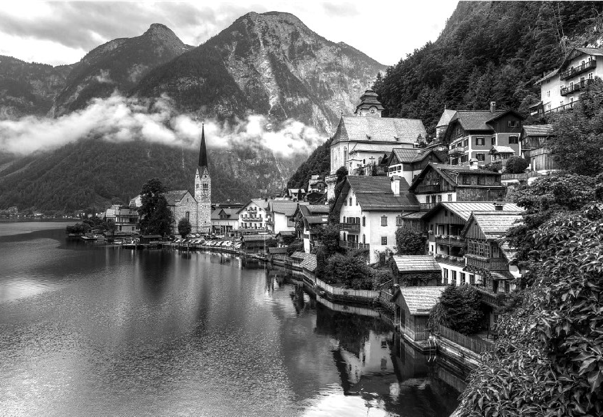
What the soul of modern man desires consciously or unconsciously, is fulfilled for the solitary viewer located at top of a mountain. It is not the tranquility of the holy ground that surrounds it, because a thousand forms of life sprout up around it; those things, which up close seem to be in a fight without mercy, from far are give the appearance of peaceful coexistence, concordance and harmony. Likewise, the human feels liberated from the tormenting weight, which never abandons him in his everyday existence. He even senses that beyond the contrasts around him, which simulate his imperfect senses, something incomprehensible, a global soul moves through all things and unites them in perfect harmony. This idea of the existence of an order and a law governing chaos, of harmony above dissonance, of calm over movement, is known as Stimmung. Its elements are calm and a distant vision[10] (Rosenauer, 1996: 28).
Consequentially, Stimmung, for Riegl, means a spiritual sensation, which also allows an enlightened conscience, or an agnostic intellect[11] to have a kind of pantheistic revelation.
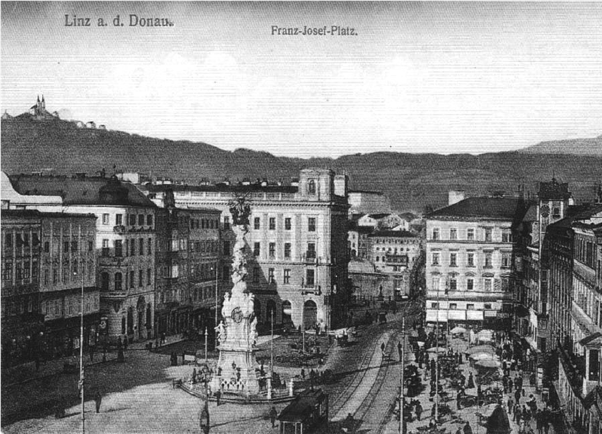
So who was Alois Riegl? We have a vast knowledge of his rich, multifaceted historicalartistic work[12], which has extended its influence until the present, but we have little information about his personality. Riegl descended from a German-speaking family. He was born in 1858 in Linz, the capital of Upper Austria (Oberösterreich). His father worked as a clerk for the public tobacco company, the Tabakregie. In this capacity, he was transferred to Galicia, in present-day Poland, where his son Alois frequented the local gymnasium[13]; this allowed him, from early on, to be confronted with the different realities of life within the Habsburg monarchy. After his father’s untimely death, the family returned to Upper Austria. Alois finished his studies in a Benedictine monastic school. He later began studying law under the instruction of a tutor, but he then shifted his studies first to history and then to art history.
The most accurate description of his education as an art historian is probably the one made by Max Dvořák, a disciple of Riegl and his successor in the position of general conservator. In a detailed obituary published in the newspaper Mitteilungen der Zentralkommission[14], Dvořák mainly focused on Riegl’s scientific career and his merits as a developer of a historicalartistic methodology, but he also gave sporadic insights into his character. He spoke these words about Riegl’s rather severe and puritan education, which shaped him and determined his perception of the world:
No matter how happy, animated and full of hope Riegl was even in the most difficult times of his life, one of the most important traits of his personality was always the almost sacred seriousness, with which he addressed all the matters that concerned him for the purpose of understanding the subspecies aeternitas down to its deepest causes[15] (Dvořák, 2010: 267).
Dvořák described the happy confidence in the development of the history of art as a science, which he himself had carried forward, but also his deep disappointment when he was not granted the position of director of the Museum für Angewandte Kunst, a position to which he had aspired during his eleven years working there as its curator. According to Dvořák, Riegl was a brilliant speaker and his ability to present his concepts “with a cheerful eloquence, which was the fruit of a deep conviction, he knew how to lead the attentive public along the path of his ideas.”[16] And he further added “when I think back on those times, it seems to me that he felt even then that he would not be granted a long life”[17] (Dvořák, 2012: 278). In 1903, Alois Riegl was called to become a member of the Zentralkommission, and during the last two years of his life, from 1904 until his death on June 17, 1905, he served as the general conservator of this institution. Dvořák, who calls this last stage of his life “the tragic end” (Dvořák, 2012: 281), wrote: “the silent and solitary man, who already lived partially removed from the world because of his deafness, far from life and its daily battles, and who was dedicated to his ideas and his research, suddenly became a fervent and tireless organizer.”[18] Riegl “who was already a very sick man in those days”[19] (Dvořák, 2012: 281) had devoted his last energy to a fundamental reform of the care of monuments in Austria. “With the noblest of instruments, one of the noblest of men would have created a work, which would have become a new lasting foundation of our artist culture. But shortly before reaching the end, he collapsed”[20] (Dvořák, 2012: 282).[21]
The theory on the values of the monument that Riegl developed in the The modern cult of monuments has been tackled by secondary literature, so it will only be referred to briefly here: the author begins with an analysis of the terms and he establishes three different commemorative values. He initially differentiated monuments with intentional commemorative value (“created to keep certain works or human events as permanently alive and current”[22] (Rosenauer, 1996: 139)) and monuments with “non-intentional” commemorative value, to which only subsequently and subjectively a meaning is attributed. Due to the fact that, in many cases, the original recipients no longer exist, at the end of the day monuments with intentional memory value are monuments with “unintentional commemorative value.” Then these monuments with unintended memory value were named in Austria with the official term “monuments of history and art.” Here Riegl believes that it is almost a tautology, all historical monuments are at the same time also art-historical, and all those art-historical are also historical, due to the fact that they document phases of the development of a form of expression, and in this capacity they also have “historical value.” Finally, there is the age value. This value is attributed to the object solely because of its antiquity for “the fact that externally it sufficiently demonstrates that it has already existed and ‘lived’ during a time prior to the present”[23] (Dvořák, 2010: 145). The aged object, visibly exposed to the forces of nature, reveals itself as “substrate” (we could also say catalyst), and transfers to the observer a state of mind, where the eternal cycle of creation and decomposition, to which it is itself subjected to, seems not only acceptable but conciliatory.
This order also corresponds, according to Riegl’s conception, to the chronological development of monuments: in Antiquity and in the Middle Ages there were only monuments with “intentional commemorative value.” During the Renaissance, historical value was progressively attributed, which acquired a very special value in the 19th century. On the other hand, in the 20th century, the antiquity value gained more and more importance. Parallel to this evolution the emancipation of the individual is fulfilled. The antique value refers directly to this individual, the Stimmungsmensch, the modern man of feeling, and promises nothing less than “salvation.” More than once Riegl compares this immersion in the antique value with a religious feeling. In the title of her profound essay of 1985, Margaret Olin got to the bottom of the question: “The cult of the monument as a state religion in late 19th century Austria.”[24] Similar to a religion, the value of the ancient is accessible to everyone – in contrast with the “historical value” that requires prior knowledge. At first the antique value would have been recognized only by a small group of enthusiasts, while “thousands of people already feel it instinctively” and would have the potential “to reign over a whole future”[25] (Rosenauer, 1996: 158).
How should we then treat the monuments? The response by Riegl is the following: it depends on the predominant values. It is necessary to understand that the values never appear separated, but almost always coexist and concur with each other. If only the antiquity value is taken into consideration, the monument should be exposed to progressive deterioration in order to be able to contemplate it without disturbances as it dissolves little by little into the omnipresent and amorphous nature. The “historical value” on the other hand requires the preservation of a documentary value, as authentic as possible. Hence: conserve, put an end to progressive deterioration, without adding anything. On the other hand, concentrating on the intentional memory value calls for the most complete possible transmission of the original message of the artifact. Its meaning must be permanently legible (or making it readable again); this means in an extreme case: reconstruction.
To further complicate the responsibility of values (and to also make it more realistic Riegl introduces a series of “values of contemporaneity.” These imply those characteristics that satisfy spiritual or intellectual needs, which could have been equally satisfied by contemporary, modern objects.
Among these, for example, is the “instrumental value” to which the functions of representation and “decorum” also naturally belong, as well as the exercise of religious functions in the case of religious buildings that require adequate maintenance and care. This category also includes the “artistic value” –the satisfaction of aesthetic needs can also be obtained with modern works of art, in the same manner as with historical ones. Here we must make another distinction between the “value of novelty” (the “elemental” artistic value) and the “relative artistic value.” The value of novelty is automatically in everything that is fresh, new, concluded in itself; it (still) is the artistic value of the great masses and the most bitter enemy of the antiquity value. On the contrary, the relative artistic value is subject to continuous variations because there is not yet a valid scale of values. The observation of this artistic value can also lead to the removal of traces of antiquity, in some cases even a Restauratio in integrum may be necessary – in this case too, the relative artistic value may become opposed to antiquity value.
In Riegl’s value system, a well-thought-out system of a monument’s values that concur seems logical in itself, its greatest weakness has probably been the overestimation of the antiquity value, also interpreting spiritually. One of the most important critics of his theory of monuments has been the art historian, Georg Dehio, who in a speech delivered on January 27, 1905, on the occasion of the birthday of the German emperor, opposed this concept[26]: “We do not preserve a monument for its beauty, but because it is part of our national identity. Protecting monuments does not mean to seek pleasure, but to exercise piety[27]” (Dehio, 2018: 19). Dehio demands respect for historical existence as such and he does so on the basis of patriotism “All classes must reach the perception that the people who own many monuments are a people noble[28]” (Dehio, 2018: 20).
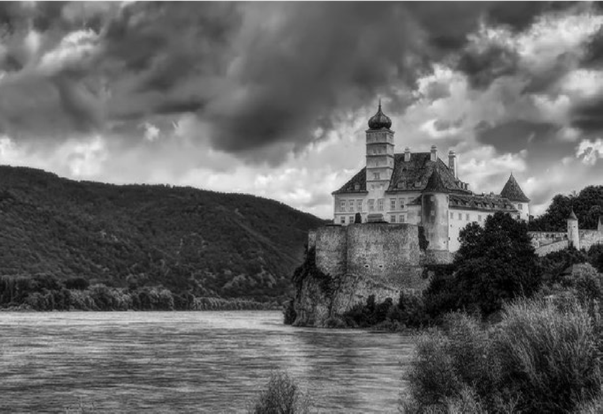
In his last essay, written in 1905, the year of his death New trends in the care of the monuments, Riegl responds to this attack, expressing with determination his disagreement to take into consideration patriotism as the basis for the care of the monuments. In support of his argument, he refers to a very current example: historic buildings in the Wachau area, a particularly picturesque part of the Danube valley in Lower Austria, which were in danger due to a construction project, and whose loss had already been publicly deplored[29]. At first he describes the relatively vast and primitive forms of this anonymous architecture and concludes that they have no architectural value. Where does the regret for its imminent loss come from then?
It cannot be anything other than the ‘ancient’ in itself, the non-modern, the creative testimony of previous generations, from whom we descend. ... In this sense the houses of Weißenkirchen [a village in the Wachau region] actually appear to us to be a part of our existence, and because they were built at one time by Austro-Germans and because by observing them we felt like AustroGermans, we think they are part of our national existence. Even so, regardless of the fact that some of those who think in this manner were not born in the Wachau region, and that their ancestors were not always of Austro-German nationality, surely many will not be able to repress the certainty that for example arcades in Trento or the small streets in the palace district of Split, of completely different cultural origin, provoke in them the same feeling of pleasure than the contemplation of the ancient in the houses of the Wachau[30] (quoted in Bacher, 1995: 222).
These
will surely appear to us as a part of our existence, but not of a national existence, but of a human one. National selfishness seems to be reduced in this way into a selfishness of humanity, the feeling on which the care of monuments is based seems to approach a purely altruistic feeling[31] (quoted in Bacher, 1995: 222).
In the end he goes one step further: he extends his reasoning to the protection of natural heritage:
Thus we see that the cult modern for a giant wild tree or a vertical rock wall has been created by nature itself, without any contribution of human hands. So, why does it feel like a sacrilege when someone puts their hands on them, cuts down the tree, blows up the rock wall, takes life away in a certain manner? Why do we also claim for these products of nature the right to be able to live in a certain way without being bothered? The truth is that we also respect in them the evidence of testimony of existence, of life and of creation of the past, although not referred to the existence of the nation or to the existence of humanity at an earlier stage of its evolution, but to the existence of nature. In the cult of the ‘monuments of nature’ the last residue of selfishness – the one referring to humanity – has also been overcome and, with the participation in the works of extra-human nature, complete altruism has been achieved[32] (quoted in Bacher, 1995: 223).
In the end Riegl stresses again that it is not the aesthetic qualities or the historical documentary value of the monuments, on which a care of monuments by the State could be based, but simply the faculty of being able to provoke feelings.
Only on the existence and the universal dissemination of a feeling that, while resembling a religious feeling, is independent of any special instruction of an aesthetic or historic character, and separated of a rational observation, and its dissatisfaction is unbearable, can a legislation for the protection of monuments be successfully based[33] (quoted in Bacher, 1995: 226).
Therefore there are two fundamental arguments that Riegl emphasizes in this last essay, on the one hand is the foundation of the protection of monuments on emotions, already mentioned in the Cult of monuments, which “resembling a religious feeling” are provoked by a meditation stimulated by the value of the ancient; on the other side it is the equation of protection of cultural monuments with the one of natural monuments, that is, the interpretation of the protection of monuments as care of nature. Any product of past times of “particular individual character” has the right to fulfill its natural time of existence, each intervention in this cycle would be a sacrilege. We do not know if Riegl came by himself to this conclusion that requires “full altruism” and the neglect of all selfish, national-selfish or humanely-selfish interests, or if these reflections that somehow approach Buddhism have been influenced by the study of philosophers such as Schopenhauer. Unfortunately, we do not have any news about his library or his favorite authors. His rejection of nationalism (and his confrontation with Georg Dehio based on this rejection) has surely been guided by his loyalty to the monarchy’s multiethnic, supranational state. However, for the interpretation of his last essay which contains the demand for a disinterested “human feeling” we must also take into account the situation in which Riegl lived and his state of mind, and that he sensed his imminent death.
*
References
Bacher, Ernst (Hg.) (1995) Alois Riegl, Kunstwerk oder Denkmal? Alois Riegls Schriften zur Denkmalpflege, Deutsche Stiftung Denkmalschutz, Wien, Köln, Weimar.
Dehio, Georg (2018) “La protección y el cuidado de los monumentos en el siglo XIX”, Conversaciones… con Georg Dehio, Alois Riegl y Max Dvořák (5): 29-45.
Dvořák, Max (2012) Schriften zur Denkmalpflege, gesammelt und kommentiert von Sandro Scarrocchia, Böhlau Verlag, Wien.
Frodl, Walter (1988) Idee und Verwirklichung. Das Werden der staatlichen Denkmalpflege in Österreich, Böhlau Verlag, Wien.
Huse, Norbert (Hg.) (2006) Denkmalpflege, Deutsche Texte aus drei Jahrhunderten, C.H. Beck, Munich.
Noever, Peter, Artur Rosenauer und Georg Vasold (Hrsg./eds.) (2010) Alois Riegl revisited: Beiträge zu Werk und Rezeption. Contributions to the opus and its reception, Verlag der Österreichischen Akademie der Wissenschaften, Wien.
Olin, Margaret (1985) “The cult of monument as a state religion in late 19th century Austria”, Wiener Jahrbuch für Kunstgeschichte (38): 177-198.
Riegl, Alois (1996) [1899] “Die Stimmung asl Inhalt der modernen Kunst”, in: Artur Rosenauer (Hg.), Alois Riegl, gesammelte Aufsätze, Klassische Texte der Wiener Schule der Kunstgeschichte, WUV-Universitätsverlag, Wien, S. 27-37.
Riegl, Alois (1903) Der moderne Denkmalkultus. Sein Wesen und seine Entstehung, K.K. Zentral-Kommision für Kunst- und historiche Denkmale, Wien.
Rosenauer, Artur (Hg.) (1996) Alois Riegl, gesammelte Aufsätze, Klassische Texte der Wiener Schule der Kunstgeschichte, WUVUniversitätsverlag, Wien.
Van Heerde, Jeroen Bastiaan (1993) Staat und Kunst: Staatliche Kunstforderung, 1895-1918, Böhlau Verlag, Wien.
Notes